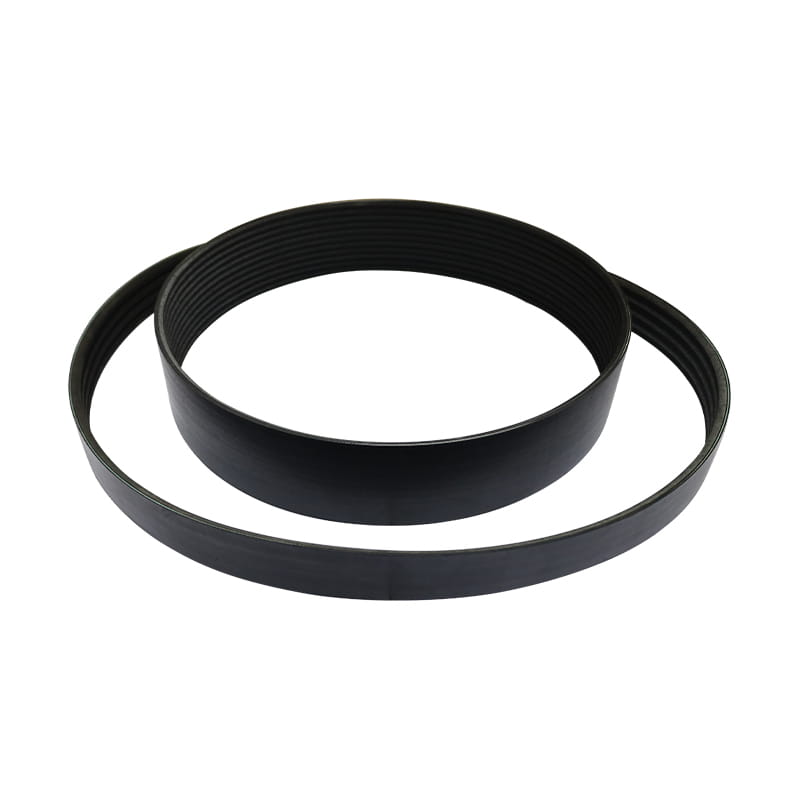
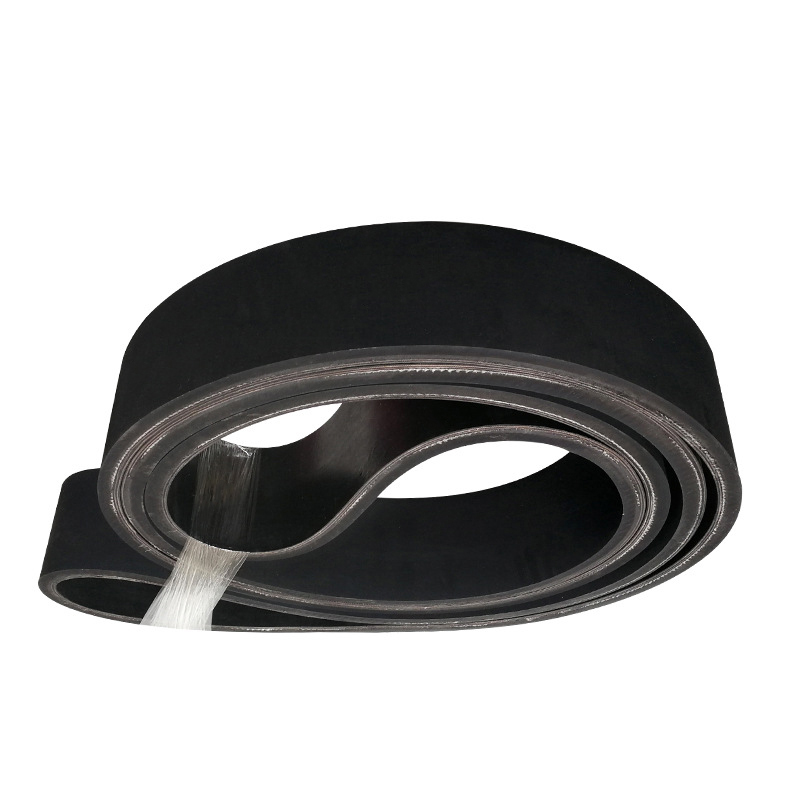
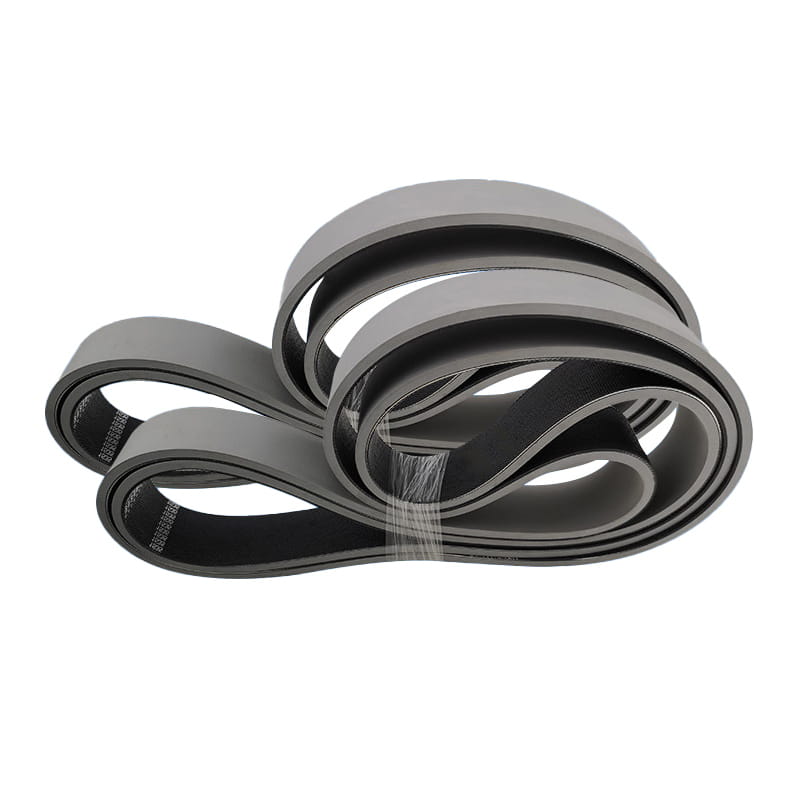
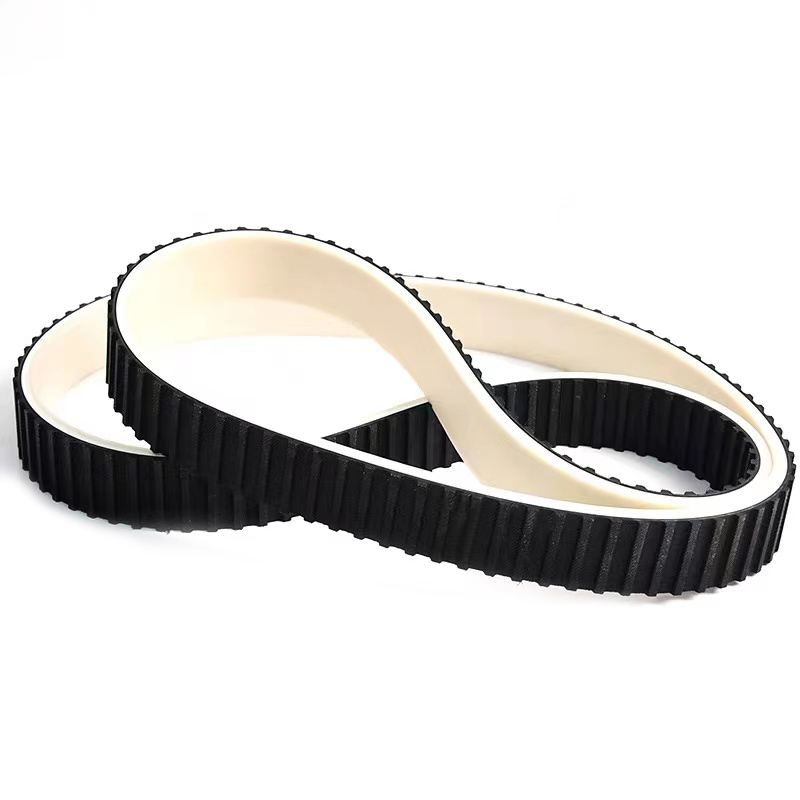
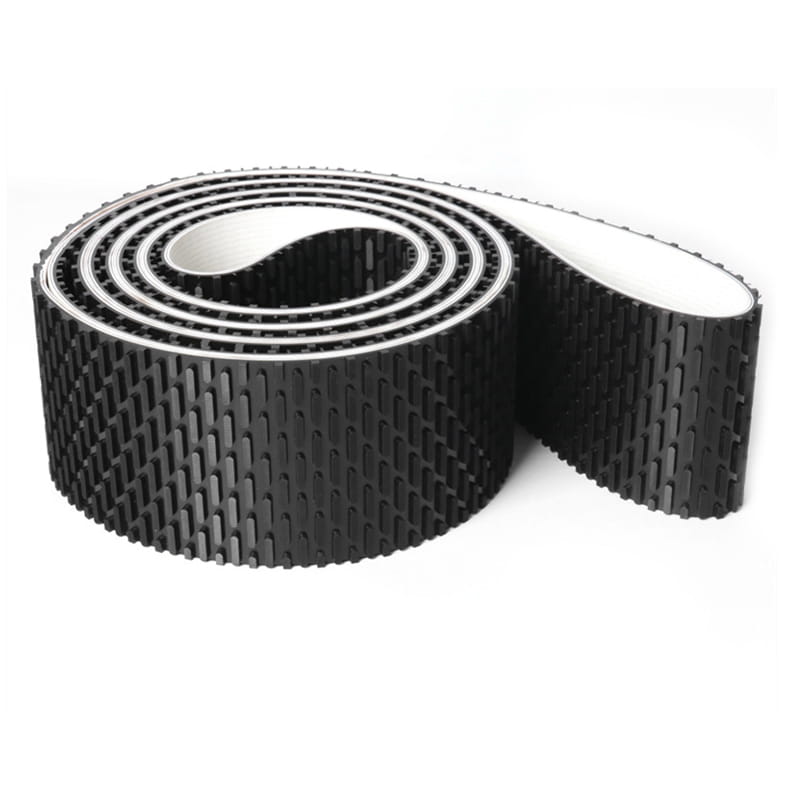
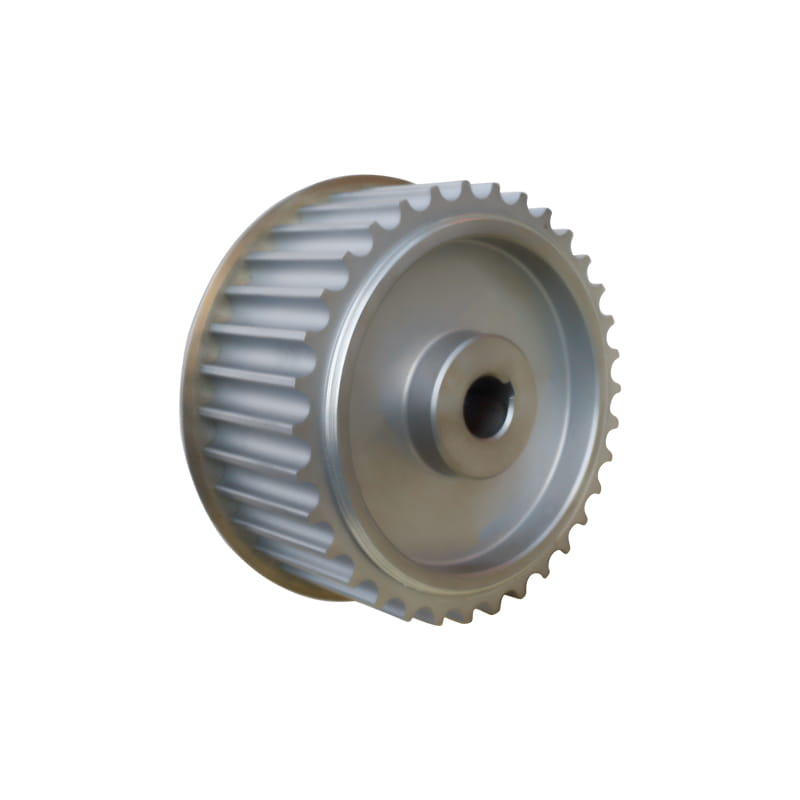
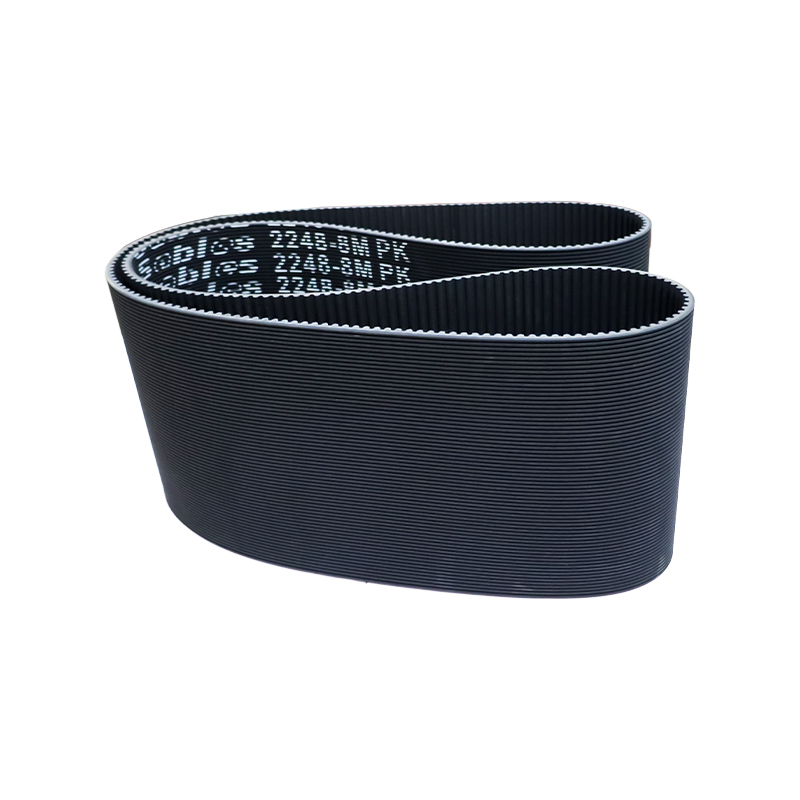
Yes, Rubber Ribbed Belts are genuinely good, and for most power transmission applications they are a significant improvement over traditional flat belts and single-groove V-belts. The multi-rib design increases the contact area between belt and pulley, which reduces slippage, improves power transfer efficiency, lowers energy consumption, and extends service life compared to older belt designs (Source: GUL-TZ, Poly-V Ribbed Belts Offer Numerous Advantages Over Traditional V-Belts). They operate more quietly, require less frequent re-tensioning, and handle higher power loads in a more compact package. The only situations where they are not the ideal choice are applications requiring extremely high torque with large-diameter pulleys, or environments with severe oil or chemical contamination that could degrade the rubber compound, in which case specific material grades or alternative belt types need to be considered.
What Makes Rubber Ribbed Belts Different From Standard Belts
To evaluate whether rubber ribbed belts are good, it helps to understand what makes them mechanically distinct from the flat belts and single-groove V-belts they evolved from.
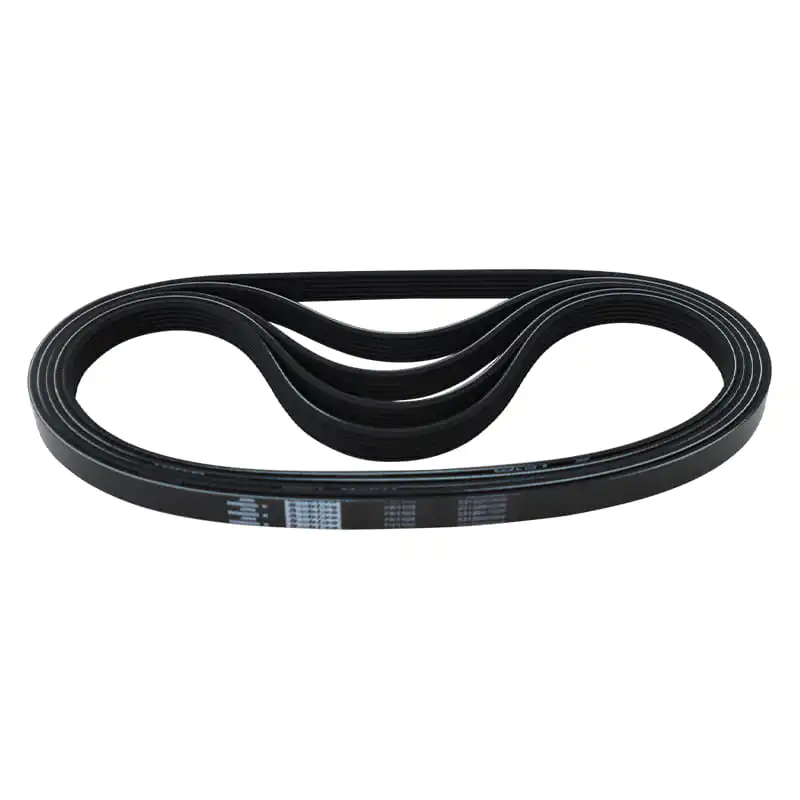
A ribbed belt, also known as a multi-rib, poly-V, or V-ribbed belt, features a series of longitudinal ribs running the full length of the belt's inner face. These ribs engage with matching grooves on the drive and driven pulleys, creating multiple parallel contact zones instead of the single contact zone of a conventional V-belt. GUL-TZ explains this directly: the multiple ribs on the inner surface engage with corresponding grooves on the pulleys, creating increased contact area that allows for higher power transmission capabilities compared to traditional V-belts, with uniform load distribution that reduces slippage risk and maximizes power transfer efficiency (Source: GUL-TZ, What Are the Features and Advantages of Ribbed Belts).
The number of ribs varies by application. GUL-TZ notes that the most common number is six, though this varies depending on load requirements, and ribbed belts are classified by standardized rib profiles including PK for automotive serpentine systems, PJ for smaller equipment and home appliances, and PL and PM for heavier industrial loads (Source: GUL-TZ, What Are the Features and Advantages of Ribbed Belts). The standardization of rib profiles ensures that a correctly specified belt fits a corresponding pulley precisely across different manufacturers and equipment types.
Where Rubber Ribbed Belts Outperform Alternatives
Higher Power Transmission In A Smaller Space
One of the most practically significant advantages of rubber ribbed belts is their ability to transmit more power through a physically narrower belt and smaller pulley than a conventional V-belt of equivalent power rating. Hawkbelt confirms that the ribbed design allows for a more compact arrangement, making it possible to operate multiple components with a single belt while saving space and reducing total system weight (Source: Hawkbelt, Understanding the Functionality and Benefits of V-Ribbed Belts in Automotive Applications). GPR Industrial adds that poly-V belts can operate on smaller pulleys, directly reducing the footprint of equipment and machinery compared to traditional belt drive designs (Source: GPR Industrial, The Ultimate Guide to Poly V Belts).
This compact power density is why ribbed belts became the standard for automotive serpentine drive systems, where a single belt drives the alternator, power steering pump, air conditioning compressor, water pump, and other accessories simultaneously. Attempting to do the same with individual conventional V-belts for each accessory would require far more space and increase the total number of maintenance items on the engine.
Reduced Slippage And Improved Efficiency
Slippage between belt and pulley wastes energy, generates heat, and accelerates belt wear. The multi-rib contact pattern of a rubber ribbed belt reduces slippage significantly compared to single-groove designs. TreadmillPartsZone notes that the larger contact surface area of ribbed V-belts allows transmission of higher power levels with less slippage, making them particularly valuable for serpentine systems and other applications where consistent rotational fidelity matters (Source: TreadmillPartsZone, Are Ribbed V Belts the Same as V Belts). GUL-TZ quantifies the mechanism: the ribs increase the contact area between belt and pulley, resulting in less slippage, higher power transfer, reduced energy consumption, and improved overall efficiency (Source: GUL-TZ, What Are the Features and Advantages of Ribbed Belts).
Quieter Operation Than Flat Or V-Belts
Noise is a meaningful performance metric in automotive applications, home appliances, HVAC equipment, and any setting where operational acoustics matter to the end user. Hawkbelt notes that ribbed V-belts reduce vibration and allow smoother operation compared to conventional belt designs, which is particularly important in applications where noise reduction is a priority such as residential or sound-sensitive environments (Source: Hawkbelt, Understanding the Functionality and Benefits of V-Ribbed Belts). The consistent multi-rib engagement distributes the mechanical interaction between belt and pulley across multiple contact zones simultaneously, which reduces the individual impact load at each contact point and results in smoother, quieter running.
Lower Maintenance Requirements
Rubber ribbed belts require less maintenance intervention than conventional V-belts in most applications. The multi-rib design minimizes belt slip, which reduces the heat and friction that cause premature wear and the subsequent need for re-tensioning. GUL-TZ states that the durable construction and resistance to stretching and wear extends the belt's lifespan, resulting in fewer replacements and associated maintenance costs, and that the reduced tendency for slip means re-tensioning is needed less frequently than with single-groove designs (Source: GUL-TZ, Poly-V Ribbed Belts Offer Numerous Advantages Over Traditional V-Belts). For industrial operations where maintenance downtime has a direct cost, this reduction in routine intervention adds up to meaningful savings over the belt's service life.
Material Quality Is What Separates Good From Poor Ribbed Belts
The design advantages of ribbed belts are only realized when the rubber compound and reinforcement materials meet appropriate quality standards. A ribbed belt made from lower-grade rubber compound will lose the efficiency, longevity, and noise benefits of the design much faster than one built from appropriate materials for the application.
EPDM Versus CR Rubber Compounds
Modern premium ribbed belts are increasingly made from EPDM, ethylene propylene diene monomer rubber, rather than the chloroprene rubber used in older belt designs. GUL-TZ confirms that modern ribbed belts made from advanced materials like EPDM are highly resistant to heat, ozone, and cracking, leading to a much longer lifespan and less frequent replacement compared to CR compounds (Source: GUL-TZ, What Are the Features and Advantages of Ribbed Belts). EPDM's superior resistance to environmental degradation makes it particularly suitable for automotive applications where the belt is exposed to elevated temperatures, UV radiation, and ozone over its operational life.
Tensile Cord Reinforcement
The rubber body alone is not sufficient to maintain belt dimensions under load. Ribbed belts incorporate tensile cord reinforcement, typically polyester, aramid, or fiberglass, running longitudinally through the belt body to resist elongation under tension. INJ Belt notes that reinforcement with fiberglass or aramid cords allows rubber power transmission belts to resist elongation, fatigue, and environmental degradation, offering long-term reliability even under continuous load (Source: INJ Belt, What Makes Rubber Timing Belts the Future of Precision Power Transmission). The quality, count, and construction of these cords directly determines how well the belt holds its length and tension throughout its service life.
Rib Profile Precision
The dimensional accuracy of the rib profile determines how evenly the belt seats into the pulley grooves. A belt with imprecise rib geometry will make uneven contact across its width, concentrating load on some ribs while others carry less, which leads to uneven wear, increased noise, and reduced service life. This is why the standardized rib profiles such as PK and PJ exist, and why belts that conform accurately to these profiles outperform non-conforming alternatives in real-world applications.
Performance Comparison: Rubber Ribbed Belts vs Other Belt Types
| Belt Type |
Power Density |
Slippage Resistance |
Noise Level |
Maintenance Interval |
| Flat belt |
Low |
Low without tensioners |
Moderate |
Frequent re-tensioning |
| Single-groove V-belt |
Moderate |
Good in groove |
Moderate |
Periodic re-tensioning |
| Rubber ribbed belt |
High in compact width |
Excellent, multi-rib contact |
Low, smooth engagement |
Less frequent, low slip |
| Timing belt |
High, zero-slip |
Zero, positive engagement |
Low |
Scheduled replacement required |
The table illustrates that rubber ribbed belts occupy a strong middle position: they match or exceed single-groove V-belts in every performance category while delivering better compact power density, and they offer lower maintenance overhead than timing belts while still providing significantly better slippage control than flat or standard V-belts.
Industries And Applications Where Rubber Ribbed Belts Are Used
The combination of compact power density, low noise, and low maintenance makes rubber ribbed belts the design of choice across a wide range of industries.
Automotive And Transportation
The automotive serpentine belt is the most widely known application for rubber ribbed belts. In modern vehicles, a single poly-V serpentine belt drives all engine-mounted accessories simultaneously, replacing the multiple individual belts used in older designs. This approach reduces total weight, simplifies maintenance to a single belt inspection and replacement, and reduces parasitic drag from multiple separate belt drives. The PK profile is the automotive standard in this segment, with belt width determined by the number of ribs required to handle the combined accessory load.
HVAC And Refrigeration Equipment
Air handling units, compressors, and chiller systems use rubber ribbed belts to drive fans and compressor stages where consistent rotational speed, low noise, and resistance to ambient heat and humidity are all required simultaneously. GPR Industrial lists HVAC systems as one of the primary applications for poly-V belts, citing their versatility for continuous-use applications (Source: GPR Industrial, The Ultimate Guide to Poly V Belts).
Industrial Machinery And Conveyor Systems
Manufacturing equipment including woodworking machines, metalworking tools, textile machinery, and light conveyor drives use rubber ribbed belts where the combination of high power density and quiet operation is valued over the zero-slip precision of timing belts. Aosheng Belt notes that poly ribbed V-belts are used across various industrial applications including conveyor systems where superior grip and durability are required (Source: Aosheng Belt, Why Settle for Less: Upgrade to Poly Ribbed V-Belts Today).
Home Appliances And Consumer Equipment
Washing machine drum drives, dryer drums, exercise equipment, and power tools commonly use the PJ profile rubber ribbed belt, which is designed for the smaller pulley diameters and moderate loads typical in this application category. GUL-TZ confirms the PJ profile is specifically suited to small electrical appliances and office equipment (Source: GUL-TZ, What Are the Features and Advantages of Ribbed Belts).
Situations Where Rubber Ribbed Belts Have Limitations
Rubber ribbed belts are not the right solution for every power transmission scenario. Understanding the limitations prevents specifying them where a different belt type would perform better.
- Applications requiring absolute synchronization with zero slip, such as engine camshaft drives or CNC positioning systems, require timing belts with positive tooth engagement rather than the friction-based grip of a ribbed belt
- Environments with heavy oil splash or immersion can degrade rubber compounds regardless of quality grade; in such environments, chain drives or fully sealed belt enclosures are more appropriate
- Very large center-distance drives, such as those found in agricultural machinery or heavy mining equipment, may favor conventional V-belt configurations due to the structural requirements at large spans
- Applications with very high static shock loads can cause rib cracking in standard compound belts; in these scenarios, reinforced aramid cord constructions or alternative drive types should be evaluated
For the vast majority of rotating equipment in automotive, industrial, and appliance applications, none of these limitations apply, which is why rubber ribbed belts have become the dominant design across those sectors.
What To Check When Selecting A Rubber Ribbed Belt
The performance of a rubber ribbed belt in service is determined by how well the specification matches the application requirements, not just by the design category alone.
- Rib profile: confirm whether the application requires PK, PJ, PL, or PM profile by checking the existing belt marking or the equipment specification sheet, since profiles are not interchangeable between pulley types
- Number of ribs: more ribs means greater power capacity; the correct rib count for the application's power demand must match the pulley width
- Belt length: specified as the effective outer circumference; using an incorrect length will cause improper tensioner pre-load and premature wear
- Rubber compound: for automotive or high-temperature applications, confirm the belt uses EPDM compound rather than CR rubber; EPDM runs significantly longer before showing heat-related cracking
- Tensile cord material: polyester cords are standard, aramid is specified for high-load or shock-load conditions where maximum resistance to elongation is required
The KML Rubber Ribbed Belts range covers the full range of standard rib profiles and sizes with rubber compound and tensile cord specifications matched to automotive, industrial, and appliance application requirements, providing a reliable starting point for engineers and procurement teams specifying belt drive solutions across these sectors.



 中文简体
中文简体