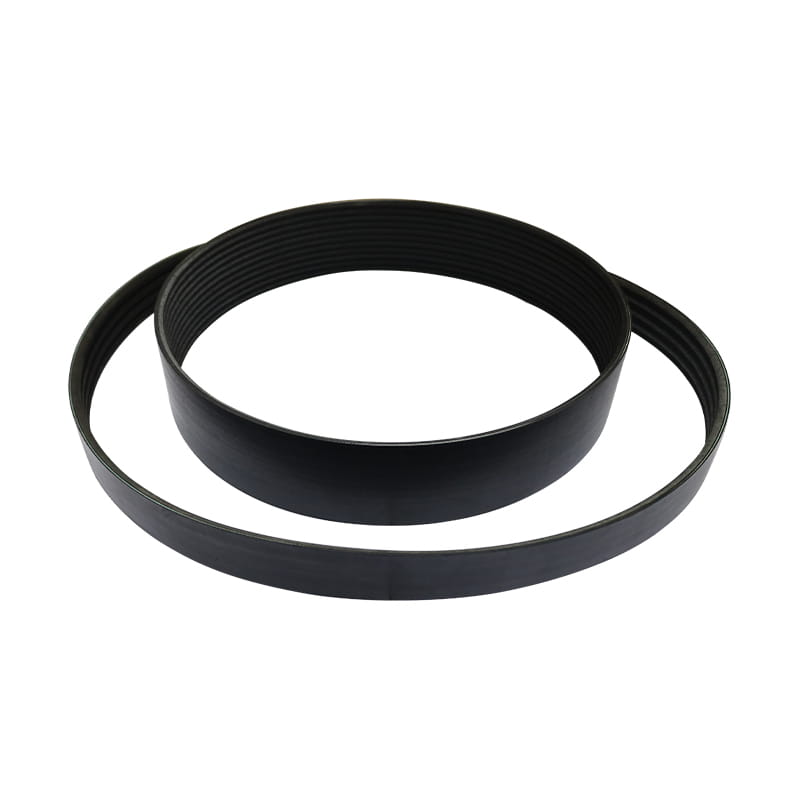
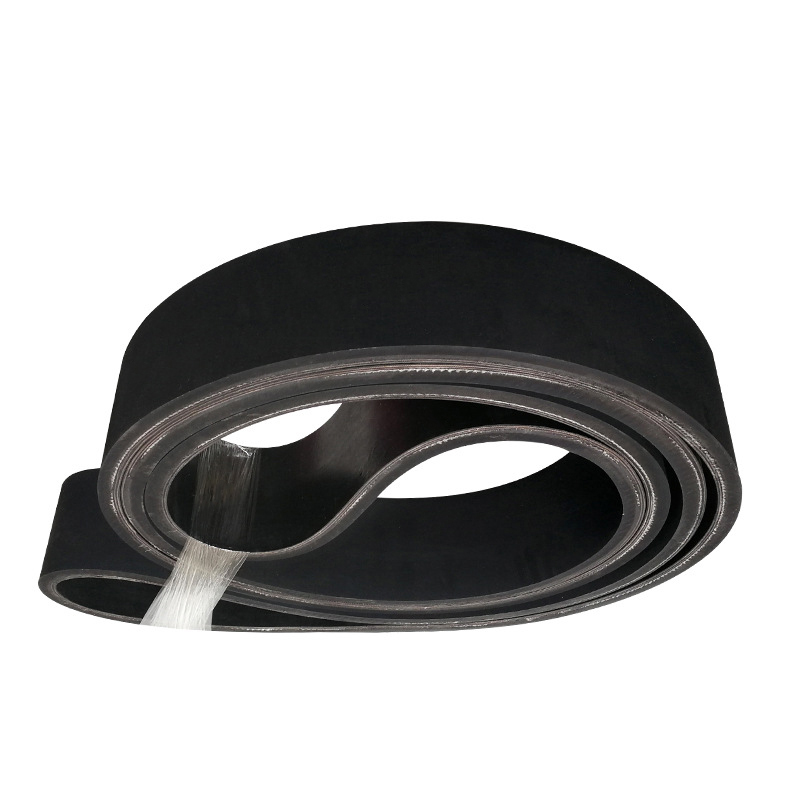
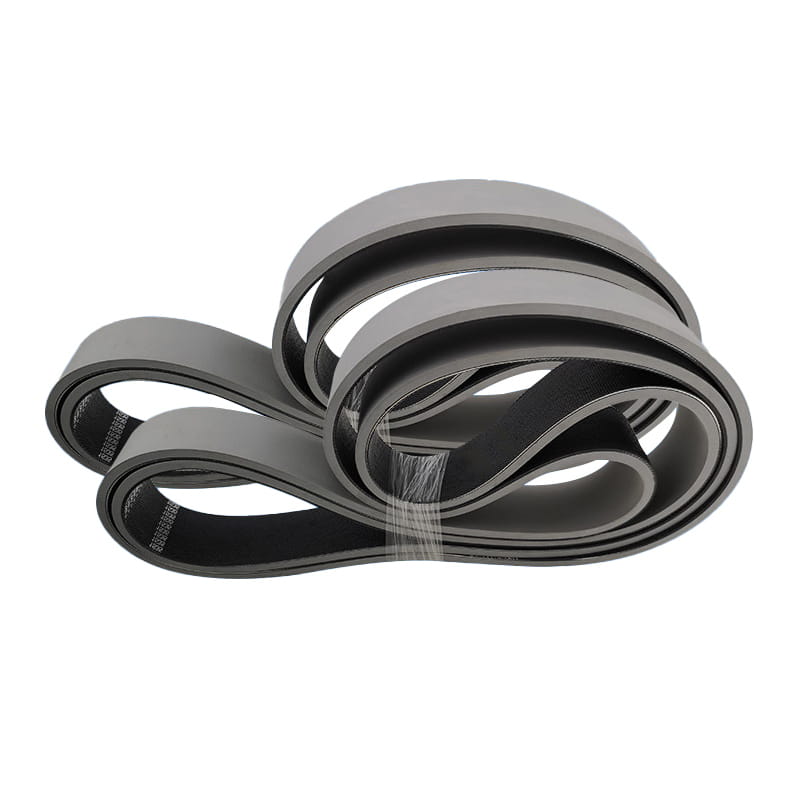
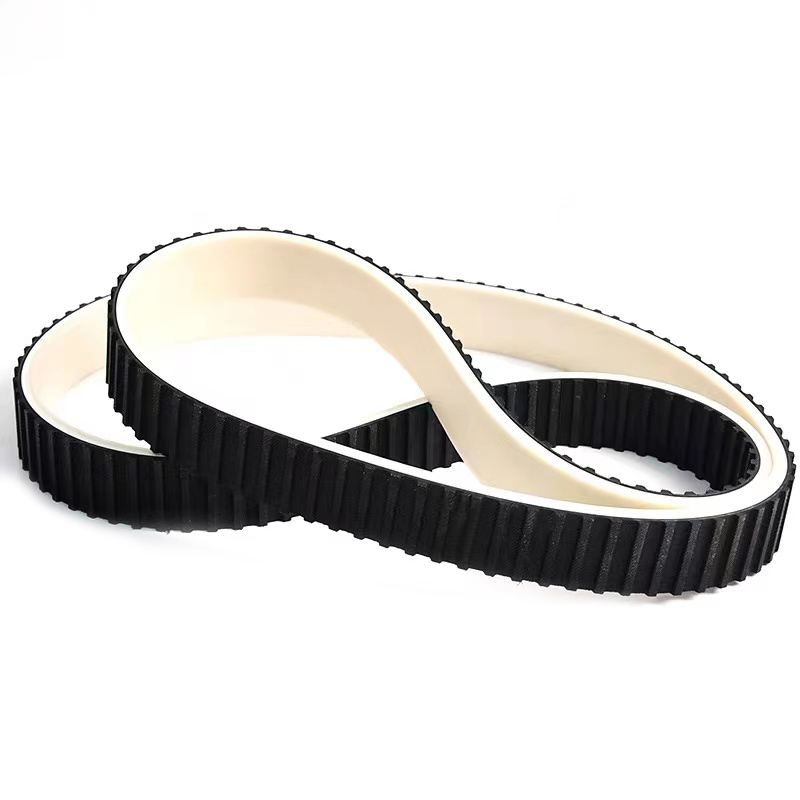
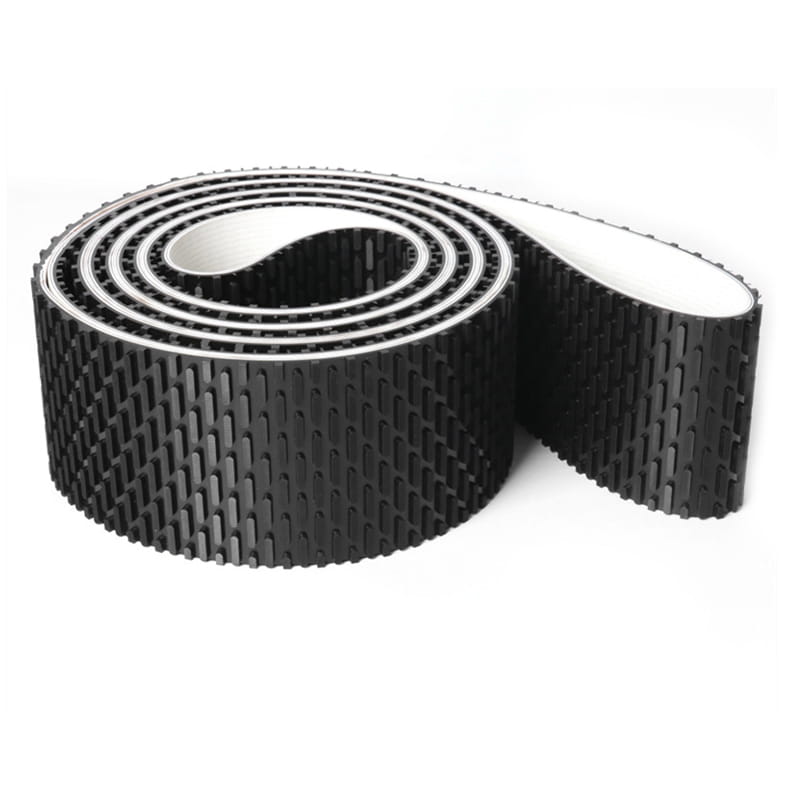
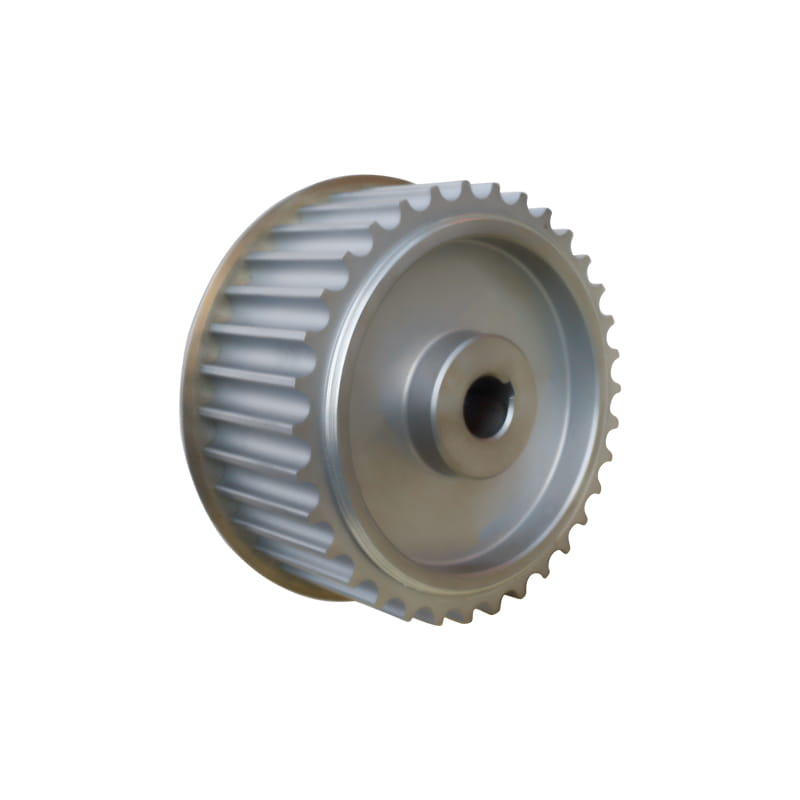
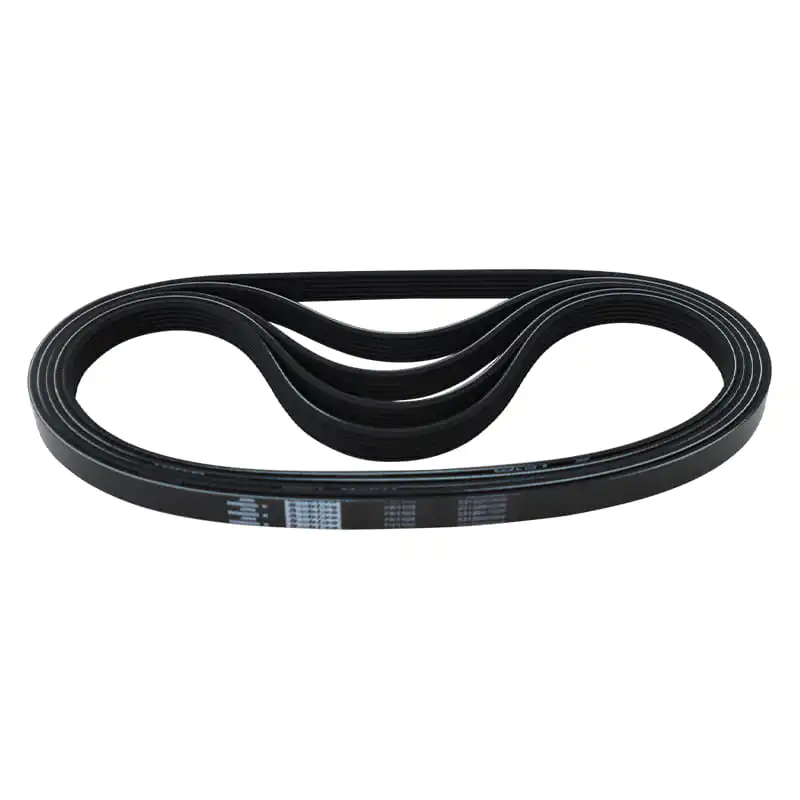
Rubber Ribbed Belts -- also called poly-V belts, multi-rib belts, or serpentine belts -- are flexible power transmission belts made from an elastomeric rubber compound reinforced by longitudinal tensile cords, with a series of parallel V-shaped ribs running along their inner surface. Those ribs seat into matching grooves on the pulleys they drive, combining the flexibility of a flat belt with the positive grip of multiple V-belts in a single compact unit. A standard 6PK ribbed belt, for example, packs the load capacity of three conventional V-belts into a profile only 21.4 mm wide -- enabling the compact, efficient drive systems found in modern automotive engines, industrial machinery, fitness equipment, and household appliances worldwide. This article explains exactly what rubber ribbed belts are: their structure, materials, geometry standards, manufacturing process, and the range of applications where they are the preferred power transmission solution.
The Anatomy of a Rubber Ribbed Belt: Four Structural Layers
A rubber ribbed belt is not a homogeneous rubber strip. It is a precisely engineered composite of four distinct structural layers, each contributing a specific mechanical function. Understanding this structure explains why ribbed belts outperform simpler belt designs in demanding applications.
Layer 1 -- The Rib Body (Inner Surface)
The innermost layer forms the ribbed profile itself -- the series of longitudinal V-shaped ribs that engage with the pulley grooves. This layer is made from a high-grade rubber compound -- most commonly EPDM (ethylene propylene diene monomer) in modern belts -- chosen for its combination of flexibility, friction coefficient, and resistance to heat and ozone. The rib geometry defines the belt's profile designation and load capacity. Rib dimensions are standardized internationally under ISO 9981 and DIN 7867, specifying the precise pitch (center-to-center distance between ribs), rib height, and flank angle for each profile designation from PH through PM.
Layer 2 -- The Tensile Cord
Embedded in the rubber body just above the rib roots is the tensile cord layer -- the structural backbone of the belt. These cords run longitudinally along the belt's length in a helical arrangement and carry the entire tensile load transmitted by the drive. Three cord materials are used depending on application requirements:
- Polyester: Standard choice for automotive and general industrial applications. Tensile strength typically 1,200 to 1,800 N per rib for PK profile. Good fatigue resistance under cyclic loading at moderate cost.
- Aramid (para-aramid fiber): Used in high-tension and shock-load drives. Tensile modulus approximately 5 to 6 times higher than polyester, meaning dramatically less elongation under peak loads. Specified for heavy industrial compressors, start-stop drives, and high-torque machinery (source: Optibelt Technical Manual, Power Transmission Engineering, 2020).
- Polyamide (nylon): Selected where high flexibility combined with good tensile strength is required, such as in high-speed small-pulley fitness equipment drives and medical device mechanisms.
Layer 3 -- The Cushion Layer
Between the tensile cords and the belt back is a cushion layer of softer rubber compound that bonds the cords to both the rib body below and the backing above. This layer absorbs differential stresses between the rigid cords and the flexing rubber matrix during belt bending, preventing cord-to-rubber delamination -- the primary fatigue failure mode in under-designed ribbed belts. The cushion compound is typically a softer durometer formulation than the rib compound, optimized for adhesion and fatigue life rather than surface friction.
Layer 4 -- The Fabric Back
The outer surface of a ribbed belt -- the back that runs against idler pulleys and tensioners -- is typically covered with a woven fabric layer, usually polyamide or polyester textile. This fabric serves three functions: it protects the rubber back from abrasion where it contacts backside idler pulleys; it stabilizes the belt cross-section and prevents the back from tacky-bonding to pulleys or guides; and it provides a visually clean surface that makes identification markings, length codes, and manufacturer stamps legible throughout the belt's service life.
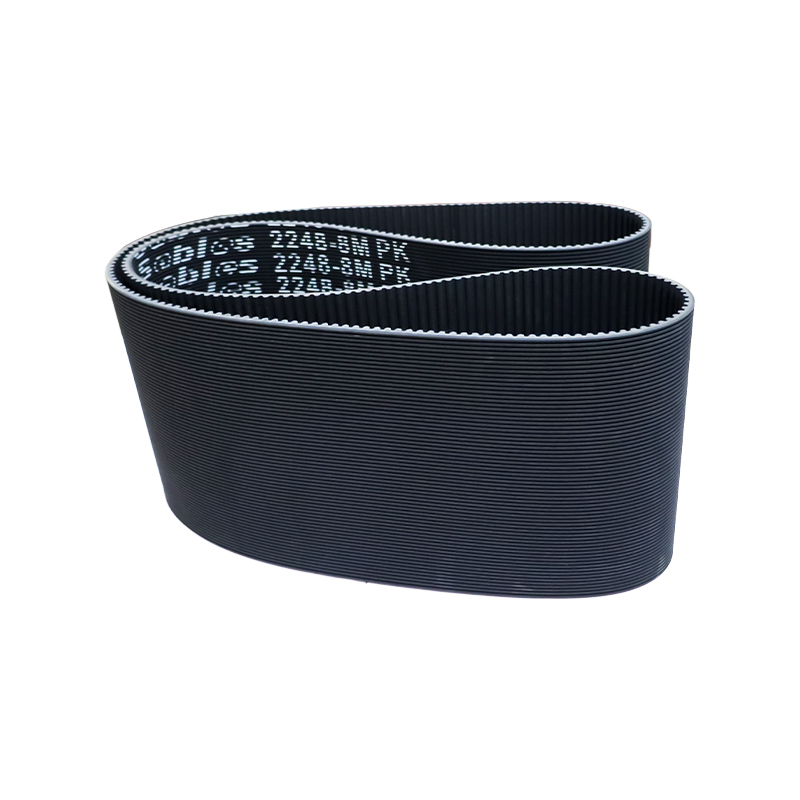
Rib Profile Standards: The International Designation System
The rib geometry of a rubber ribbed belt is not proprietary to any manufacturer -- it is defined by international standards that ensure complete interchangeability between belts and pulleys from different suppliers worldwide. The two governing standards are ISO 9981 (international) and DIN 7867 (European, harmonized with ISO 9981). Both specify identical rib dimensions across five standard profile designations:
| Profile |
Rib Pitch (mm) |
Rib Height (mm) |
Flank Angle |
Min. Pulley Dia. (mm) |
Typical Applications |
| PH |
1.60 |
0.80 |
40 deg. |
13 |
Medical devices, precision instruments, small appliances |
| PJ |
2.34 |
1.00 |
40 deg. |
20 |
Household appliances, fitness equipment, office machines |
| PK |
3.56 |
1.55 |
40 deg. |
45 |
Automotive engines, HVAC, light-to-medium industrial drives |
| PL |
4.70 |
2.00 |
40 deg. |
75 |
Agricultural machinery, heavy industrial compressors |
| PM |
9.40 |
3.76 |
40 deg. |
180 |
Very heavy industrial drives, large-diameter pulley systems |
Source: ISO 9981:1998 / DIN 7867. Rib pitch = center-to-center distance between adjacent ribs. Minimum pulley diameter is the smallest recommended sheave diameter for that profile.
A belt designation such as 6PK1750 encodes all three critical specification parameters in a standardized format: 6 = number of ribs, PK = profile designation, 1750 = effective length in millimeters. This notation system, defined in ISO 9981, makes cross-referencing between manufacturers and confirming correct replacement belt specifications straightforward for maintenance engineers globally.
Rubber Compound Materials: What Ribbed Belts Are Made Of
The rubber compound used in the rib body determines the belt's temperature operating range, chemical resistance, ozone resistance, and surface friction characteristics. Three compounds dominate the market, each suited to a distinct application environment.
EPDM -- The Modern Standard Compound
EPDM (ethylene propylene diene monomer) is the dominant compound in modern automotive ribbed belts and is increasingly used in industrial applications. Its key properties are:
- Temperature range: Continuous operation from -40 degrees C to +120 degrees C; intermittent tolerance to +150 degrees C
- Ozone resistance: Excellent -- EPDM contains no unsaturated carbon-carbon double bonds in its main polymer chain, making it inherently resistant to ozone attack that causes surface cracking in older compounds
- Service life: EPDM automotive ribbed belts are rated for 100,000 to 160,000 km of vehicle operation under normal conditions, compared to 40,000 to 60,000 km for previous-generation CR compound belts (source: SAE J1390 Belt Life Testing Standard, 2018)
- Wear behavior: EPDM wears gradually and evenly -- it does not crack or chunk at end of life the way CR compound does, which means visual inspection alone is insufficient. A rib wear gauge is required for accurate EPDM belt condition assessment.
CR -- Chloroprene (Neoprene) Compound
CR (chloroprene rubber, trade name Neoprene) was the industry standard before EPDM and remains in use where oil and fuel splash resistance is a priority. CR has better resistance to petroleum-based fluids than EPDM, making it the preferred choice for industrial gearbox drives, marine engine applications, and any environment where lubricant contamination of the belt surface is a regular operating condition. CR belts have a usable temperature range of approximately -30 degrees C to +100 degrees C and show visible cracking at end of life -- a more straightforward visual inspection indicator than EPDM wear.
Specialty High-Temperature Compounds
For industrial drives operating in continuous temperatures above 130 degrees C -- textile dryer systems, industrial oven conveyors, heated process machinery -- specialty fluoroelastomer or silicone-based rubber compounds are used. These materials maintain dimensional stability and grip properties at temperatures that cause conventional EPDM and CR compounds to soften, swell, or lose tensile strength. Fluoroelastomer ribbed belts can operate at continuous temperatures up to 200 degrees C in some formulations (source: Parker Hannifin Fluoroelastomer Technical Data, 2022).
How Rubber Ribbed Belts Are Manufactured
The manufacturing process for ribbed belts is precision-controlled at each stage, because dimensional tolerances at the micron level determine whether a belt will engage correctly with its pulleys, run quietly, and achieve its rated service life.
- Rubber compound mixing: Raw polymer (EPDM, CR, or specialty elastomer) is blended with carbon black, plasticizers, vulcanization agents, and processing aids in an internal mixer (Banbury-type) to produce a homogeneous compound with the target hardness, friction coefficient, and thermal properties. Compound rheology is tested before each production run.
- Cord preparation: Tensile cord yarns (polyester, aramid, or polyamide) are treated with an adhesive primer system -- typically an RFL (resorcinol-formaldehyde-latex) dip -- to promote bonding between the cord and the rubber matrix. Untreated cord would delaminate from the rubber under cyclic loading, causing premature belt failure.
- Belt building: A tubular belt sleeve is built on a cylindrical drum by sequentially wrapping layers: fabric back, cushion rubber, tensile cord (helically wound at precise tension and pitch), and rib rubber. The rib compound layer is applied as a flat sheet at this stage -- the rib profile is formed in the subsequent molding step.
- Vulcanization molding: The built sleeve is placed inside a heated mold with the ribbed profile machined into its interior surface. Applied heat (typically 160 to 180 degrees C) and pressure cause the rubber to vulcanize -- forming covalent sulfur cross-links between polymer chains that convert the thermoplastic compound into a thermoset elastomer with its final mechanical properties. The rib profile is simultaneously formed and cured in this single step.
- Cutting and finishing: The vulcanized sleeve is removed from the mold and cut into individual belts of the specified width (number of ribs). Belt edges are trimmed to remove flash, and each belt is inspected for dimensional conformance, surface defects, and correct rib profile geometry before marking with the designation code and length.
The entire process from compound mixing to finished belt inspection is governed by quality management standards including ISO/TS 16949 (automotive supply chain quality) and ISO 9001 (general manufacturing quality), ensuring consistency across production batches. Our Rubber Ribbed Belts are produced under these quality standards with full dimensional and material traceability from raw material to finished product.
Physical Characteristics: What a Rubber Ribbed Belt Looks and Feels Like
For engineers and technicians encountering ribbed belts for the first time, a precise physical description helps with identification and specification verification:
- Inner surface: Multiple parallel longitudinal V-shaped grooves running the full length of the belt. The groove profile is precise -- rib flanks meet at a defined angle (40 degrees for standard profiles), and rib tips and roots have small radii to reduce stress concentration. Running a fingernail along the inner surface reveals the distinct ridged texture of the rib crowns.
- Outer surface (back): Typically covered with a woven textile fabric -- usually a herringbone or plain weave in black or dark gray. This fabric surface has a cloth-like texture distinctly different from the rubbery rib surface. Designation codes, length markings, and profile labels are stamped or printed on this surface.
- Cross-section: Rectangular in overall profile. Width is determined by the number of ribs multiplied by rib pitch (e.g., a 6PK belt is 6 x 3.56 mm = 21.36 mm wide). Total thickness from rib tip to belt back is typically 4.0 to 4.5 mm for PK profile belts.
- Flexibility: A ribbed belt feels noticeably more flexible transversely (bending around a pulley) than longitudinally. Bending the belt across its width requires modest force; trying to stretch it along its length produces essentially no elongation due to the tensile cord reinforcement.
- Weight: A typical automotive 6PK1750 belt weighs approximately 120 to 160 grams, depending on the compound formulation and cord material. The low mass is a meaningful advantage in high-speed rotating systems where belt inertia contributes to parasitic energy losses.
How Rubber Ribbed Belts Differ From Other Belt Types
Placing ribbed belts in context with the other major belt types clarifies what makes them the correct choice for specific applications and where alternative designs are better suited:
| Belt Type |
Drive Surface |
Load Mechanism |
Speed Ratio Accuracy |
Min. Pulley Dia. |
Noise Level |
Typical Use |
| Ribbed belt (poly-V) |
Longitudinal ribs on inner face |
Friction + rib-flank shear |
Good (minor slip possible) |
45 mm (PK) |
Low |
Automotive, HVAC, appliances |
| Flat belt |
Flat inner surface |
Friction only |
Poor (slip under load) |
25 mm |
Very low |
Woodworking, light machinery |
| Classical V-belt |
Wedge-shaped flanks |
Wedge friction |
Good |
80-100 mm |
Moderate |
Industrial machinery, HVAC |
| Synchronous (timing) belt |
Transverse teeth |
Mechanical tooth engagement |
Exact (no slip) |
25-30 mm |
Moderate (tooth impact) |
Camshaft drives, CNC, robotics |
| Round belt |
Circular cross-section |
Friction only |
Poor |
10 mm |
Very low |
Light conveying, sewing machines |
Comparative data synthesized from Optibelt Technical Manual 2020 and ISO belt standard documentation. Min. pulley dia. = recommended minimum sheave diameter for standard conditions.
The key differentiator of the ribbed belt is its unique combination of compact cross-section, multi-shaft routing capability, and high power-to-width ratio. It cannot match a synchronous belt for exact speed ratio accuracy -- a small amount of slip is possible under peak overloads -- but for the vast majority of accessory drive applications where exact speed ratio is not critical, the ribbed belt's advantages in noise, compactness, and multi-pulley flexibility make it the superior choice.
Where Rubber Ribbed Belts Are Used: Application Categories
The range of machines and devices that use rubber ribbed belts is broader than most people realize. The belt's combination of compactness, efficiency, quiet operation, and long service life makes it suitable across an exceptionally wide power and speed range.
Automotive and Transportation
The automotive serpentine belt is the highest-volume application for PK-profile ribbed belts globally. A single 6PK or 7PK belt drives all engine accessories -- alternator, power steering pump, air conditioning compressor, and water pump -- in a continuous loop. The combined peak demand on this system can reach 15 to 20 kW during simultaneous accessory engagement (source: SAE Technical Paper 2017-01-1061). EPDM ribbed belts in this application are rated for 100,000 to 160,000 km service intervals under SAE J1390.
Industrial Machinery and Compressors
PK and PL profile ribbed belts drive compressors, fans, pumps, and generators in continuous industrial service. HVAC compressor drives running 8,000+ hours per year achieve service lives of 5 to 7 years in properly maintained installations (source: ASHRAE HVAC Systems and Equipment Handbook, Chapter 44, 2020). Aramid-cord ribbed belts are specified for high-torque industrial compressor drives where shock loading at start-up would over-stretch polyester cord belts.
Fitness and Consumer Equipment
PJ-profile ribbed belts power the drive mechanisms of treadmills, elliptical trainers, and stationary exercise bikes, where quiet operation and compact geometry are essential. Service life expectations in fitness equipment are 3,000 to 5,000 operating hours before replacement is recommended (source: Fitness Equipment Manufacturer's Association Technical Service Guidelines, 2021).
Household Appliances
Washing machine drum drives, tumble dryer drum drives, and vacuum cleaner motor-to-brush roller drives commonly use PJ ribbed belts. The PJ profile's 20 mm minimum pulley diameter allows extremely compact drive geometries inside appliances where interior space is constrained by the product's external dimensions.
Agricultural and Off-Highway Equipment
PL and PM profile ribbed belts drive harvesting machinery, irrigation pumps, and utility vehicle accessories where higher power and larger pulley diameters are standard. The agricultural environment -- dust, debris, temperature extremes, and seasonal start-after-long-storage cycles -- demands ribbed belts with robust compound formulations and strong static fatigue resistance.
Key Performance Advantages of Rubber Ribbed Belts
The widespread adoption of ribbed belts across such diverse application categories reflects a set of genuine performance advantages over alternative drive solutions. The most significant are:
- High power density: A 6PK ribbed belt transmits equivalent load to a triple V-belt array at 53% less total drive width (source: Continental PowerDrive Engineering Data, 2021). This compactness enables smaller machine envelopes and lighter rotating assemblies.
- High transmission efficiency: Power transfer efficiency of 96 to 99% -- compared to 93 to 96% for equivalent V-belt drives -- due to the load-sharing across multiple rib-groove contact points and reduced bending energy loss at small pulley diameters (source: Gates Power Transmission Efficiency Study, 2019).
- Low operating noise: Continuous rib-groove contact (no discrete tooth engagement events) combined with rubber vibration damping produces 4 to 7 dB lower noise than equivalent V-belt systems across the 500 Hz to 4 kHz range (source: SAE Technical Paper 2017-01-1061).
- Long maintenance-free service life: No lubrication required; no periodic re-tensioning when paired with automatic tensioners; EPDM compound rated to 160,000 km in automotive applications.
- Multi-shaft serpentine routing: A single ribbed belt can drive 6 to 8 accessory shafts in a continuous serpentine path -- an arrangement physically impossible with V-belts or chain drives without additional countershafts or idler arrangements.
- Small pulley capability: PK profile belts operate correctly on pulleys as small as 45 mm diameter, enabling compact machine designs that V-belts (minimum 80 to 100 mm) cannot accommodate (source: ISO 9981, Annex A).
How to Read a Rubber Ribbed Belt Designation
Every rubber ribbed belt carries a standardized designation code that encodes its complete specification. Being able to read this code correctly is essential for ordering the correct replacement belt or specifying the right belt for a new drive design.
The designation format defined in ISO 9981 is: [Number of Ribs][Profile][Effective Length in mm]
Example: 6PK1750
- 6 = number of ribs (determines belt width and load capacity)
- PK = profile designation (defines rib pitch, height, and flank angle per ISO 9981)
- 1750 = effective length in millimeters (the circumference measured at the pitch line of the belt, not the inside circumference)
Some manufacturers add a suffix indicating rubber compound (e.g., E for EPDM, C for CR) or tensile cord type. These suffixes are not universally standardized and vary by manufacturer, so always confirm the compound and cord specification separately from the dimensional designation when ordering for demanding applications. Our Rubber Ribbed Belts carry full ISO 9981 designation codes on every belt with compound and cord specifications available in the product documentation for each SKU.
Selecting and Specifying the Right Rubber Ribbed Belt
For replacement applications, the simplest and most reliable specification path is to match the designation code printed on the belt being replaced, or to reference the vehicle make/model/year or machine model number against the supplier's cross-reference database. For new drive designs, the selection process requires calculating five parameters:
- Design power: Multiply the transmitted power (kW) by a service factor (1.0 to 2.0 depending on load character and start-stop frequency) to determine the design power the belt must handle.
- Profile selection: Use the design power and drive speed (rpm of the smaller pulley) to enter the profile selection chart for ISO 9981 profiles. PK covers most automotive and light industrial applications; PL for heavier industrial; PJ for small appliances and fitness equipment.
- Number of ribs: Calculate the tangential force at the small pulley, then divide by the rated force per rib for the selected profile to determine the minimum rib count. Apply a safety factor of 1.2 to 1.5.
- Effective length: Calculate from the drive geometry (center distance, pulley diameters) using the standard pitch length formula for open or crossed belt drives. Ensure the automatic tensioner will be at mid-travel position with the calculated length.
- Compound and cord: Select EPDM + polyester for standard automotive and industrial applications; CR + polyester for oil-contamination environments; EPDM or CR + aramid for shock-load or high-tension drives; specialty compound for extreme temperature applications.
Following this systematic selection process ensures the chosen belt is neither under-specified (causing premature failure) nor over-specified (adding unnecessary cost and weight). Explore our complete range of Rubber Ribbed Belts -- available in PH, PJ, PK, PL, and PM profiles across a comprehensive range of lengths, rib counts, and compound specifications -- to find the correct belt for your automotive replacement or industrial drive application.



 中文简体
中文简体