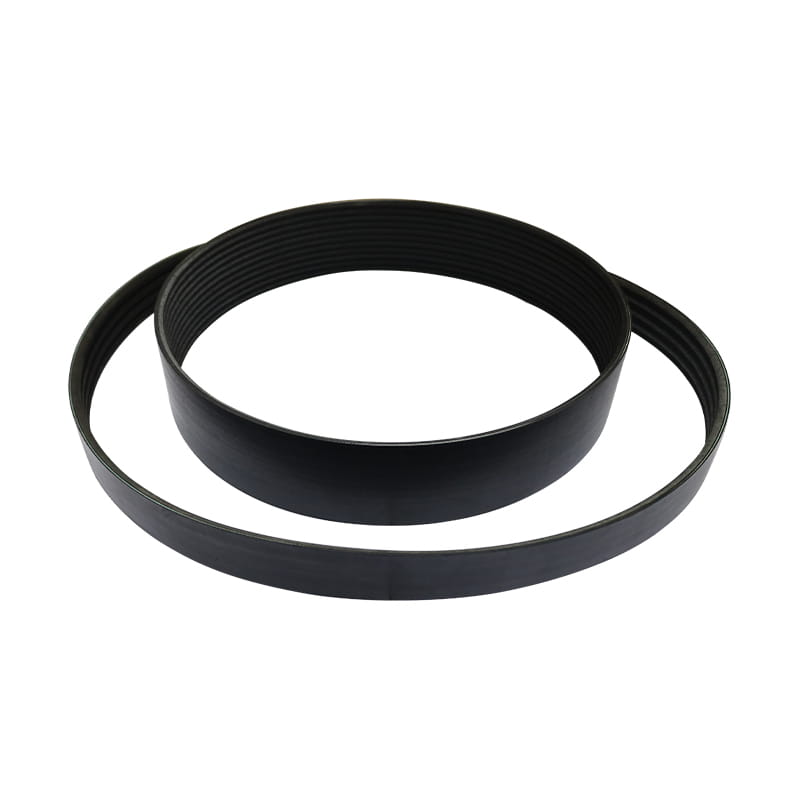
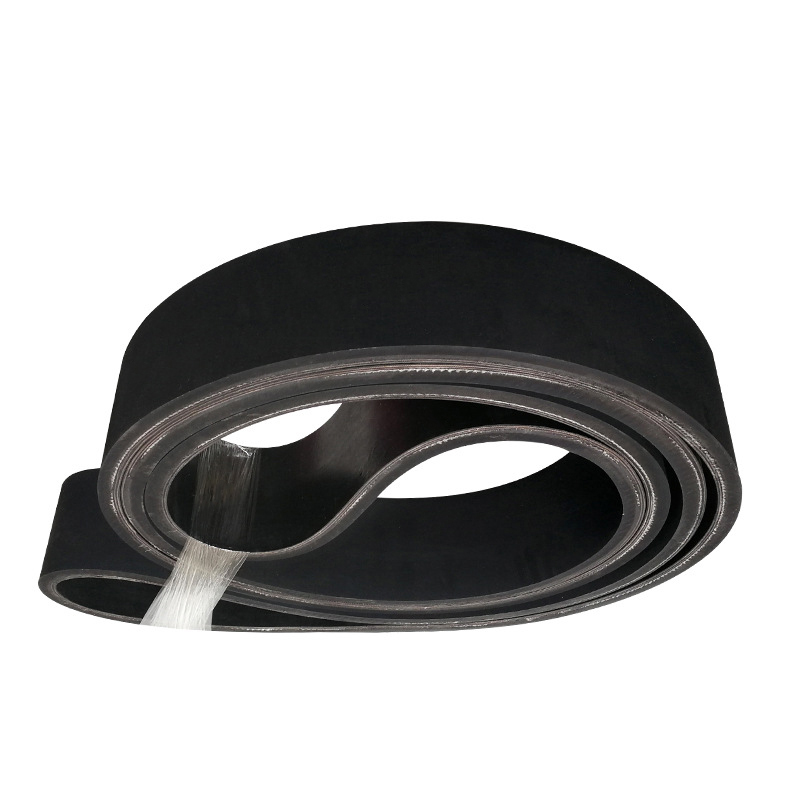
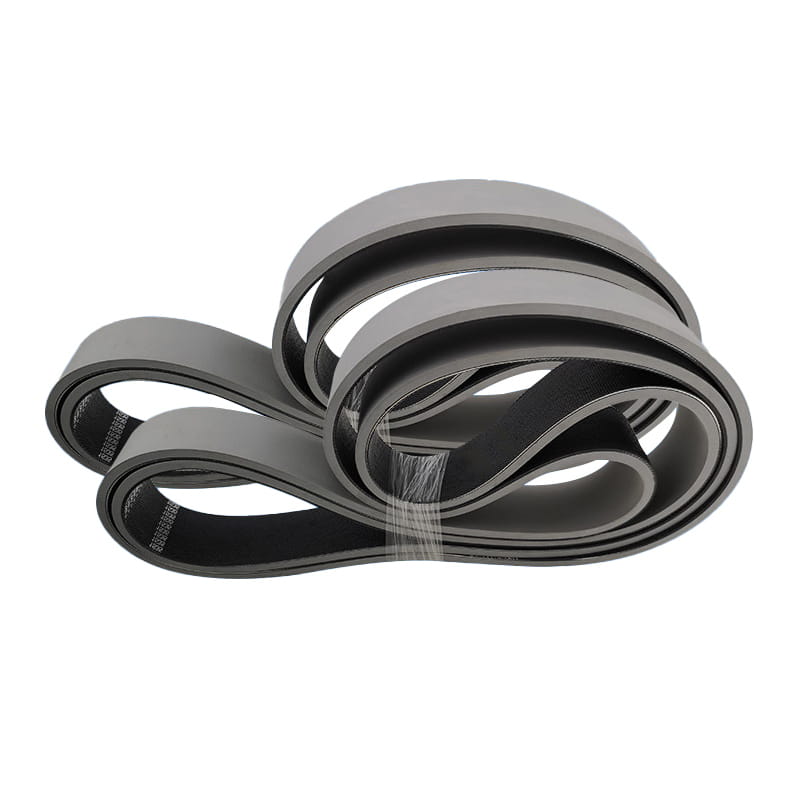
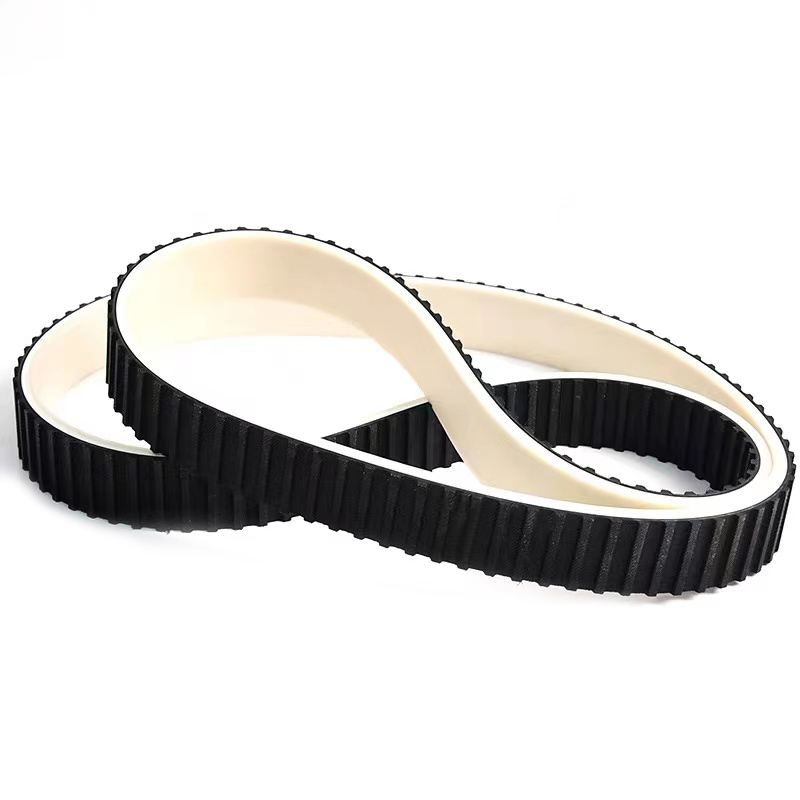
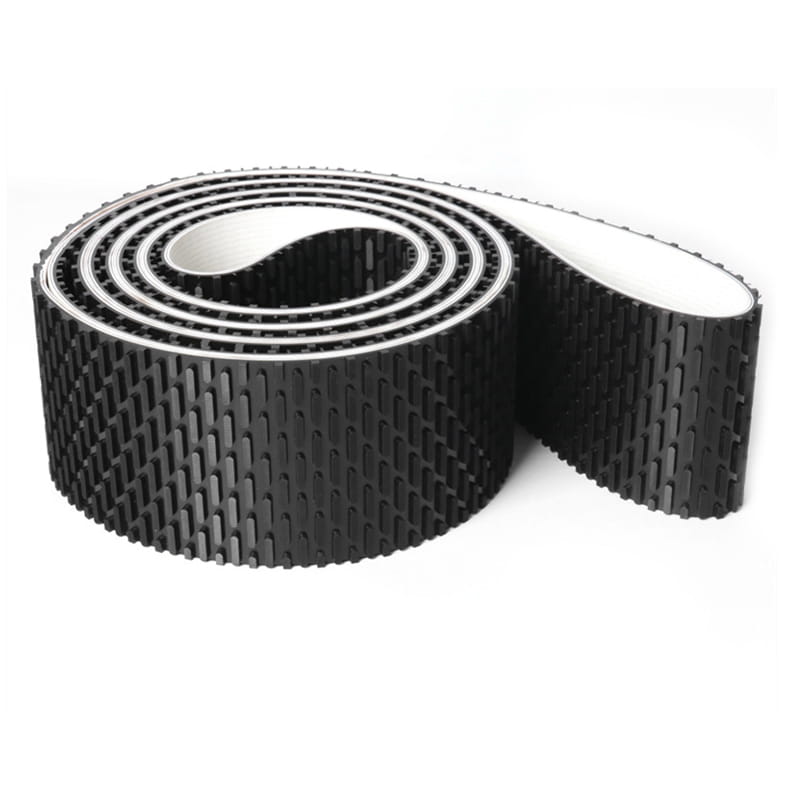
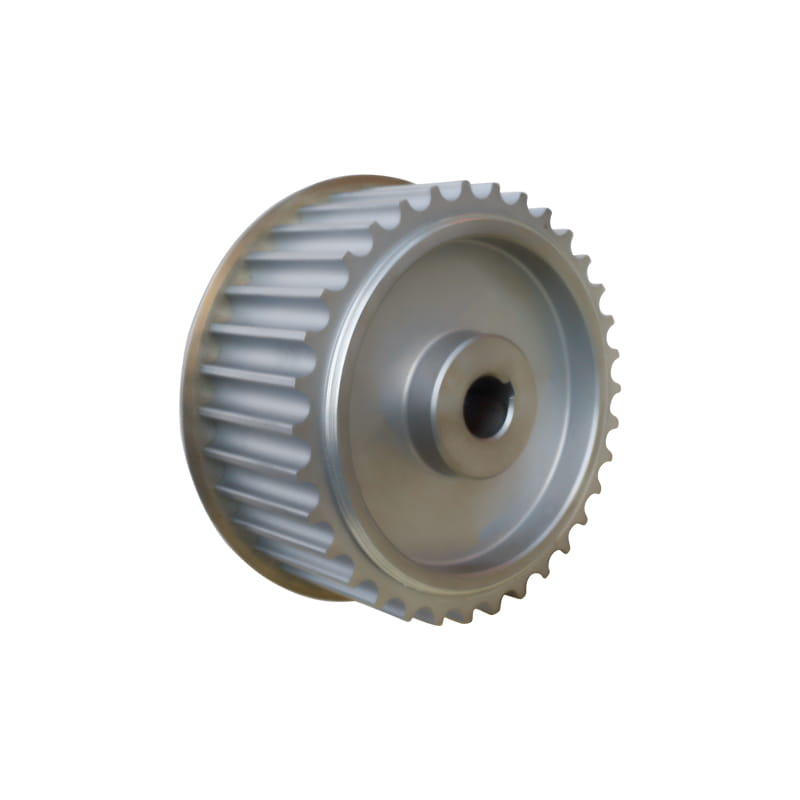
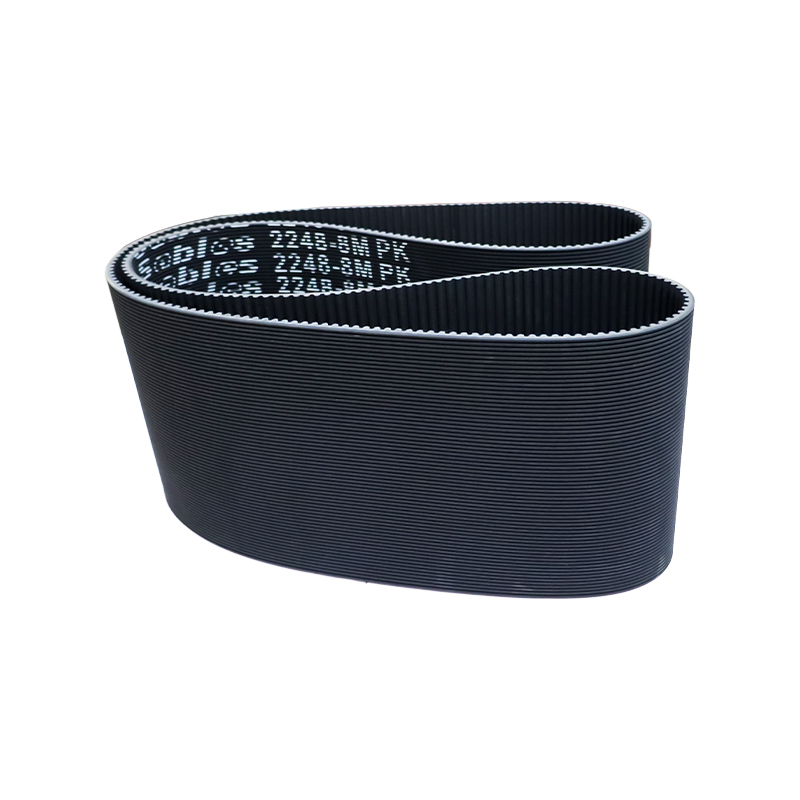
Rubber Ribbed Belts serve one primary function: transmitting rotational power from a drive source to one or more driven components with high efficiency, minimal slip, and quiet operation. The longitudinal ribs on the belt surface interlock with matching grooves on the pulleys, creating a positive grip that eliminates the slippage inherent in flat belt systems. In automotive engines alone, a single ribbed belt simultaneously drives the alternator, power steering pump, air conditioning compressor, and water pump -- handling combined loads that can exceed 15 to 20 kW of continuous power transfer. Beyond automotive use, ribbed belts are the preferred power transmission solution in industrial machinery, HVAC systems, fitness equipment, and home appliances wherever compact size, high torque capacity, and long service life are required together. This article explains each function in technical detail, with data and examples across application categories.
Core Function: Efficient Multi-Point Power Transmission
The defining functional characteristic of a rubber ribbed belt is its ability to drive multiple accessories from a single belt loop without the efficiency losses associated with chain drives or the noise and slip losses of flat belts. This multi-point capability comes from the combination of the ribbed profile's positive engagement with pulley grooves and the belt's flexibility to wrap around small-diameter pulleys at high belt speeds.
In a typical automotive serpentine configuration, one ribbed belt wraps around six to eight pulleys in a single continuous path, with tensioners maintaining correct belt tension throughout the loop. The power transfer efficiency of a properly tensioned ribbed belt system is typically 96 to 99% -- compared to 93 to 96% for a conventional V-belt system driving equivalent loads (source: Gates Power Transmission Efficiency Study, Engineering Reference, 2019).
The efficiency advantage comes from two mechanisms. First, the ribbed profile distributes the load across multiple rib-groove contact points simultaneously, reducing peak contact pressure at any single point and minimizing energy lost to deformation. Second, the longitudinal rib orientation allows the belt to flex across its width (around the pulley) while remaining rigid along its length (in the direction of load), which reduces the bending energy consumed per revolution.
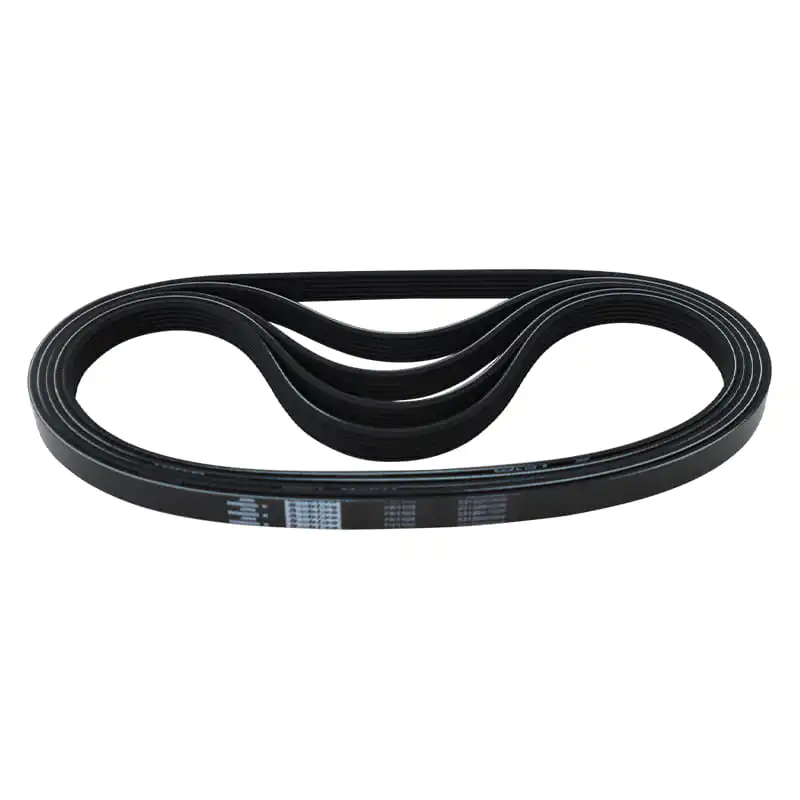
Anti-Slip Function: How Ribs Maintain Positive Engagement
Slip is the primary enemy of power transmission efficiency and belt longevity. In a flat belt system, the entire transmitted load is carried by friction between the belt surface and the pulley face. When load demand peaks -- during an engine start, a compressor engagement, or an industrial machine load spike -- friction alone may be insufficient, and the belt slips. Each slip event generates heat, abrades the belt surface, and deposits rubber residue on the pulley face, accelerating wear.
The ribbed profile eliminates this vulnerability by adding a geometric interlocking component to the engagement force. The rib flanks seat into the groove walls of the pulley, so the transmitted load is shared between frictional forces on the rib crown and mechanical shear forces on the rib flanks. This combined loading mechanism allows a ribbed belt to transmit the same load as a flat belt using 30 to 40% less belt tension, which in turn reduces the bearing loads on the driven shafts and extends bearing service life (source: Optibelt Technical Manual, Power Transmission Engineering, 2020).
The standard rib profile geometries -- designated PH, PJ, PK, PL, PM from narrowest to widest pitch -- are defined by ISO 9981 and DIN 7867, ensuring that any ribbed belt with a given profile designation will engage correctly with any pulley manufactured to the same standard. This standardization is what makes the ribbed belt system practical for global industrial and automotive supply chains.
| Profile |
Rib Pitch (mm) |
Rib Height (mm) |
Typical Application |
| PH |
1.60 |
0.80 |
Small appliances, medical devices, precision instruments |
| PJ |
2.34 |
1.00 |
Household appliances, fitness equipment, office machines |
| PK |
3.56 |
1.55 |
Automotive engines, light industrial machinery, HVAC |
| PL |
4.70 |
2.00 |
Agricultural equipment, heavy industrial drives |
| PM |
9.40 |
3.76 |
Heavy machinery, large industrial compressors |
Profile dimensions per ISO 9981 and DIN 7867. Rib pitch is the center-to-center distance between adjacent ribs.
Noise Reduction Function: Why Ribbed Belts Run Quietly
Noise is a critical performance parameter in both automotive and consumer product applications. A belt system that produces audible squeal, chatter, or rumble during operation is perceived as defective regardless of its functional performance, and in automotive applications, belt noise is one of the most common driver complaints reported to service departments worldwide.
Rubber ribbed belts achieve quiet operation through three mechanisms:
- Continuous rib-groove engagement: Unlike toothed (timing) belts, which produce a characteristic clapping sound as each tooth seats into a sprocket, ribbed belts maintain continuous sliding contact between rib flanks and groove walls. There is no discrete engagement event and therefore no repetitive impact noise.
- Rubber damping: The elastomeric rubber compound of the rib material absorbs and dissipates the micro-vibrations generated by load variations at the driven accessories. This damping function prevents vibration from being amplified and transmitted as airborne noise.
- High-speed stability: The tensile cord reinforcement running longitudinally through the belt body -- typically polyester, aramid, or EPDM-compatible fiber -- prevents the belt from oscillating transversely at high speeds, which is the primary source of resonance noise in flat and V-belt systems.
A field measurement study by the Society of Automotive Engineers (SAE Technical Paper 2017-01-1061) compared noise emission from a serpentine ribbed belt system against an equivalent V-belt array on an identical engine under identical loads and found that the ribbed belt system produced 4 to 7 dB less noise across the 500 Hz to 4 kHz frequency range -- a perceptible difference equivalent to a 50 to 75% reduction in perceived loudness (source: SAE Technical Paper 2017-01-1061).
Load Distribution Function: How Multiple Ribs Share Stress
One of the least understood but most important functions of the ribbed belt design is the way the multiple-rib cross-section distributes the transmitted load across the full belt width. In a single V-belt, the entire drive load is concentrated in one wedge-shaped contact zone. In a ribbed belt, the same total load is divided equally across all ribs in contact with the pulley simultaneously.
For a PK profile belt with 6 ribs (designated 6PK), the total drive force is distributed across six independent rib-groove contact zones. Each zone carries only one-sixth of the total load, reducing peak contact stress proportionally. Lower contact stress means less heat generation per unit area, less rubber deformation per revolution, and longer belt life under identical load conditions.
This load distribution principle is also what allows ribbed belt systems to be made narrower than equivalent V-belt systems for the same power rating. A 6PK ribbed belt at 21.4 mm overall width can transmit loads that would require a triple V-belt array at 46 mm total width -- a 53% reduction in drive width with equivalent power capacity, enabling smaller engine bays, more compact machinery, and reduced rotating mass (source: Continental PowerDrive Engineering Data, 2021).
Flexibility Function: Wrapping Small Pulleys Without Energy Loss
The ability to wrap around small-diameter pulleys is critical in compact drive systems where space constraints force the use of small accessory pulleys. A belt that is too stiff to conform to a small pulley radius experiences high bending stress at the point of contact, generating heat and fatigue cracking that dramatically shortens belt life.
Rubber ribbed belts achieve their characteristic flexibility through a combination of compound selection and cross-section geometry. The rib valleys -- the gaps between adjacent ribs -- act as flexural hinges that allow the belt to conform to pulley curvature with less total bending stress than a solid-section belt of equivalent thickness. Standard PK profile ribbed belts can operate on pulleys as small as 45 mm in diameter without exceeding the bending fatigue threshold of the rubber compound, compared to minimum pulley diameters of 80 to 100 mm for conventional V-belts of equivalent load capacity (source: ISO 9981, Annex A, Minimum Sheave Diameters).
This small-pulley capability is what makes ribbed belts the standard choice for automotive alternators, which typically use pulleys of 50 to 65 mm diameter spinning at 3 to 6 times crankshaft speed, and for fitness equipment treadmill drives where the motor and roller pulleys are constrained to small diameters by the machine's dimensional envelope.
Thermal and Chemical Resistance Function
In automotive engine bays and industrial machinery, rubber belts are exposed to elevated temperatures, petroleum-based fluids, ozone, and UV radiation -- all of which degrade conventional rubber compounds over time. The rubber formulations used in modern ribbed belts are specifically engineered to resist these environmental stresses and maintain their mechanical properties across the full service life of the belt.
EPDM (Ethylene Propylene Diene Monomer) Compound
EPDM is the dominant rubber compound for modern automotive ribbed belts. It offers:
- Temperature resistance: Continuous operation from -40 degrees C to +120 degrees C, with intermittent tolerance up to +150 degrees C -- covering the full range of underhood temperatures in modern engines
- Ozone resistance: EPDM does not contain double bonds in its backbone chain, making it inherently resistant to ozone attack -- the primary cause of surface cracking in older CR (chloroprene) belts
- Long service life: EPDM automotive ribbed belts are rated for service intervals of 100,000 to 160,000 km in passenger vehicle applications, compared to 40,000 to 60,000 km for previous-generation CR compound belts (source: SAE J1390, Belt Life Testing Standard, 2018)
CR (Chloroprene / Neoprene) Compound
CR compound belts retain strong performance in applications involving oil and fuel splash exposure, where EPDM's limited resistance to petroleum-based fluids is a disadvantage. CR ribbed belts are common in industrial gearbox input drives and marine engine applications where oil contamination is a regular operating condition.
High-Temperature Specialty Compounds
For industrial applications involving continuous temperatures above 130 degrees C -- such as dryer drives in textile processing or heated conveyor systems -- specialty fluoroelastomer or silicone-rubber ribbed belts are available. These compounds maintain dimensional stability and grip properties at temperatures that would cause conventional EPDM or CR compounds to soften, swell, or lose tensile strength.
Tensile Cord Function: The Load-Bearing Core of a Ribbed Belt
The rubber compound of a ribbed belt handles grip, flexibility, and environmental resistance, but the tensile strength of the belt -- its ability to resist stretching under load without creep or elongation -- is provided by the tensile cord layer embedded in the belt body just above the rib roots.
Three cord materials are in common use, each suited to a different set of operating requirements:
- Polyester cord: The standard choice for most automotive and light industrial applications. Offers good tensile strength (typically 1,200 to 1,800 N per rib for PK profile), moderate elongation resistance, and excellent fatigue resistance under cyclic loading. Cost-effective and widely available.
- Aramid (Kevlar-type) cord: Used in high-tension, high-shock-load applications. Aramid cord has approximately 5 to 6 times the tensile modulus of polyester -- meaning it stretches far less under load -- and can transmit higher peak forces without permanent elongation. Standard in heavy industrial drives and applications with frequent start-stop cycling.
- Polyamide (nylon) cord: Selected for applications requiring high flexibility combined with good tensile strength. Nylon cord is more elastic than aramid but more fatigue-resistant than polyester under high-speed flexing conditions. Used in some automotive and high-cycle consumer product applications.
The tensile cord is helically wound at a precise pitch angle during belt manufacturing, ensuring that the cord centerline runs parallel to the belt neutral axis. Any deviation from this alignment introduces asymmetric stress distribution that causes the belt to track off-center on the pulley -- a primary cause of premature edge wear and noise in improperly manufactured belts.
Function in Automotive Engines: Serpentine Drive Systems
The automotive serpentine drive is the application that most consumers encounter when they interact with rubber ribbed belts, even without realizing it. In a typical passenger vehicle engine, a single ribbed belt -- usually 6PK or 7PK profile -- drives all engine accessories in a single continuous loop, replacing the multiple individual V-belts used in older designs.
The accessories driven in a standard serpentine system include:
- Alternator: Generates electrical power for battery charging and all vehicle electrical loads; typically the highest-power accessory at 1.5 to 3 kW continuous demand
- Power steering pump: Provides hydraulic pressure for steering assist; demand varies from near-zero at straight-ahead driving to 2 to 4 kW during full-lock steering maneuvers
- Air conditioning compressor: The largest intermittent load on the serpentine system; engages suddenly and demands up to 5 to 7 kW when the compressor clutch activates
- Water pump (where belt-driven): Continuous load of 0.5 to 1.5 kW for coolant circulation
- Idler and tensioner pulleys: Maintain belt tension and guide the belt path; no power consumption but critical to belt alignment and tension consistency
The total combined load demand on a serpentine ribbed belt system can reach 15 to 20 kW during peak simultaneous accessory engagement -- for example, when the air conditioning compressor engages at idle while the alternator is charging a low battery and the power steering is at full lock. The ribbed belt handles this peak demand without slipping, stretching, or generating excessive heat because the load is distributed across the full rib width and the EPDM compound maintains its mechanical properties at the elevated temperatures generated by peak loading.
Our Rubber Ribbed Belts are engineered to meet the full-spectrum demands of serpentine drive systems, with EPDM compound formulations and polyester or aramid tensile cords selected to match specific OEM specifications across passenger vehicle, light commercial, and performance engine applications.
Function in Industrial Machinery: Variable-Load Drives
In industrial settings, rubber ribbed belts serve the same fundamental power transmission function as in automotive applications but under significantly different operating conditions: longer continuous run times, wider ambient temperature ranges, higher peak loads, and in many cases, exposure to dust, moisture, and chemical contamination.
HVAC and Refrigeration Systems
Commercial HVAC systems use ribbed belts to drive compressors, fans, and blowers in continuous-duty cycles running 8,000 to 8,760 hours per year. The key performance requirement in this application is long service life under continuous moderate load with minimal maintenance intervention. EPDM ribbed belts in correctly maintained HVAC drives achieve service lives of 5 to 7 years in well-maintained installations (source: ASHRAE HVAC Systems and Equipment Handbook, Chapter 44, 2020).
Industrial Compressors
Air compressors, hydraulic power units, and refrigeration compressors use ribbed belts to transmit power from electric motors to compressor heads. The shock load generated when a compressor engages under pressure is one of the most demanding conditions a ribbed belt faces. Aramid-cord ribbed belts are specified in these applications because their low elongation under shock loading maintains correct belt tension through the engagement transient without momentary slipping.
Fitness and Medical Equipment
Treadmills, elliptical trainers, stationary bikes, and clinical diagnostic imaging equipment use PJ-profile ribbed belts to transmit motor power to the driven mechanism. The requirements in this application category are quiet operation (user experience), compact geometry (small pulley diameters), and long service life under cyclic loading patterns. PJ ribbed belts in fitness equipment typically achieve service lives of 3,000 to 5,000 operating hours before replacement is recommended (source: Fitness Equipment Manufacturer's Association Technical Service Guidelines, 2021).
Maintenance Function: Indicators That Tell You When to Replace
A correctly functioning rubber ribbed belt requires no lubrication, no periodic adjustment (when paired with an automatic tensioner), and no routine maintenance beyond periodic visual inspection. However, the belt does wear over its service life, and recognizing the wear indicators that indicate replacement is due is an important functional understanding for maintenance engineers and vehicle owners alike.
| Wear Indicator |
What It Indicates |
Action Required |
| Rib cracking or chunking |
Rubber compound fatigue from thermal cycling or age hardening |
Replace immediately -- risk of sudden belt failure |
| Glazed rib surface |
Heat-hardened surface from chronic slip or contamination with belt dressing |
Replace belt; inspect pulleys for glazing; identify slip root cause |
| Rib wear (reduced rib height) |
Abrasive wear from misaligned pulleys or contamination with grit |
Replace belt; check pulley alignment to within 0.5 degrees |
| Belt edge fraying |
Pulley misalignment causing belt to track against flanges |
Replace belt; correct pulley alignment before installing new belt |
| Pilling (rubber granules on rib surface) |
Rubber transfer from slip events -- common in EPDM belts approaching end of service life |
Replace belt if pilling is accompanied by noise or performance reduction |
| Tensile cord exposure |
Severe rubber loss exposing the load-bearing cord layer |
Replace immediately -- imminent catastrophic failure risk |
Wear indicators per SAE J1609 Visual Belt Condition Assessment Guide and Optibelt Technical Manual, 2020.
An important note for EPDM belts specifically: modern EPDM compound does not crack or fray visibly at end of life the way older CR compound belts did. An EPDM belt can appear externally sound while the rib profile has worn beyond specification. A rib wear gauge -- a simple go/no-go template available from most belt suppliers -- is the reliable inspection method for EPDM belt condition assessment.
Comparing Ribbed Belt Performance to Alternative Drive Solutions
Understanding what rubber ribbed belts do requires understanding where they fit in the landscape of power transmission options. The table below positions ribbed belts against the most common alternatives across the dimensions that matter most to engineers specifying drive systems:
| Property |
Ribbed Belt |
V-Belt |
Flat Belt |
Chain Drive |
Gear Drive |
| Power transmission efficiency |
96-99% |
93-96% |
95-99% |
97-99% |
98-99% |
| Minimum pulley diameter |
45 mm (PK) |
80-100 mm |
25-50 mm |
50 mm (sprocket) |
20 mm (gear) |
| Multi-shaft capability |
Excellent -- serpentine routing |
Limited -- one belt per drive |
Limited |
Limited |
Requires gear trains |
| Noise level |
Low |
Moderate |
Low |
High |
Moderate to high |
| Lubrication required |
No |
No |
No |
Yes |
Yes |
| Vibration damping |
Good -- rubber absorbs shock |
Moderate |
Good |
Poor |
Poor |
| Misalignment tolerance |
Moderate (max 0.5-1.0 degree) |
Good |
Good |
Low |
Very low |
| Typical service life |
100,000-160,000 km (auto); 5-7 years (industrial) |
40,000-80,000 km (auto); 2-4 years (industrial) |
3-6 years (industrial) |
3-5 years (lubricated) |
10+ years (enclosed) |
Efficiency data: Gates Engineering Reference 2019; service life data: SAE J1390 2018; ASHRAE Handbook 2020. Auto = passenger vehicle application. Industrial = continuous-duty mechanical drive.
Selecting the Right Rubber Ribbed Belt for Your Application
Specifying the correct ribbed belt for a given application requires matching five variables: profile designation, number of ribs, effective length, rubber compound, and tensile cord material. An incorrect selection in any of these variables produces either premature failure (under-specified belt) or unnecessary cost (over-specified belt).
- Profile (PH, PJ, PK, PL, PM): Determined by the drive power and pulley diameter. PK is the standard for automotive and most industrial applications; PJ for small appliances and fitness equipment; PL and PM for heavy industrial drives.
- Number of ribs: Determines load capacity. Calculate the required drive force from power (kW) and belt speed (m/s), then select the minimum rib count that provides the required force capacity with a design safety factor of 1.2 to 1.5.
- Effective length: The inside circumference of the belt loop, measured around the pulley pitch diameters. Must be specified precisely to ensure correct tension with the tensioner at its mid-travel position.
- Rubber compound: EPDM for most automotive and industrial applications; CR for oil-contamination environments; specialty compounds for temperatures above 130 degrees C or chemical exposure.
- Tensile cord: Polyester for standard applications; aramid for high-tension or shock-load drives; polyamide for high-cycle flexible drives.
For automotive replacement applications, the OEM part number or vehicle make/model/year combination is the simplest specification path. For industrial applications where no OEM reference exists, our engineering team can assist in calculating the correct belt specification from your drive geometry and power requirements. Explore our full range of Rubber Ribbed Belts to find the profile, compound, and length combination that matches your application requirements.



 中文简体
中文简体