Replacing a cast iron pulley is rarely just a matter of matching the outside diameter. A packaging plant recently ordered a 250 mm two-groove cast iron sheave for an aging drive, fitted it during a weekend shutdown, and still had belt squeal by the second shift. The bore was correct. The groove angle was not, so the belt sat too deep, lost grip and generated heat instead of torque. Cast iron pulleys look simple on paper, but the details that decide whether a drive runs quietly for years or fails early are the ones a tape measure cannot check.
For most industrial drives running below roughly 35 m/s of rim speed, gray cast iron remains the practical first choice for a pulley. The reasons are mechanical rather than traditional: vibration damping, groove wear resistance, heat dissipation and easy machining. Steel and aluminum have their places, but those places are narrower than most catalogues suggest.
Why Cast Iron Is Still the Practical Default
Gray iron, the flake graphite material used for the majority of industrial sheaves, brings three properties that matter directly to a belt drive.
The first is damping. Graphite flakes interrupt the metal matrix and convert vibration into a small amount of internal friction. On a belt drive this shows up as less noise, less belt flap and slower fatigue of the belt tensile cords. Steel pulleys ring and pass vibration along. Cast iron absorbs it.
The second is groove wear resistance. Graphite also acts as a dry lubricant at the contact surface, which is why cast iron grooves hold their profile longer than aluminum grooves in the same duty. A V-belt sheave that loses a few degrees of groove angle begins to slip, slip produces heat, and heat shortens belt life.
The third is thermal behavior. Cast iron moves heat away from the belt contact area well and holds its shape at the temperatures a slipping belt creates. Aluminum conducts heat faster, but its grooves deform and wear far sooner under the same load.
The trade off is brittleness. Gray iron has very little elongation, so it does not tolerate shock loads or severe misalignment. If a jam stops the driven machine instantly, a thin-rimmed gray iron pulley can crack. Where shock loading is normal, ductile iron is the correct upgrade, and it machines almost as easily.
Gray Iron, Ductile Iron, Steel and Aluminum Compared
Indicative property ranges for common pulley materials. Confirm the exact grade and heat treatment with the foundry or pulley supplier before finalising a design.
| Material |
Typical tensile strength |
Elongation |
Best suited to |
Main limitation |
| Gray iron |
200 to 300 MPa |
Under 1 percent |
General V-belt, flat belt and light timing drives where damping matters |
Brittle, low shock resistance |
| Ductile iron |
400 to 450 MPa |
12 to 18 percent |
Shock loaded drives, higher rim speeds, crushers and mixers |
Higher cost, slightly lower damping |
| Cast or fabricated steel |
400 to 550 MPa |
15 to 25 percent |
Very high rim speeds, welded repair work, heavy duty drives |
Louder, less damping, corrodes without coating |
| Aluminum |
300 to 350 MPa |
8 to 12 percent |
Light duty, low inertia, portable equipment |
Soft grooves, faster wear, lower speed limit |
The table is a starting point, not a specification. Rim speed is usually the deciding factor, because the tensile strength of the material sets the speed at which a pulley can run safely. Elongation decides how much shock the same pulley can absorb without cracking.
Groove Profiles: Matching the Pulley to the Belt
A pulley is only half of a pair. Whatever the material, the groove has to match the belt that runs in it.
V-belt and wide-angle sheaves
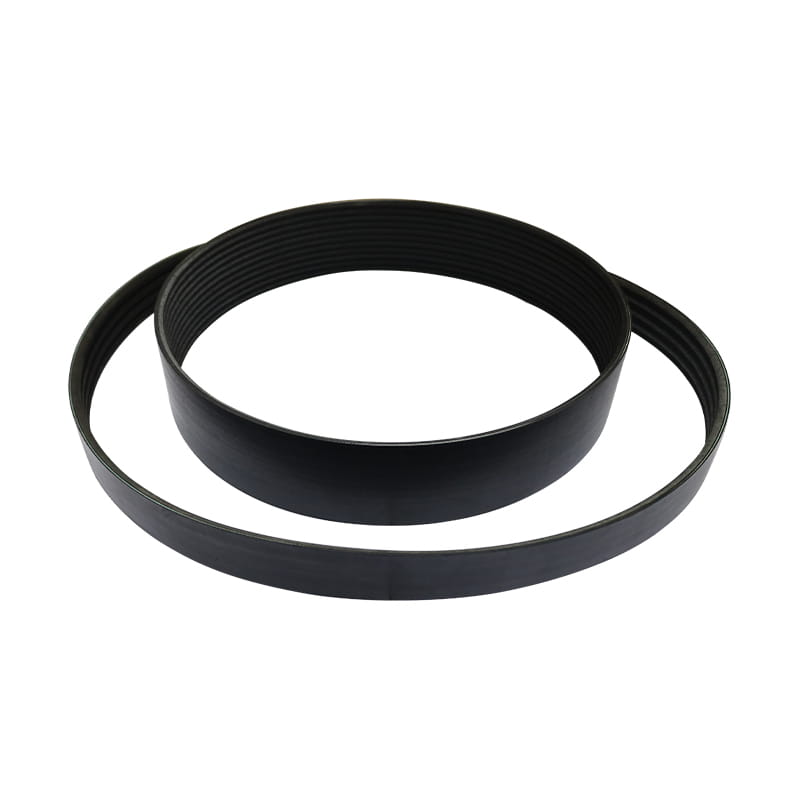
V-belt sheaves use groove angles of 34, 36 or 38 degrees, and the correct angle depends on the datum diameter of the sheave rather than on the belt alone. Smaller sheaves need a narrower angle because the belt bends more sharply and its cross section changes shape as it wraps. Wide-angle belts are a different family again: they run in shallower, wider grooves and are common on high-ratio drives in industrial machinery. When a replacement sheave is ordered by outside diameter alone, the groove angle becomes a guess, and a wrong guess either slips under load or chews the belt sidewalls.
Timing belt pulleys
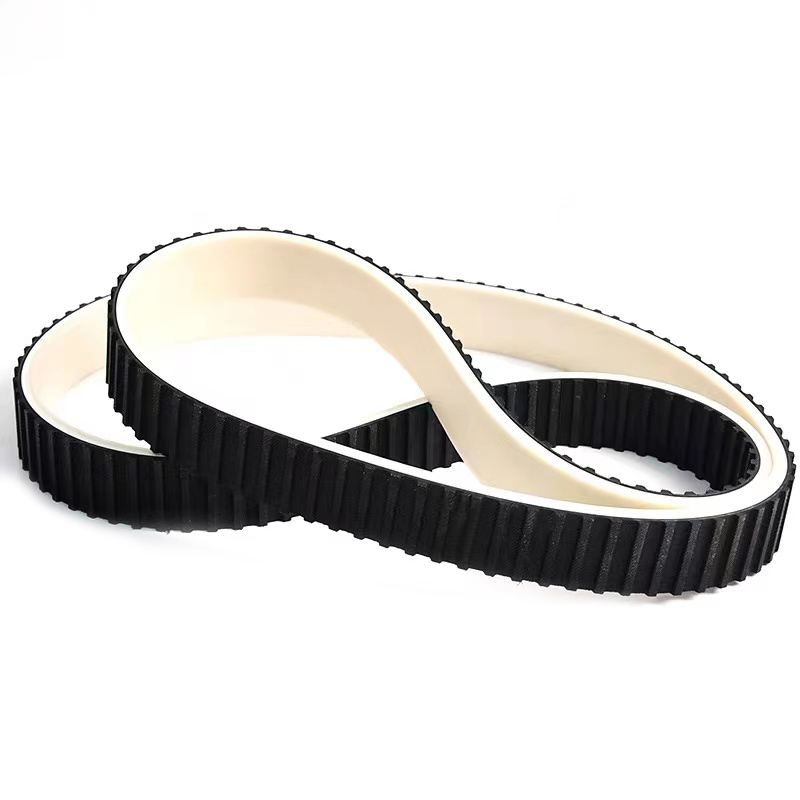
Where the drive is synchronous, the pulley is a toothed sprocket rather than a grooved sheave. Tooth profile, pitch and tooth width must match the belt exactly. A trapezoidal pulley will not run correctly with a curvilinear belt, and backlash changes as soon as the profile is wrong. Because the tooth flanks carry the load, a synchronous pulley is normally machined after casting and then inspected for profile and runout. The relationship between belt tooth geometry and pulley tooth geometry is covered in this guide to matching belt tooth profiles to pulleys.
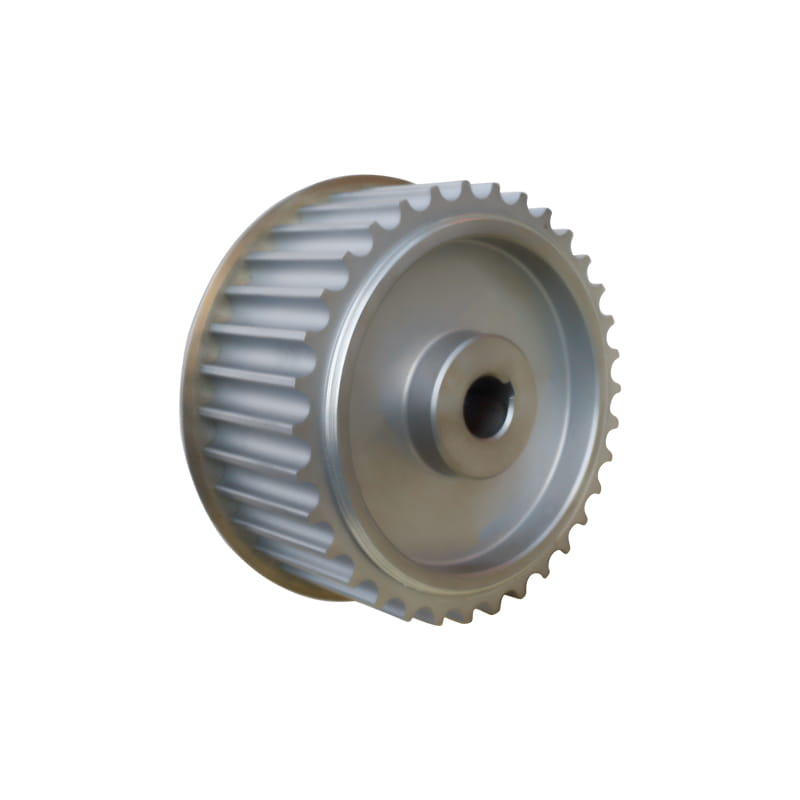 Synchronous Pulley for Toothed Belt Drive SystemsA synchronous pulley for toothed drive systems, customizable in steel, aluminium alloy, stainless steel, cast iron or nylon to suit belt tooth profiles.View Product →
Flat belt pulleys
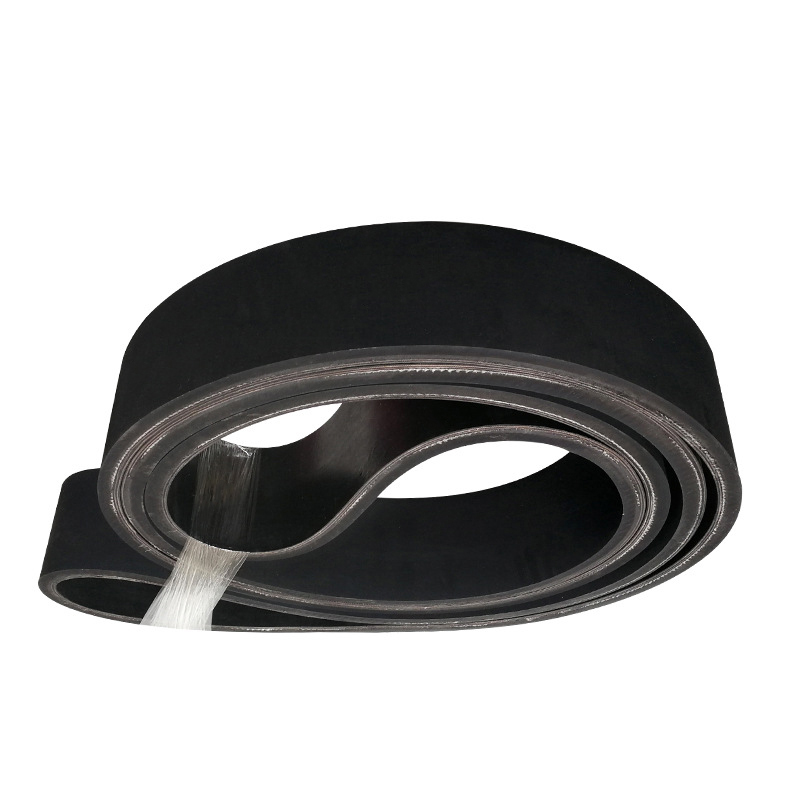
Flat belt pulleys rely on a slight crown, typically around 0.5 to 1 percent of face width, to keep the belt centred. A worn flat pulley that has lost its crown or developed a shoulder will track badly no matter how carefully the drive is aligned.
Tolerances, Balance and Rim Speed That Actually Matter
Three measurements cause most of the trouble when a new cast iron pulley is fitted.
- Bore and keyway fit. A finished bore is machined to a close running fit. A bore that is too loose lets the pulley work on the shaft, and fretting damage follows within weeks.
- Radial and axial runout at the groove. Runout at the rim is what the belt feels as a periodic tug. Check it with a dial indicator after mounting, not on the bench.
- Balance. Single groove pulleys at moderate speed are usually satisfactory with static balancing. Multi-groove sheaves, wide faces and anything above roughly 1000 rpm should be dynamically balanced, especially if the pulley is going onto a machine with sensitive bearings.
Rim speed then sets the ceiling. Gray iron is commonly limited to about 35 m/s, while ductile iron and steel allow more because their tensile strength is higher. Centrifugal force grows with the square of speed, so over-speeding a cast pulley does not produce a gradual warning. It produces a sudden failure, which is why the speed calculation belongs in the selection process, not in the commissioning checklist.
Bore, Keyway and Mounting Options
Cast iron pulleys are supplied in several mounting formats, and the choice affects maintenance more than it affects performance.
- Pilot bore. Supplied with a small bore for the customer to machine to the shaft size. This suits OEM builds where the shaft tolerance is known precisely.
- Finished bore with keyway. Ready to mount, provided the shaft diameter, key size and key length are confirmed before ordering.
- Taper lock and QD bushings. The pulley mounts on a split bushing clamped to the shaft. Removal is quick and the shaft is not damaged, which matters on equipment with frequent changeovers.
- Split pulleys. Used where the pulley has to be fitted without dismantling the shaft or removing bearings.
Whichever format is chosen, inspect the shaft before fitting. A worn shaft with visible fretting or a measured runout above the tolerance will destroy a new pulley just as quickly as a worn bore would. Re-boring an existing cast iron pulley is often economic when the shaft has been turned down, provided enough wall thickness remains around the bore.
A Practical Selection Checklist
- Identify the belt first: V-belt cross section, wide-angle profile, or timing belt tooth profile and pitch.
- Confirm the number of grooves or the tooth count, and the datum or pitch diameter rather than the outside diameter.
- Calculate rim speed from diameter and rpm, then confirm the material limit for that speed.
- Specify bore, keyway and mounting method, and measure the shaft for wear and runout.
- State the balance requirement, plus environment factors such as wash-down, moisture, dust and ambient temperature.
- Request the inspection record for critical drives: profile tolerance, runout and balance report.
Most ordering errors trace back to step one or step two. Belt first, pulley second, speed check third.
Wear, Re-grooving and When to Replace
Belts leave a readable record of pulley condition. A belt worn on one sidewall points to misalignment. A belt polished across the base, with the cords beginning to show, indicates a groove that has worn deeper than its datum diameter allows. Glazing on the sidewalls usually means slip, and slip usually means the groove angle has opened up.
Cast iron can often be re-machined. If wall thickness allows, the grooves can be recut to the original angle, and the pulley returns to service at a slightly reduced diameter. Two limits apply: the resulting minimum diameter must still allow the belt to bend without cracking, and the pulley must be re-balanced after machining. Beyond those limits, replacement is cheaper than another belt failure.
When a pulley is replaced, replace the belt at the same time and re-check alignment and tension after a few hours of running. Reusing a belt that has already taken a set to a worn groove simply transfers the old wear pattern onto the new component.
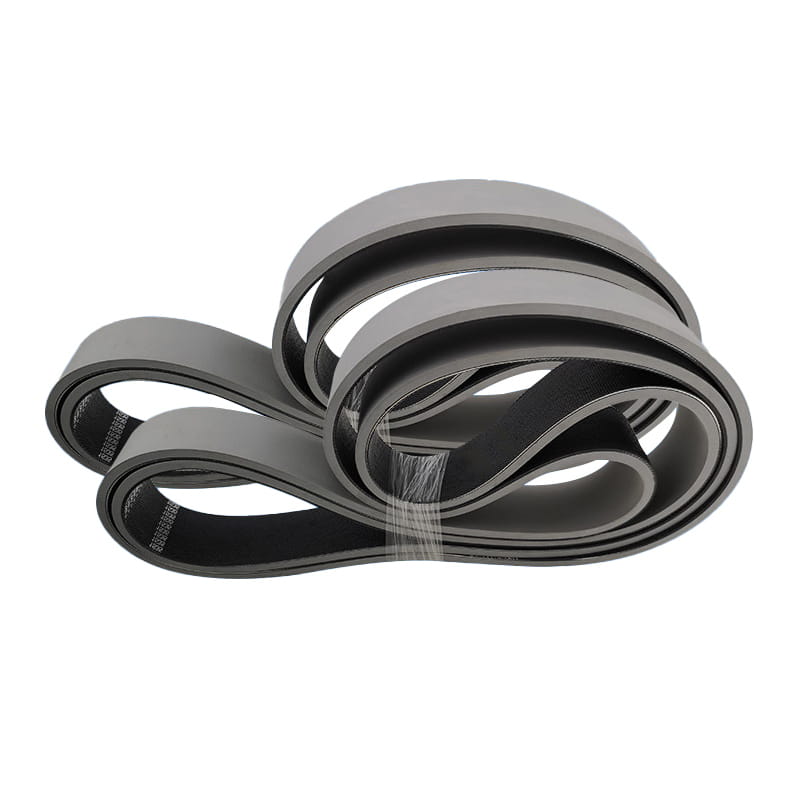
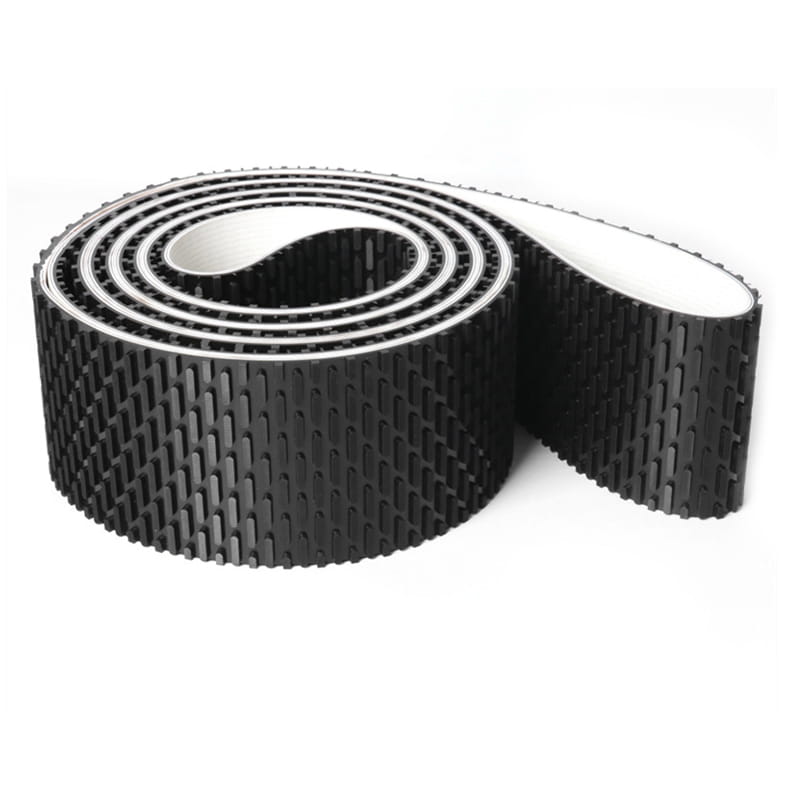
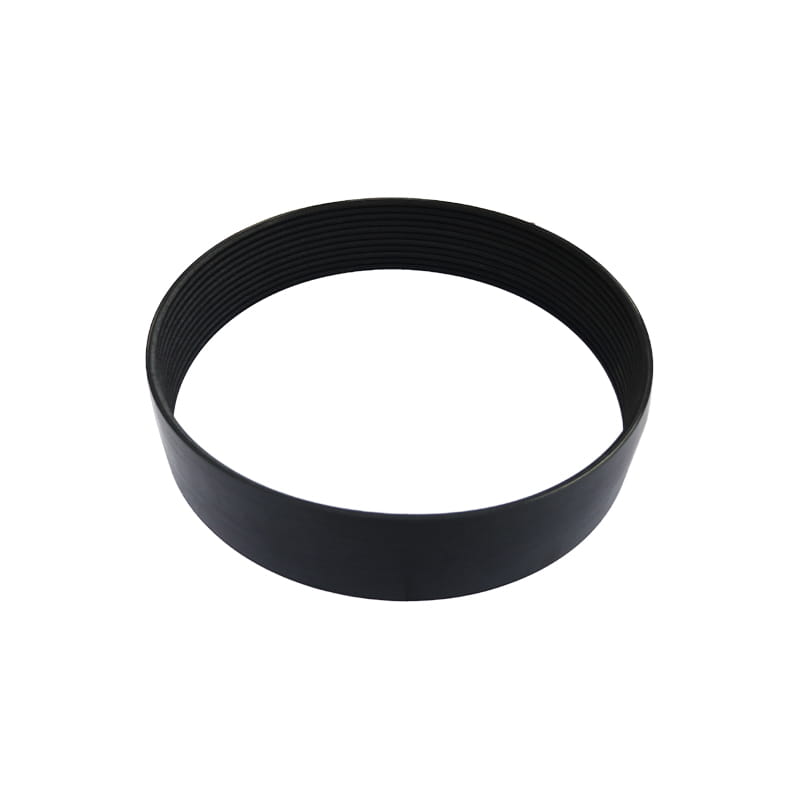 Rubber Wide-Angle Belt with 60° Wedge AngleA 60° wedge-angle rubber belt for industrial drives, available in PU, CR and EPDM with 3M–11M sections and reduced tension drop after installation.View Product →
Belts and Pulleys Work as One System
A large share of premature drive failures come from buying the belt and the pulley from separate sources and hoping the two agree. Groove angle, tooth profile, datum diameter and belt length all interact, and a small mismatch in any of them shows up as noise, heat or short belt life within days of commissioning.
Jiangxi Kangqi Industrial manufactures rubber synchronous belts and special belts under the SABLES and KML brands, and supplies matching pulley components, so belt and pulley can be specified together against the same drawing. The company also works as a distributor of Bando belts, which helps when an existing machine is tied to a specified belt brand and the pulley has to be made to suit it. You can review our belt and pulley range by application, from high-speed packaging and printing drives to sanding machines and food processing equipment.
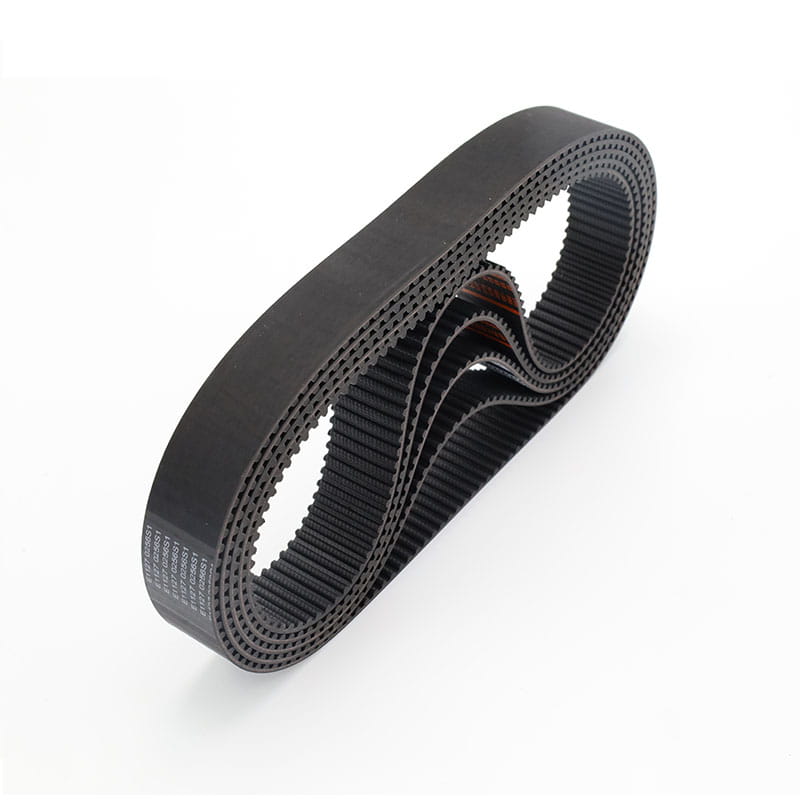 Rubber Synchronous Belt for Positioning and TransmissionRubber timing belt with glass fiber cord and wear-resistant nylon teeth, suitable for positioning and conveying; specify with matching pulleys as a set.View Product →
Ordering the two components as a matched set removes the most common source of argument during commissioning, because there is one drawing, one tolerance set and one party responsible for the fit.
Cast iron remains the sensible default for the majority of industrial pulleys, but the material is only part of the decision. Match the groove or tooth profile to the belt, keep the bore and keyway fit close, check runout on the machine rather than on the bench, and respect the rim speed limit of the grade you have chosen. Those four checks cost an hour at the planning stage and save far more than that in unplanned stops.



 中文简体
中文简体