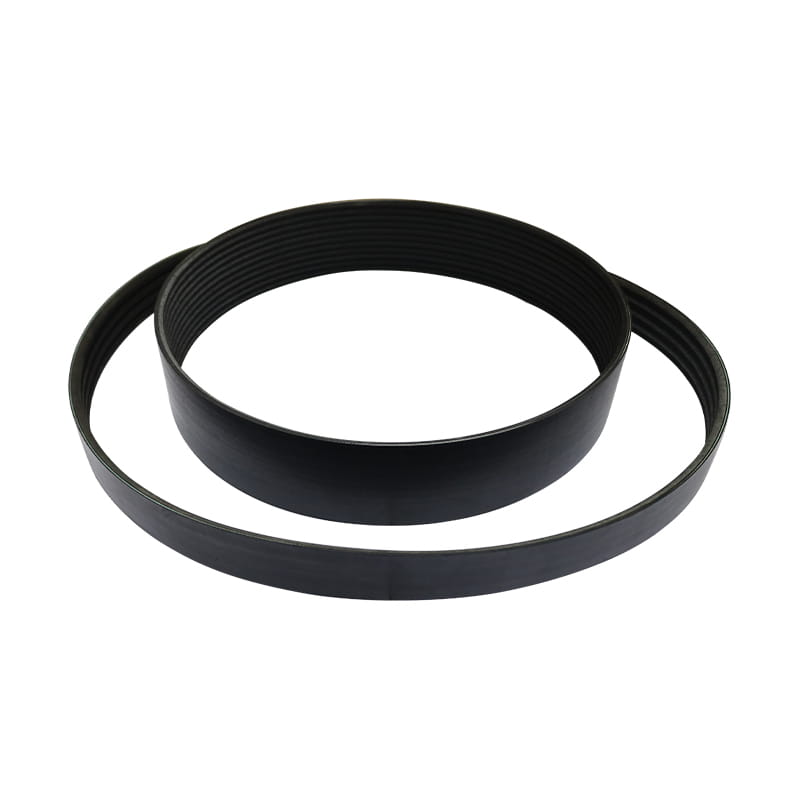
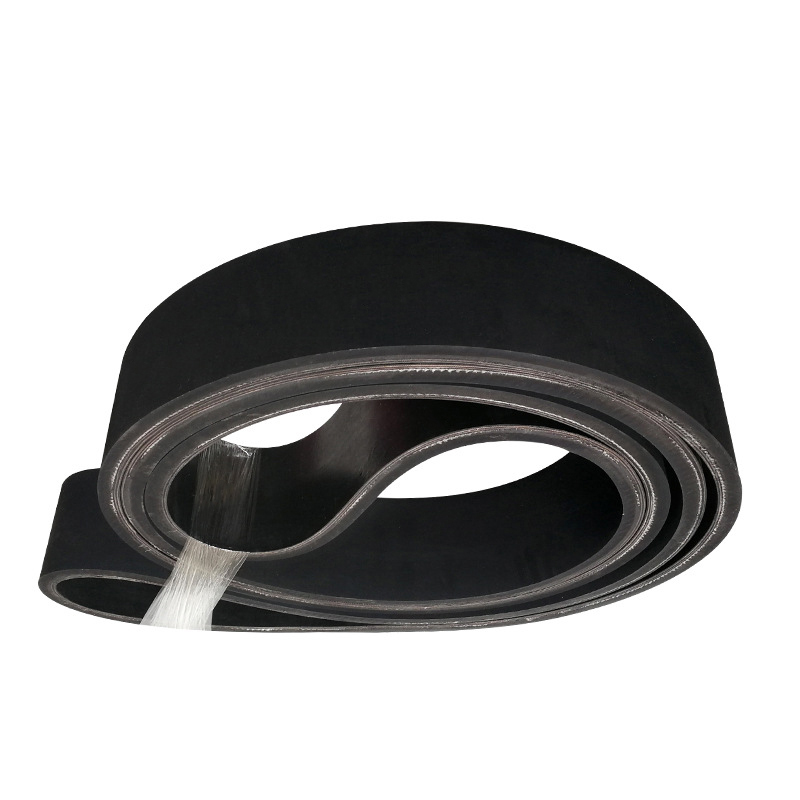
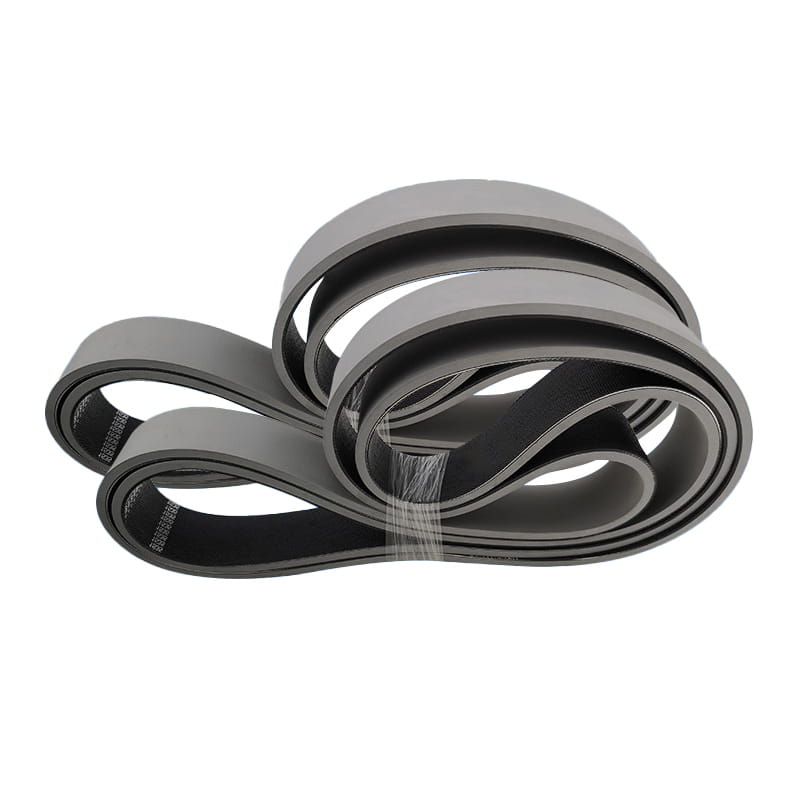
A packaging line stops when a timing belt stretches and loses registration. The replacement belt looks the same, but the cord fabric inside it is different. That hidden woven layer controls elongation, load distribution, and flex life. Cord fabric is widely known from tire manufacturing, yet the same reinforcement logic applies to industrial belts. The practical rule is to specify the fabric by fiber, construction, adhesion, and test data, not by name alone.
What Cord Fabric Does in a Rubber Belt
In an industrial belt, cord fabric usually means a woven fabric with strong warp cords and a lighter weft. The warp carries tension in the running direction, while the weft holds the cords in place and gives the fabric handling strength. After adhesive dipping and calendering, the fabric becomes a rubber-coated reinforcement that can be cut, spliced, and built into a belt.
The fabric must combine tensile strength, low stretch, fatigue resistance, heat stability, and good adhesion. A strong fabric with poor adhesion can delaminate. A low-stretch fabric with poor flex life can crack on small pulleys. Belt design is therefore a balance of properties, not a search for the single strongest yarn.
Cord fabric is one reinforcement option among several. The final choice depends on pulley size, load, speed, and operating environment.
| Reinforcement |
Load behavior |
Typical fit |
Procurement check |
| Cord fabric |
Good strength with controlled elongation and flexibility |
Timing, flat, and conveyor belts |
Confirm fiber, cord count, dip, and adhesion data |
| Steel cord |
Very high modulus and low elongation |
Heavy duty drives with larger pulleys |
Check bend radius, corrosion protection, and splice |
| Aramid fabric |
High strength and heat resistance |
High load or high temperature duties |
Check flex fatigue, not only tensile strength |
For many buyers, the useful question is not cord fabric versus ordinary fabric. It is whether the fabric is a tensile member, a surface layer, or both. A timing belt may use a reinforcing fabric ply and a wear-resistant face fabric. A conveyor belt may use multiple fabric plies for tension and a separate cover compound for grip or release. Ask for the fabric role on the drawing, because the term is used loosely across the trade.
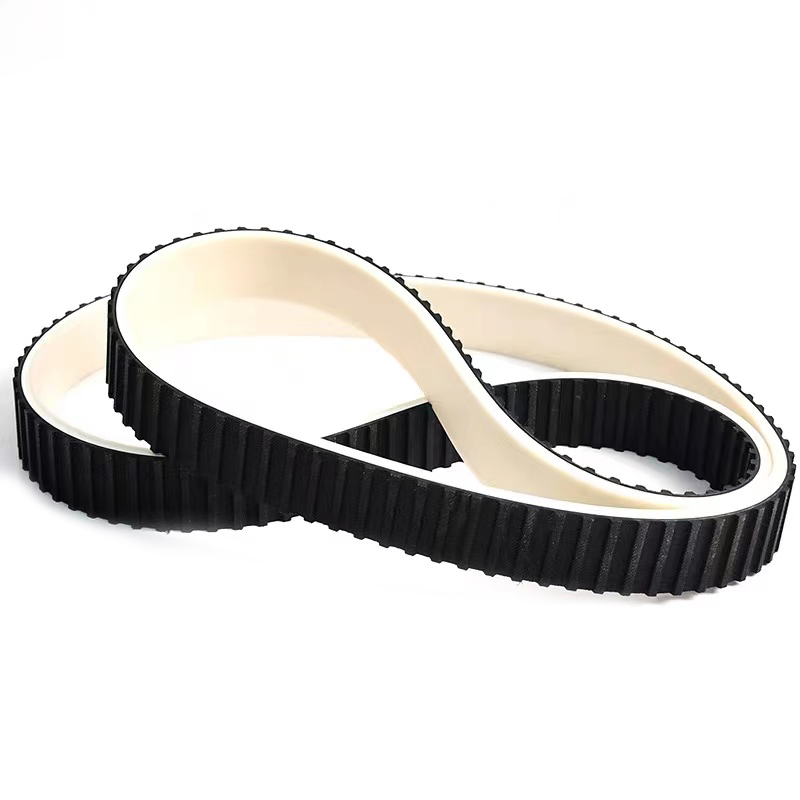
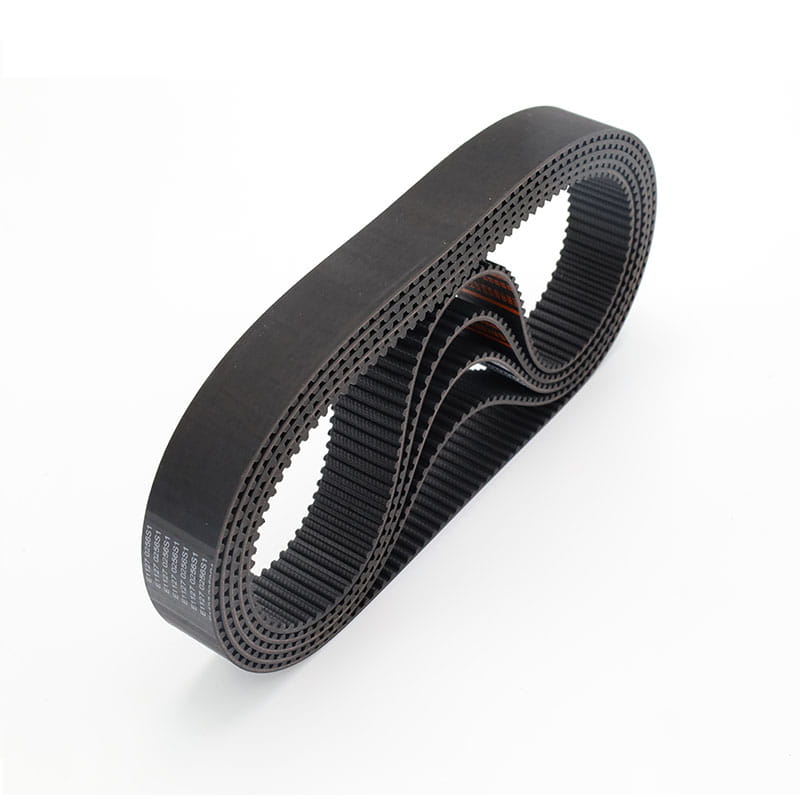 Rubber Synchronous Belt for Positioning and Power TransmissionTiming belt with glass fiber cord core, chloroprene rubber protection and wear-resistant nylon tooth layer for synchronous positioning and power transmission.View Product →
Fiber Types and Specification Basics
Polyester, often called PET, is common in timing and flat belts because it offers high modulus, low creep, and good dimensional stability. Its weakness is hydrolysis in hot, humid conditions, so adhesive treatment and compound selection matter. Nylon brings high toughness and fatigue resistance, with higher elongation and moisture regain. A polyester warp with a nylon weft, often called EP, balances stability and impact resistance.
Rayon has a long history in rubber reinforcement and offers good heat resistance, but lower strength than polyester or aramid. Aramid is very strong and heat resistant, yet its low elongation and poor compression fatigue can be a problem on small pulley drives. Blends are used to balance cost and performance. The fiber name alone is not a specification. Buyers also need cord linear density, twist, ends per inch, picks per inch, fabric weight, and thickness.
- Fiber and blend, with warp and weft stated separately.
- Cord construction, including linear density, twist direction, and twist level.
- Fabric geometry, including width, ends per inch, picks per inch, gauge, and weight.
- Adhesive system, dip pick-up, and heat treatment condition.
- Tensile strength, elongation at a stated load, and heat shrinkage.
- Adhesion value by a named test method, with an acceptance limit.
A common procurement risk is a supplier substituting a lighter fabric or a different fiber while keeping the same product name. The belt may pass a short run test and fail later through elongation, edge cracking, or ply separation. Require the fabric style code and a certificate of analysis for each lot, and keep a retained sample for comparison.
Construction and Bonding Checks
Cord fabric does not bond to rubber by pressure alone. Most industrial cords receive an adhesive dip, commonly an RFL system, followed by controlled heat treatment. Calendering then presses a thin rubber skim into the fabric. If the skim is too thin, air pockets remain. If it is too thick, the fabric becomes stiff and may not track well. Fabric bias angle and splice design also affect how the belt carries load. A misaligned splice creates a stiff spot that appears as noise, vibration, or early failure.
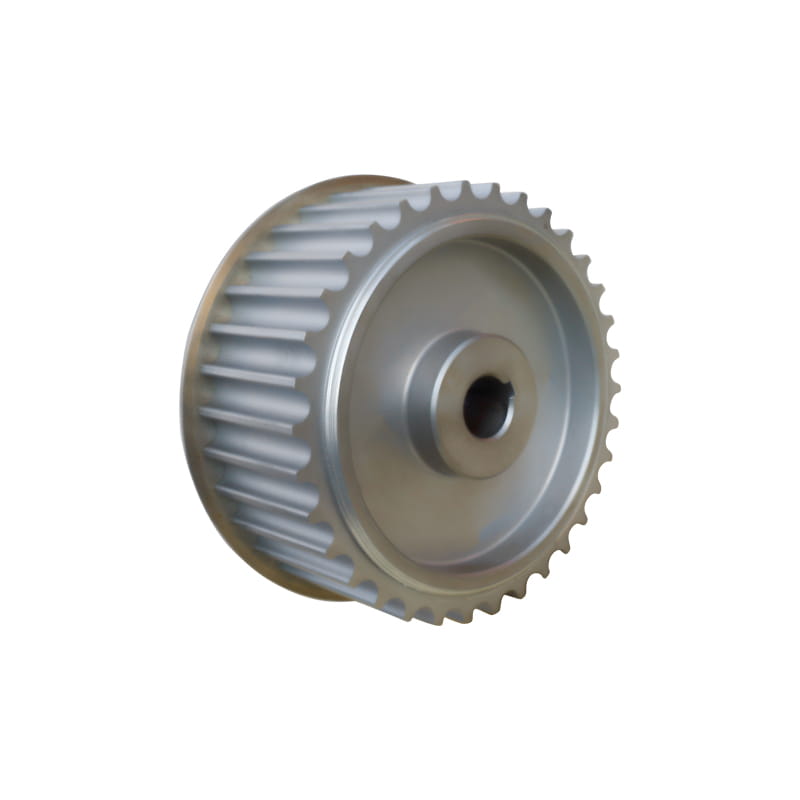
For synchronous belts, fabric, tooth shape, and pulley geometry must work together. A belt can have the correct pitch and still run badly if the teeth do not engage properly or if the fabric orientation allows tooth shear. Review tooth profile matching together with cord tension and pulley wear before changing the fabric specification.
Tolerance deserves attention. Fabric width, gauge, cord spacing, and splice length should have written limits. A drawing that says only cord fabric reinforced is not a specification, because it leaves the supplier free to choose a cheaper fabric. Put the fabric style, adhesive, and key mechanical values on the drawing, and state the test method for each value.
Where Cord Fabric Matters in Real Belts
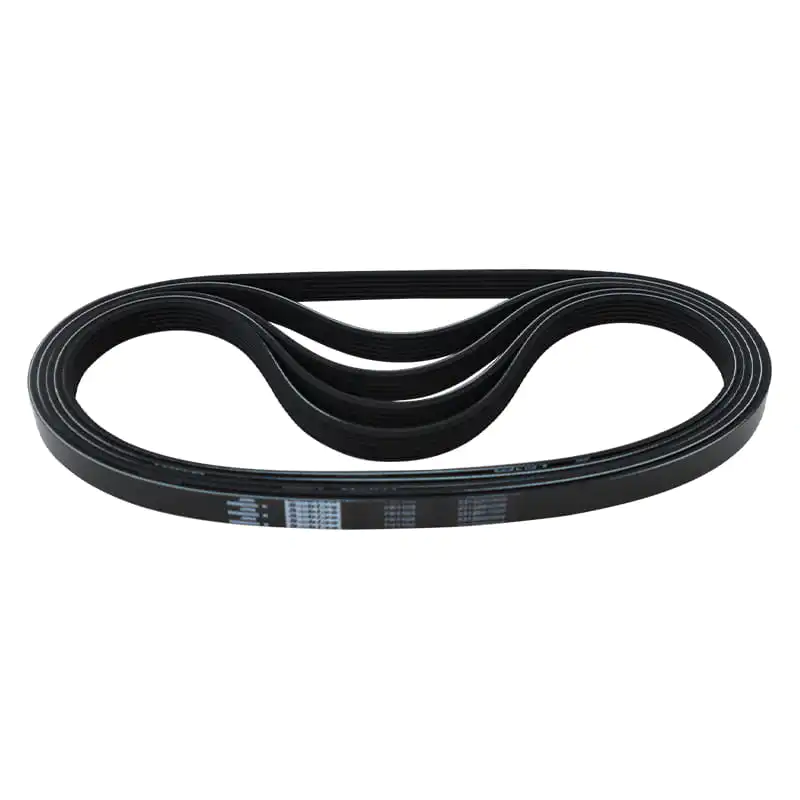
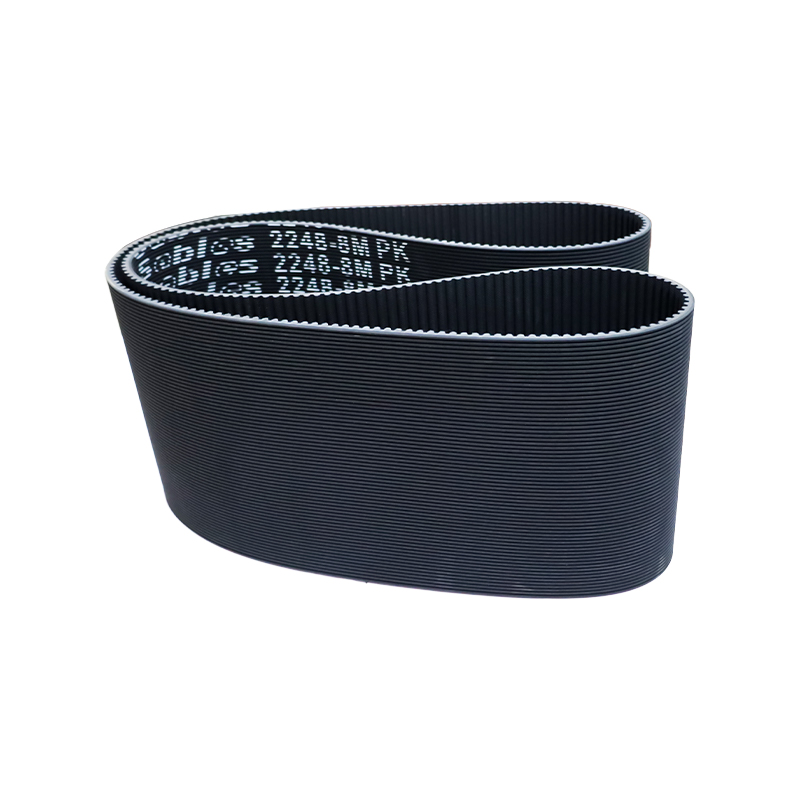
In timing belts for printing, packaging, textile, and logistics equipment, cord fabric helps hold pitch length while the belt runs at speed. The belt must transmit motion without slip, so elongation under load is a direct performance issue. In light-duty conveyor belts, fabric plies provide tensile strength and resist tearing when packages or components are loaded.
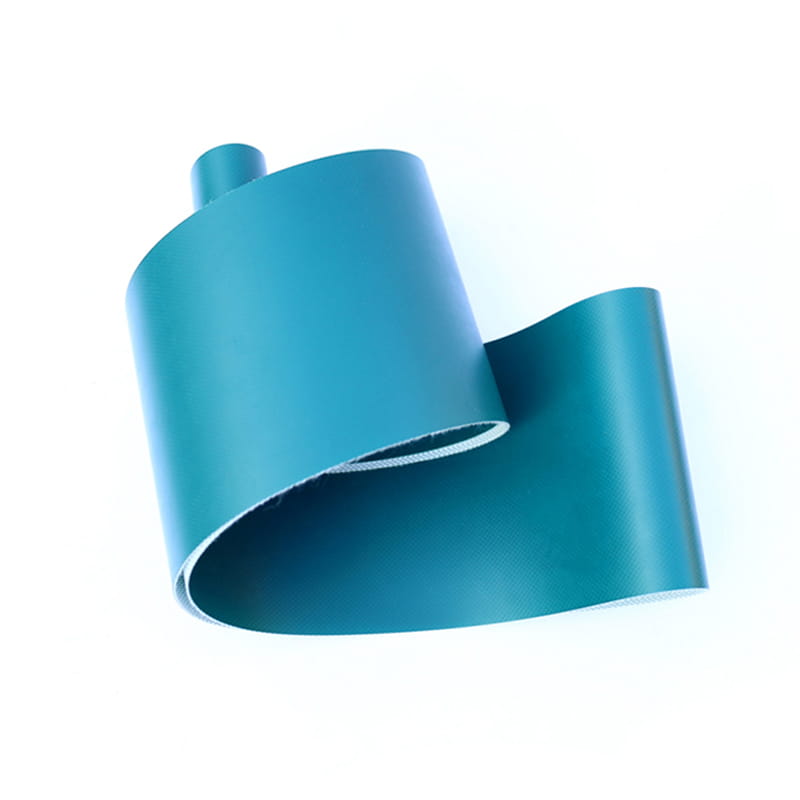 Light Duty Conveyor Belts for Compact Transmission and TransportBrowse rubber, PVC and PU light conveyor belts for compact transmission, high wire speed and applications such as food, medical, paper and textile machinery.View Product →
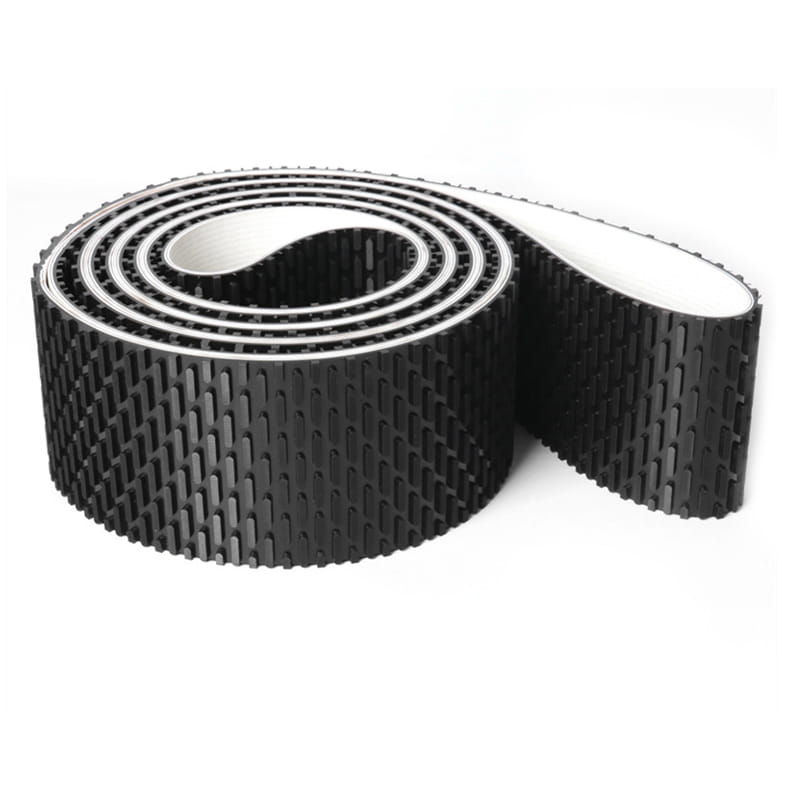
Coated and special processing belts use fabric for more than tension. The fabric may also provide a surface that grips, releases, or resists abrasion. Food processing, paper handling, and sanding machine belts are examples where surface function and tensile function must be separated in the specification. For coated belts, ask which fabric is the strength member and which fabric or coating touches the product.
 Coated Rubber Belts for Friction Drive and TransportCoated rubber belt options include rubberized timing belts and adhesive flat tape for friction drives, packaging equipment and conveying, with wear-resistant surfaces and customizable grooves.View Product →
For example, a small-pulley timing drive on a packaging machine may use a polyester cord fabric to limit length change. A nylon replacement may run quietly at first but elongate and alter timing. Increasing tension does not correct the root cause. Restoring the specified fabric and checking pulley alignment is the more reliable fix.
Selection, Inspection, and Maintenance
Start with the drive, not the fabric. Record load, speed, pulley diameters, center distance, duty cycle, temperature, moisture, oil, and cleaning chemicals. Then match the fabric to the belt construction. A fabric that works in a dry printing line may fail in a humid food plant if hydrolysis resistance is not addressed.
Incoming inspection should tie each check to a written acceptance limit. A general statement of high quality is not a substitute for measured data.
| Check |
Why it matters |
Practical evidence |
| Fiber and style identity |
Substitution changes elongation and fatigue life |
Certificate of analysis and retained sample |
| Adhesion |
Weak bonding leads to ply separation |
Peel or H-test result with method and limit |
| Tensile and elongation |
Insufficient strength or excessive stretch |
Test at stated load and temperature |
| Heat shrinkage |
Belt length changes after warm-up |
Shrinkage value after specified heat exposure |
| Gauge and width |
Fit and load distribution |
Measured values against the drawing |
Do not accept a general claim such as high quality cord fabric as a substitute for data. Ask for the fabric style, fiber, cord count, adhesive type, and test report. For critical drives, run a belt sample under actual tension, speed, and temperature. A short bench test will not reveal hydrolysis or long-term creep, so include heat aging and flex fatigue in the qualification plan.
Compare cost per operating hour, not price per kilogram of fabric. A lighter fabric may lower the invoice but raise downtime if it stretches or fails early. Store belts away from direct sunlight and ozone sources, keep pulleys aligned, use the specified tension, and replace worn pulleys. Record the fabric style and supplier lot at each replacement so future purchases can be compared.
Cord fabric is a small share of belt cost and a large share of belt reliability. When a belt stretches, delaminates, or loses timing, ask what fabric is inside before changing the compound or increasing tension. A clear specification with fiber, construction, adhesion, and test limits gives buyers a defensible basis for comparison and gives belt makers a stable target for repeatable production. For an unusual duty, share the operating conditions and let the belt construction follow the application, not the other way around.



 中文简体