A plastic profile line can look perfectly stable until the puller belts begin to slip. The symptom is often small at first: a wave in haul-off speed, an ovality reading drifting toward the tolerance limit, or water tracks appearing on a surface that was previously clean. On an extrusion line, puller belts are not simple conveyor components. They set the grip point between the die and the downstream cutter, and any change in grip becomes a change in dimensions.
The practical rule is simple: choose extrusion puller belts for grip consistency first, then heat and water resistance, then wear life and joint reliability. A low-cost belt that forces operators to retension, slow the line, or reject product is expensive in the long run.
What Extrusion Puller Belts Do on the Line
Extrusion puller belts, also called haul-off belts or caterpillar belts, run in pairs or sets above and below the extruded product. They pull the profile away from the die at a controlled speed while applying enough pressure to prevent slip. The belt must hold that speed without crushing the profile, marking the surface, or introducing vibration into the cooling section.
This is different from a normal conveyor application. A conveyor belt moves loose parts from one point to another. A puller belt controls tension in a moving plastic profile that is still cooling and still changing dimensions. That is why belt construction, surface texture, hardness, and thickness consistency matter more than raw tensile strength alone.
In many lines, the puller is also where water, talc, or release agents accumulate. The belt has to grip through that contamination, or the operator has to compensate with higher pressure. Higher pressure can flatten a hollow profile, distort a thin wall, or accelerate belt edge wear, so the better answer is usually a belt that maintains friction without excessive squeeze.
Start With the Extrusion Process, Not the Belt Catalog
Before comparing compounds, record the conditions at the puller. The most useful starting data are the product surface temperature at the belt contact point, the amount of cooling water carried to the puller, the profile footprint, the required pull force, and the line speed. These five inputs usually narrow the belt choice faster than a general material comparison.
- Surface temperature matters more than melt temperature. A profile can leave the die hot but reach the puller at a much lower temperature, and that contact temperature drives compound selection.
- Water changes friction. A belt that grips well on a dry line may slip once cooling water, spray, or condensation reaches the contact area.
- Profile geometry sets pressure limits. Thin walls, hollow sections, and soft surfaces need lower local pressure and a more even contact pattern.
- Line speed affects heat build-up. Higher speed can raise internal belt temperature even when the product itself is not hot.
- Pull force must be known, not guessed. If the line is already running at the limit of its motor or tension setting, a different belt construction may not solve the problem.
This is also the point to check the puller machine itself. Worn pulleys, misaligned rollers, and uneven tension can make a good belt perform badly. If one belt in a set wears faster than the other, the cause may be alignment rather than compound quality.
Construction Choices That Affect Grip and Life
Flat, ribbed, coated, or custom
Most extrusion puller belts fall into a few practical families. The right choice depends on contact pressure, water exposure, marking risk, and how much customization the machine can accept.
Common extrusion puller belt constructions and the line conditions they tend to suit.
| Construction |
How it grips |
Good fit |
Watch-outs |
| Endless flat rubber belt |
Broad, even contact across the profile |
Pipe, siding, sheet, and general profiles |
Alignment and water carryover matter; a smooth cover can slip when wet |
| Ribbed belt |
Higher local pressure and channels that help move water aside |
Wet cooling lines and higher pull force |
Rib spacing must suit the product; local pressure can mark soft profiles |
| Rubber-coated belt |
Rubber cover over a tension member for controlled friction |
Custom grip and release needs |
Cover wear and bond quality need checking |
| Special processing belt |
Grooves, cleats, holes, or edge profiles |
OEM machines and unusual shapes |
Requires drawings, sample approval, and longer lead time |
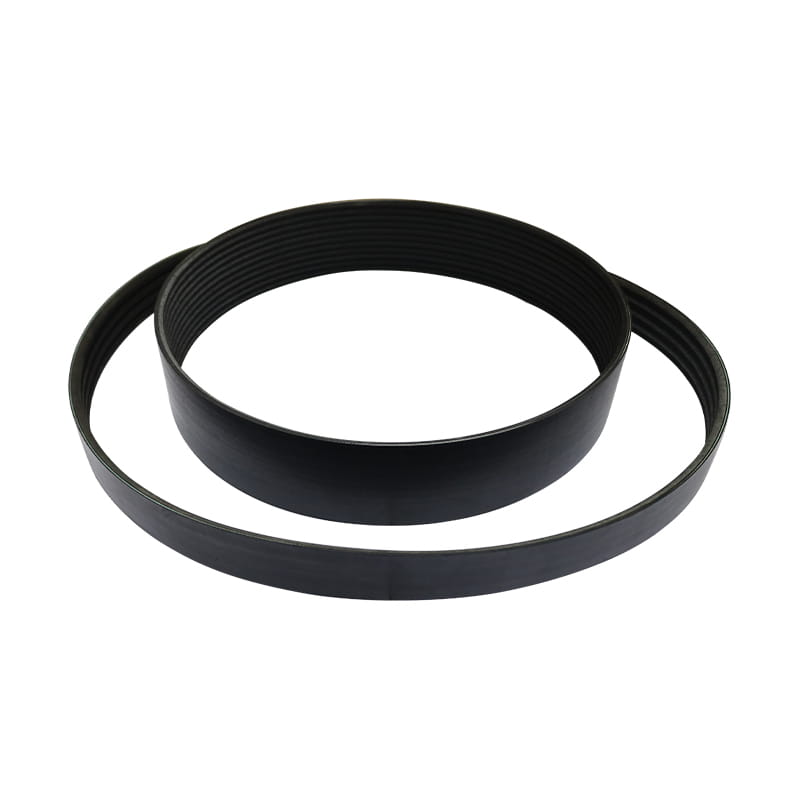
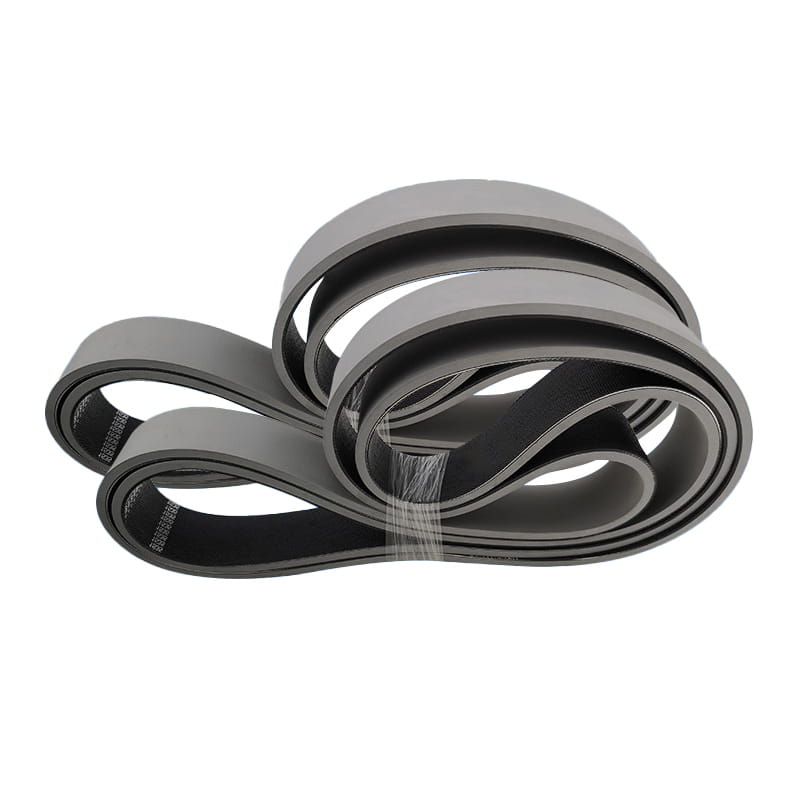
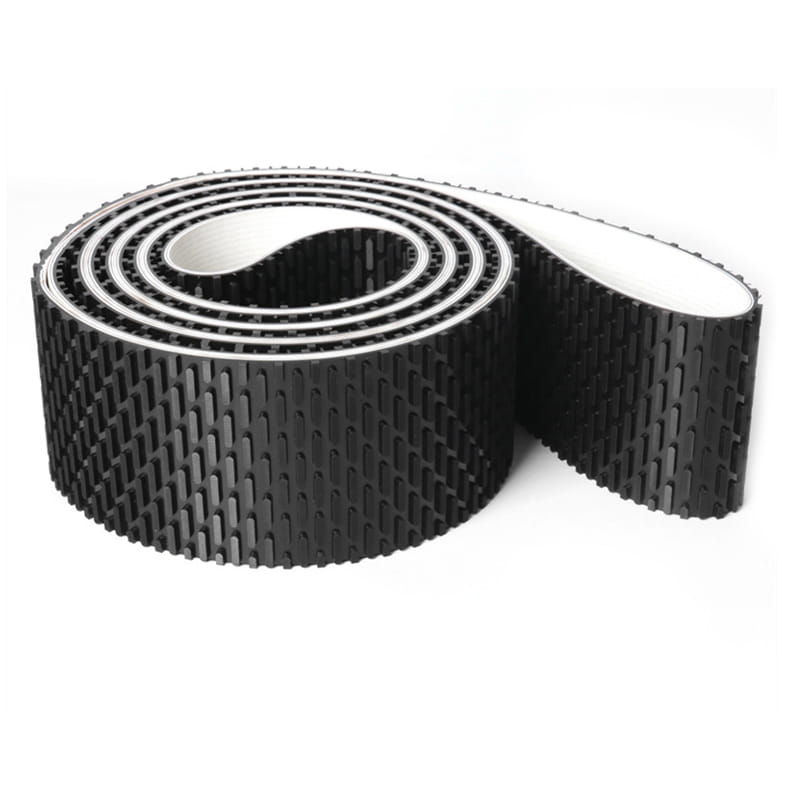
For many lines, an endless flat rubber belt is the baseline because it distributes pressure evenly and runs cleanly. When the surface needs a different friction level, rubber-coated belts can be customized to balance grip and release. The key is to define the surface condition at the puller, not just the product material.
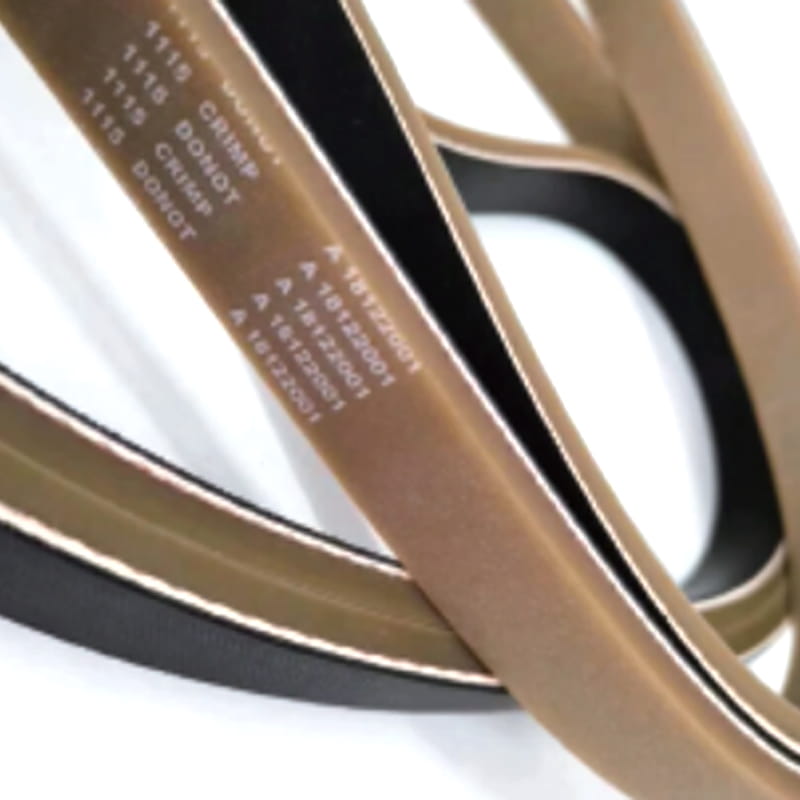 Coated Rubber Belts for Controlled Friction and ReleaseRubberized timing belt and adhesive flat tape options offer high-friction surfaces, wear resistance, and customizable slots or grooves for packaging, printing, and friction drives.View Product →
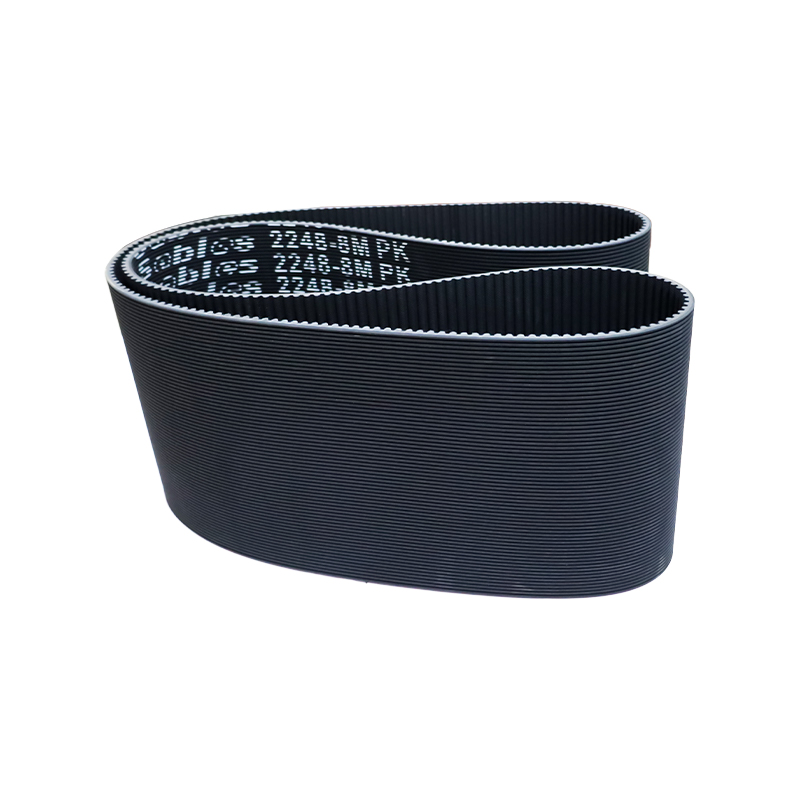
A ribbed belt can help on wet lines because the ribs create local pressure points and leave paths for water. That advantage disappears if the rib pattern presses into a soft profile and leaves marks. For delicate surfaces, a smooth cover with controlled hardness is often safer than a more aggressive texture.
Hardness, Surface Texture, and Marking Risk
Hardness is a starting point, not a guarantee. Many extrusion puller belts use compounds in the 60 to 80 Shore A range, but that range is too broad to specify without line data. Softer compounds increase contact area and reduce point pressure. Harder compounds resist compression and wear but can mark soft profiles or amplify small alignment errors.
Ask for thickness and width tolerances, not just nominal dimensions. A 0.5 mm thickness variation across a wide belt can tilt the puller head and create edge tracking. Width variation can change contact pressure from one side of the profile to the other. On a line making tight-tolerance pipe or siding, those small differences can show up as ovality or surface waves.
Surface texture should match the marking limit. A smooth belt is easier to clean and often releases better, but it may need higher tension on wet lines. A textured or grooved belt may grip better, but the pattern can transfer to the product. If the profile has a visible face, test the belt on that face before committing to a production order.
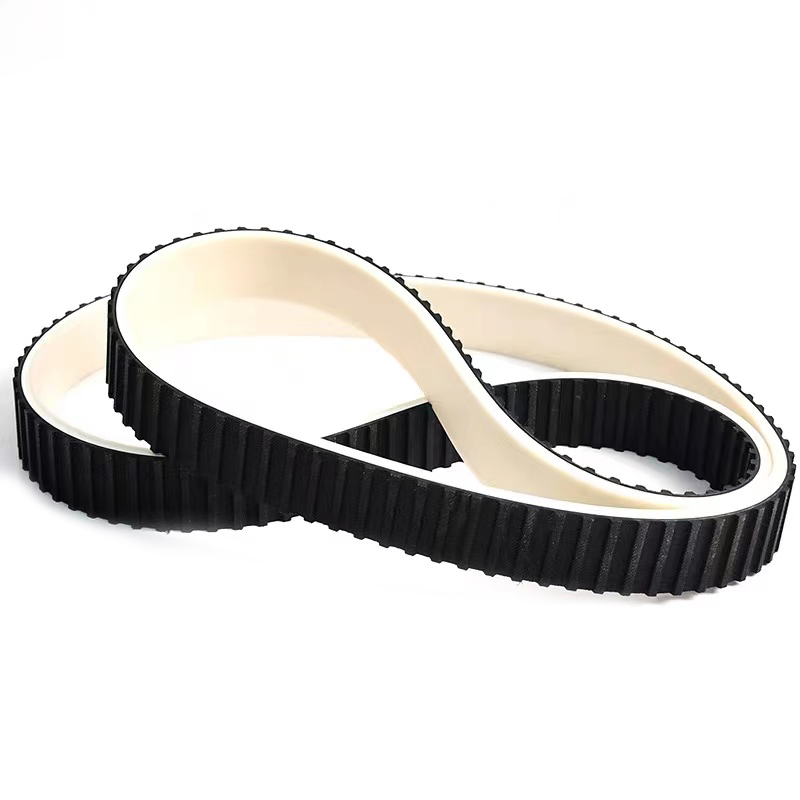
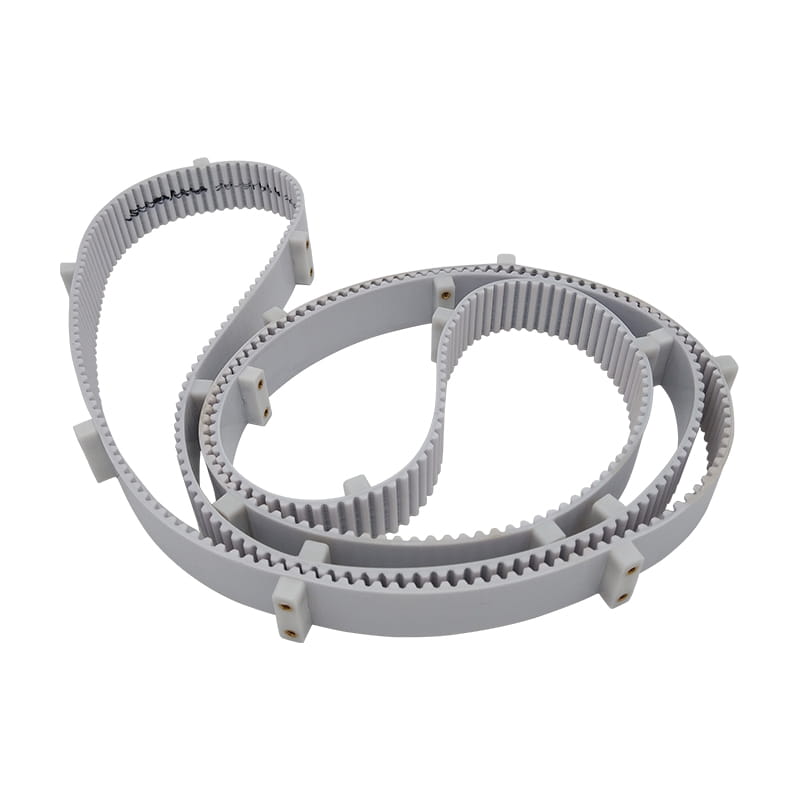 Special Processing Belts with Custom Surface and Tooth ProfilesCustom grinding, punching, blocks, holes, and grooves can add wear resistance, anti-slip grip, and positioning while matching surface-texture limits on visible product faces.View Product →
Custom grooves, cleats, and edge profiles are useful when the product shape makes standard contact uneven. They are not a substitute for correct tension and alignment. A custom belt should be approved with a drawing, a sample profile, and a short trial run that checks mark depth, dimensional drift, and belt tracking.
Joint and Endless Belt Decisions
An endless belt has no joint, so it avoids a repeated bump at the puller and reduces the risk of joint failure. That matters on lines where speed stability affects wall thickness or where cleanliness is important. A spliced belt can be replaced faster and may cost less, but the joint is a planned wear point and can affect tracking if it is not made accurately.
For extrusion pullers, the default should usually be an endless belt unless the machine design or replacement window makes a spliced belt necessary. If a spliced belt is used, check joint thickness, joint direction, and whether the splice can pass through the puller without changing pressure. Endless rubber flat belt stability depends on both the belt and the puller condition, so inspect rollers and guides before blaming the belt.
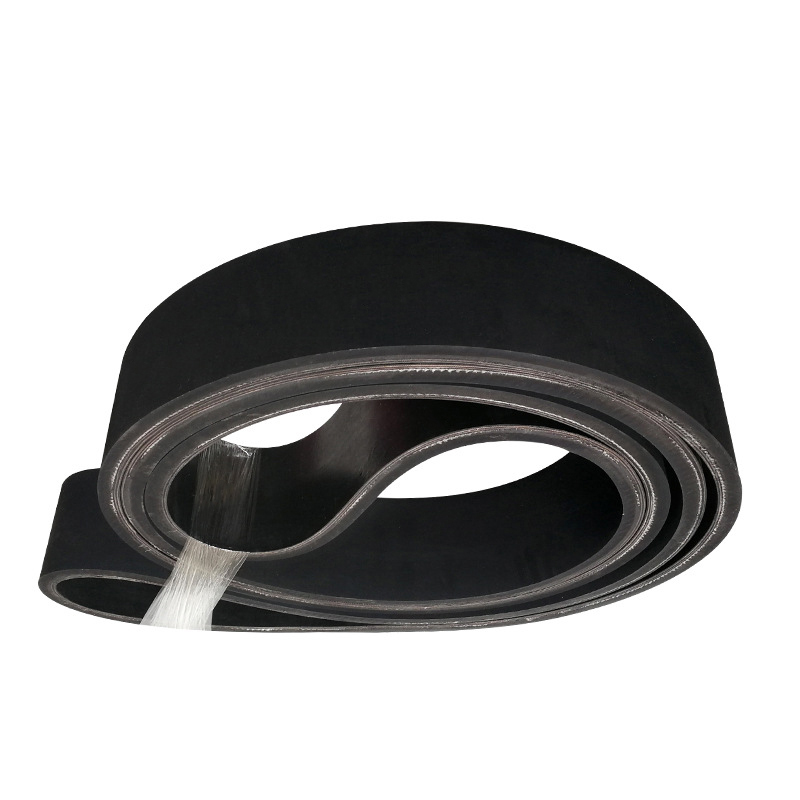
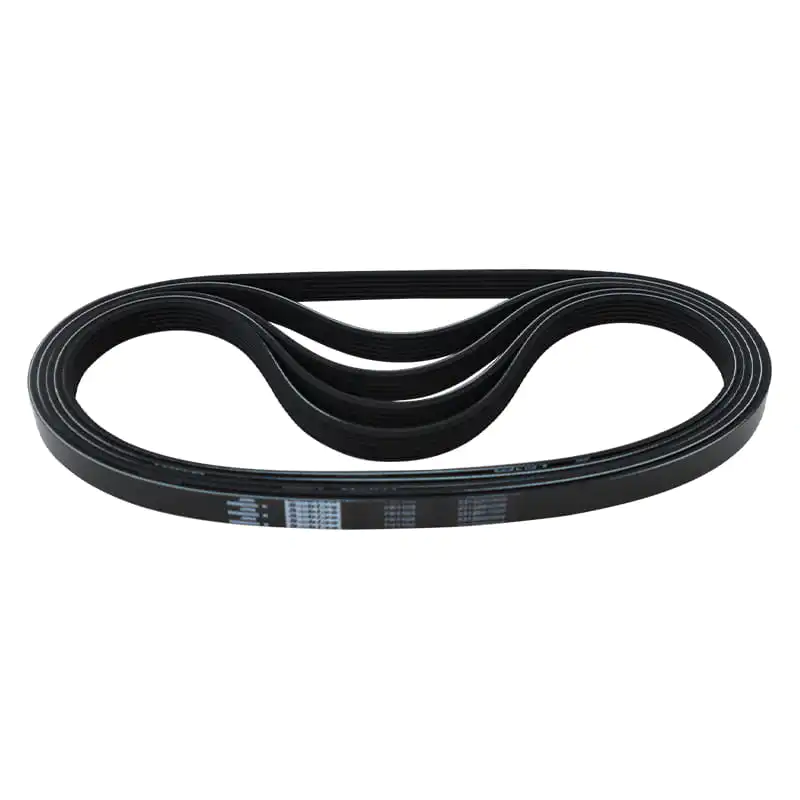
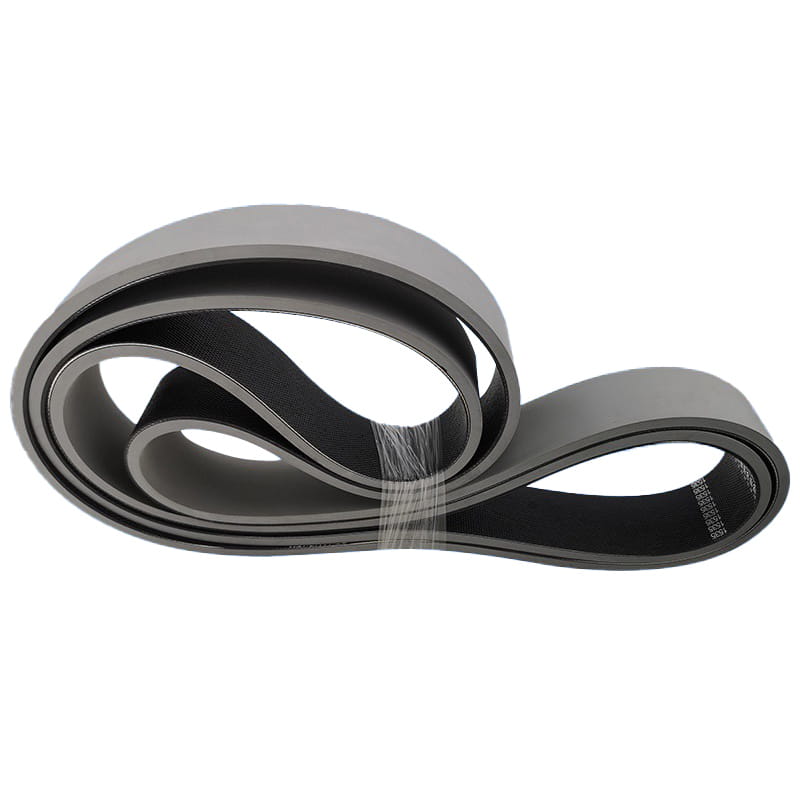 Endless Rubber Flat Belts for High-Speed TransmissionFH, FL, and FM belts offer low elongation and stable running for high-speed conveying and transmission; matched sets help maintain even grip on critical lines.View Product →
Matched sets matter. If one belt in a pair is replaced while the other is worn, the pair may grip unevenly. On critical lines, keep a complete spare set and replace both belts together when wear or stretch reaches the maintenance limit.
Specification Checklist for OEM and Maintenance Buyers
A common purchase risk is matching only length and width. That is enough to make the belt fit, but not enough to make it perform. Use a short specification checklist before ordering:
- Belt length, width, and thickness, with tolerances and measurement method.
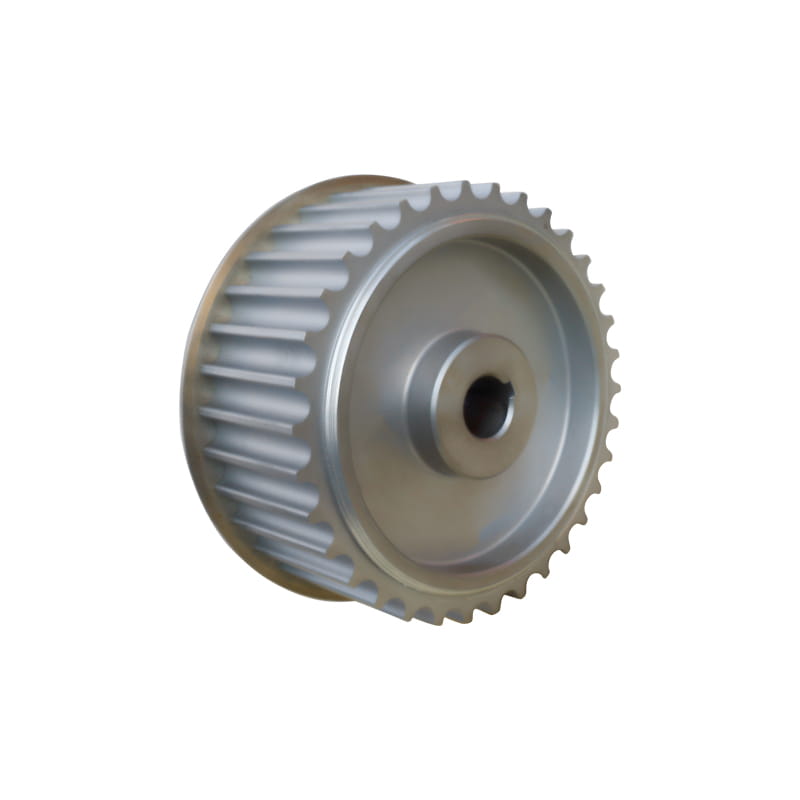
- Puller pulley diameter, crown, and guide arrangement.
- Required pull force and normal line speed, plus any slow or high-speed operating modes.
- Product surface temperature at the belt contact point and water exposure level.
- Marking limits and the visible face of the profile.
- Joint type, preferred replacement method, and spare set quantity.
- Batch traceability and test report requirements for OEM approval.
For OEM projects, ask for a sample set before full approval. Run the sample through the same cooling, water, and speed conditions used in production. Check belt tracking after the first hour, after the first shift, and after the first week. If the belt needs retensioning twice in the first week, the construction or the machine alignment is probably wrong.
Installation and Maintenance Checks
Clean the puller before installation. Water, polymer dust, and release agents can form a film that changes friction. Align the belts so contact pressure is even across the profile. Tension to the belt supplier recommendation, then check again after warm-up. Do not use tension to compensate for a worn cover or a glazed surface, because that only increases load on the puller bearings and can distort the product.
During operation, watch for three early signs: edge wear, shiny patches on the belt surface, and a growing difference in tension between the upper and lower belts. Edge wear often points to misalignment. Shiny patches suggest slip or heat. Uneven tension suggests one belt is carrying more load. Any of these should be investigated before product dimensions drift.
Store spare belts away from direct sunlight, oil, ozone sources, and heavy compression. Hang wide belts on a suitable core or store them flat without sharp bends. A belt that is stored badly can take a set before it ever reaches the line.
A Practical Buying Rule
The right extrusion puller belt should be boring in service: stable speed, clean release, even tracking, and no emergency retensioning. Bring a product sample, line data, and a worn belt to the supplier. Ask for a construction recommendation that explains how the belt will handle water, heat, and marking. If those points cannot be answered clearly, the lowest price is not a useful comparison.



 中文简体