A packaging plant was replacing roughly sixty timing belts a year on the same four machines, and the failure pattern pointed at length variation rather than wear. The belts were not breaking. They were running slack within a few weeks, which shifted center distance, loaded the teeth unevenly, and eventually stripped the profile. That is a manufacturing problem, not a maintenance problem. In industrial timing belt manufacturing, the outcome is set by four things: compound consistency, cord tension during building, the accuracy of the tooth mold, and the cure cycle that locks all three together. Get those right and a belt behaves predictably for years. Get one wrong and no amount of field tensioning will recover it.
What Industrial Timing Belt Manufacturing Really Controls
Cord tension is the variable buyers almost never see and the one that most often explains early failure. A synchronous belt carries load through its cords, not through the rubber. When winding tension drifts across the width of a sleeve, or between batches, the finished belt length moves with it. A belt that lands outside the length tolerance changes the center distance the machine was designed around, and the drive starts running either tight or loose before it has done any real work. Strong plants log tension per sleeve, keep the spread inside a narrow band, and then confirm the result by measuring belt length after cure instead of trusting the machine setting.
Compound control is the second lever. Tooth hardness, filler dispersion and cure state decide how a tooth shares load with the pulley groove. An under-cured belt feels correct on the bench and then creeps under load once it reaches operating temperature. Plants that hold this in check keep mix batches traceable, check hardness on a sampling basis, and hold cure temperature and pressure inside a defined window rather than a generous one.
The mold sets tooth geometry. Cavity machining accuracy, surface finish and venting determine whether the tooth flank makes full contact along its height or only touches near the tip. A small profile mismatch concentrates load on a narrow band of rubber, and that band is where the tooth will eventually shear. This is why tooling condition, not just tooling existence, belongs in any supplier audit.
The Production Sequence, From Mixing to Final Inspection
A conventional rubber timing belt line runs through seven stages, and each one leaves a fingerprint that shows up later in service.
- Mixing. Rubber compound is mixed and milled to a target hardness and dispersion level, then rested before use.
- Calendering. The compound is calendered into sheet and skim layers thin enough to flow around the cords during cure.
- Cord preparation. Glass, aramid or steel cord is treated for adhesion and spooled under controlled pre-tension.
- Building. The sleeve is built on a mandrel, cord wound in a helix at a set tension, then covered with the top layer.
- Curing. The built sleeve enters a vulcanizer where heat, pressure and time push compound into the tooth cavities and cross link it.
- Finishing. The cured sleeve is demolded, ground or slit to width, and cut to the required length.
- Inspection. Length, tooth pitch, hardness, cord pull-out and visual checks are recorded before marking and packing.
Buyers usually see only stage seven. The first six are where the differences between a cheap belt and a stable one are actually created.
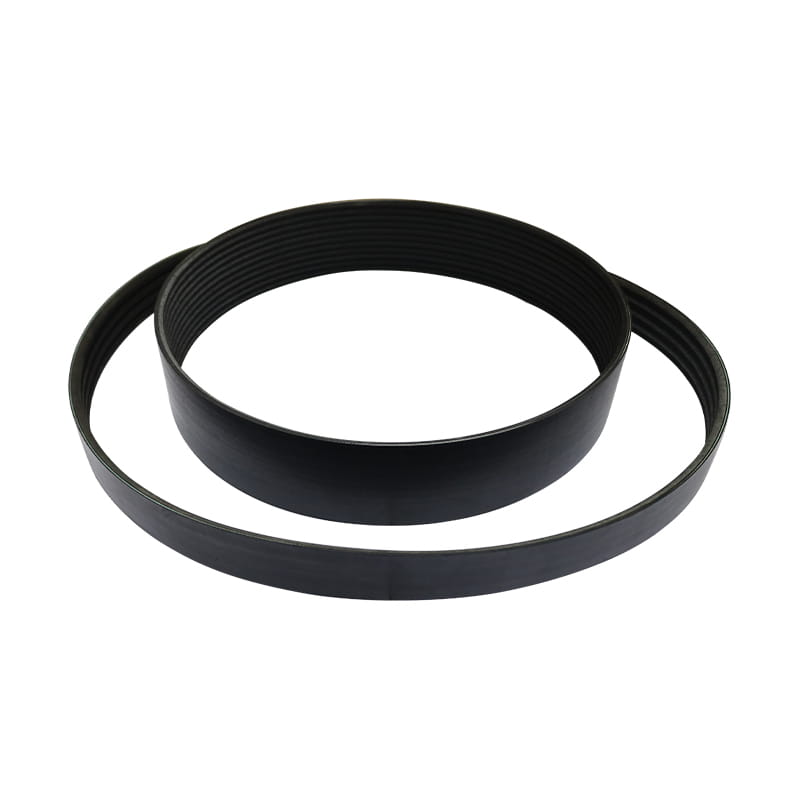
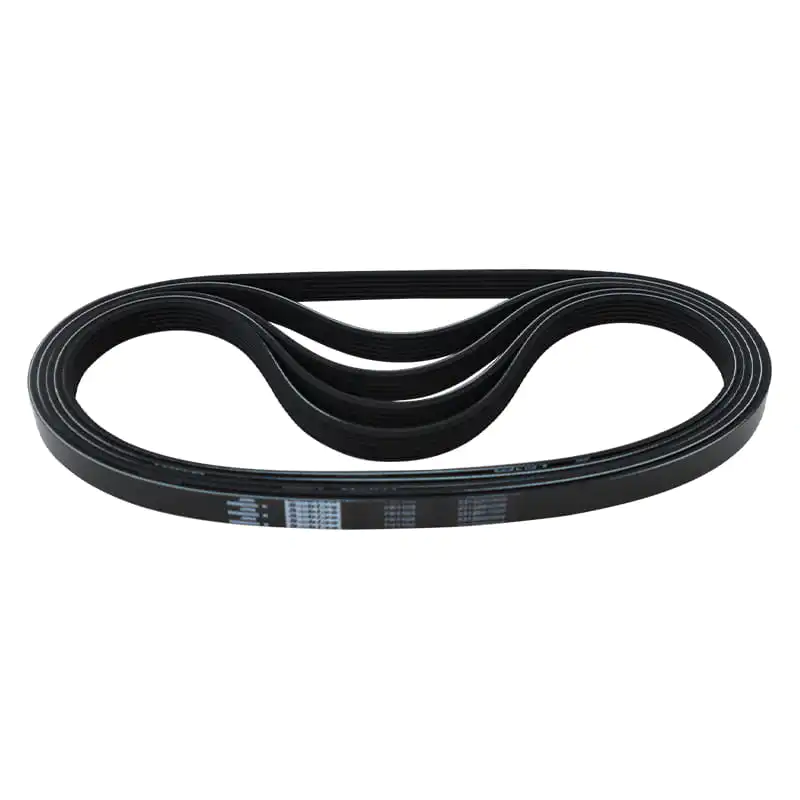
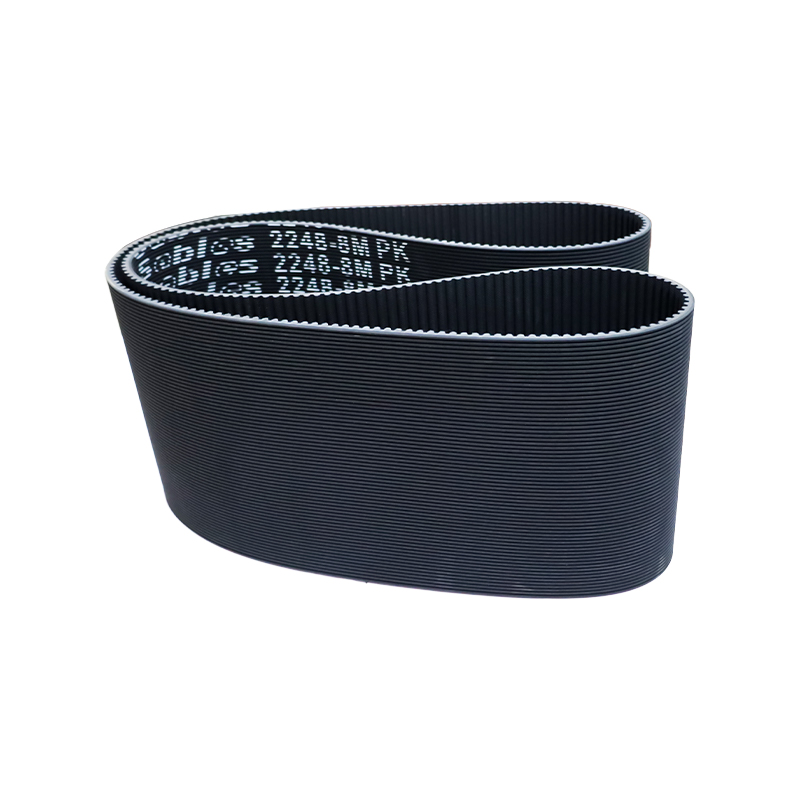
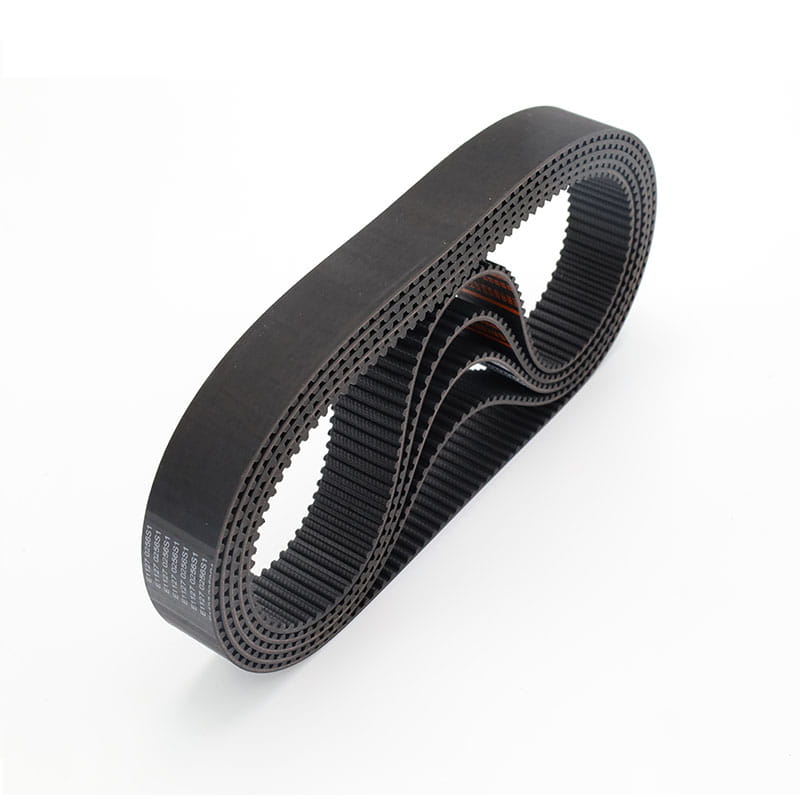 Rubber Synchronous Timing Belts for Positioning and TransmissionGlass-fiber cord, chloroprene rubber and a nylon tooth layer support stable transmission across many profiles; review when belt construction matters.View Product →
Mold Capability and Why Long Pitch Belts Are Harder
Long pitch and long circumference belts are not simply scaled-up short belts. A larger mold means a larger thermal mass, so heat has to travel further and more evenly through the sleeve during cure, or the tooth section and the backing end up with different properties. Cord path length also grows, and the tension needed to keep that longer path uniform across the full width rises with it. Our own tooling covers molds for long pitch rubber synchronous belts up to 8600 mm in circumference, which is the practical threshold that separates standard catalog supply from project work. If your drive needs a length near that ceiling, ask for the mold drawing and the length verification method before you discuss price.
Rubber or Polyurethane: Match the Material to the Duty Cycle
Material choice should follow the operating condition, not the catalog page. The comparison below covers the points that usually decide the discussion.
General comparison of rubber and polyurethane timing belts by operating condition.
| Property |
Rubber timing belt |
Polyurethane timing belt |
| Temperature range |
Around minus 20 C to 100 C, better at sustained heat |
Around minus 30 C to 80 C, heat build-up matters at speed |
| Oil and grease |
Moderate resistance, depends on compound |
Good resistance in most lubricated areas |
| Abrasion |
Good, softer tooth surface |
Better under sliding and abrasive contact |
| Tooth shear strength |
Sufficient for most general drives |
Higher, useful on small pulley diameters |
| Noise |
Generally quieter at moderate speed |
Louder unless profile and tension are well matched |
| Typical use |
Printing, textile, packaging, general transmission |
Line shafts, positioning, clean or oily automation |
The practical rule: if the drive runs hot and the load is steady, rubber is usually the safer base. If the drive is oily, abrasive, or needs a compact center distance with a small pulley, polyurethane tends to win. Where a machine is sensitive to noise at moderate speed, rubber still has the advantage.
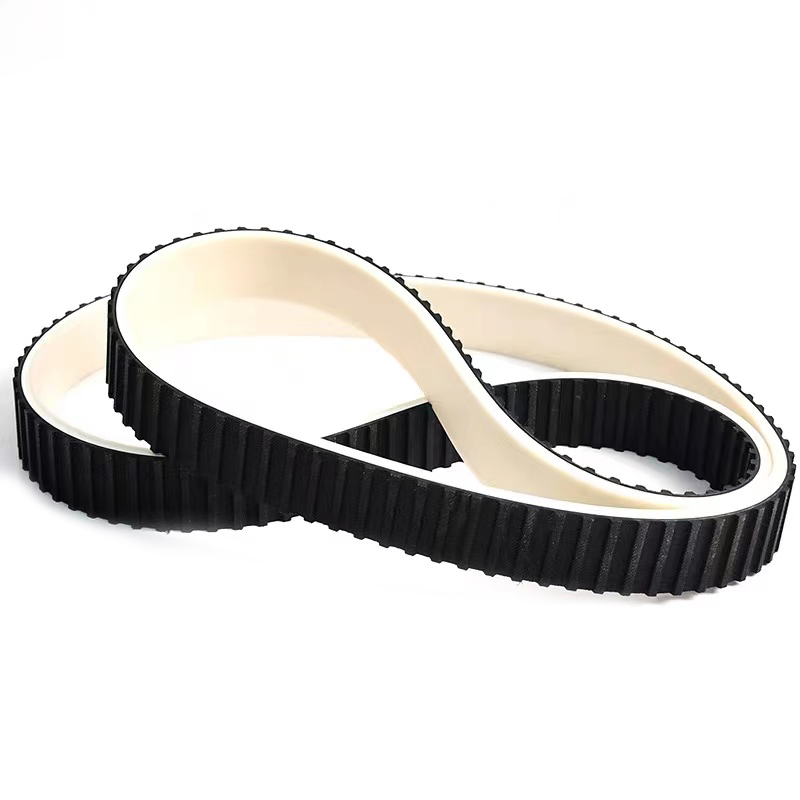
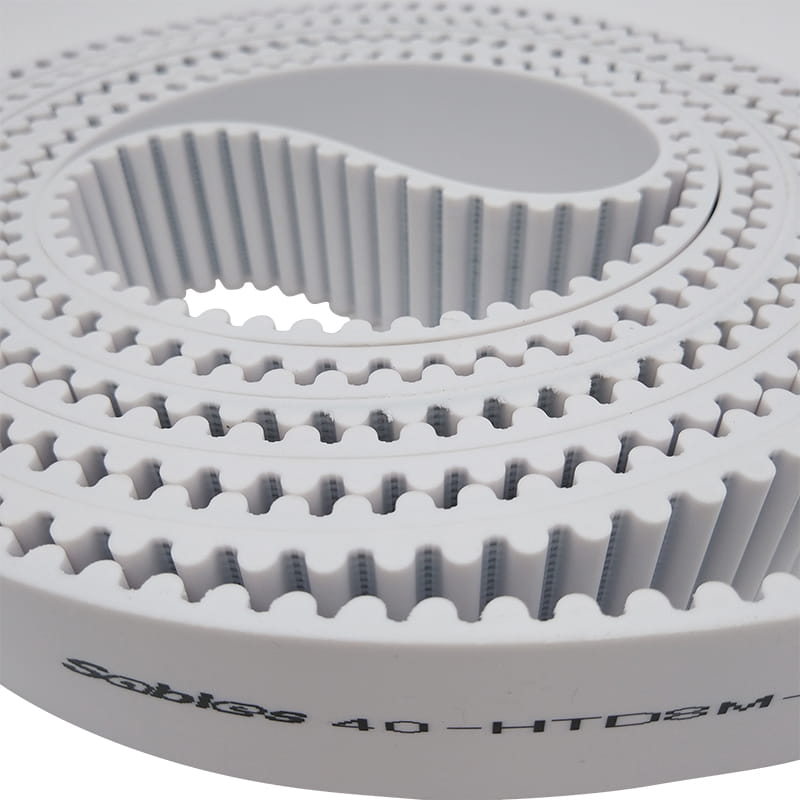 PU Synchronous Belts for Linear Transmission and PositioningPolyurethane timing belts with cord reinforcement suit precise positioning and conveying; check pulley pitch, groove count and wear before matching the drive.View Product →
Pulley Fit Decides How Long the Belt Lasts
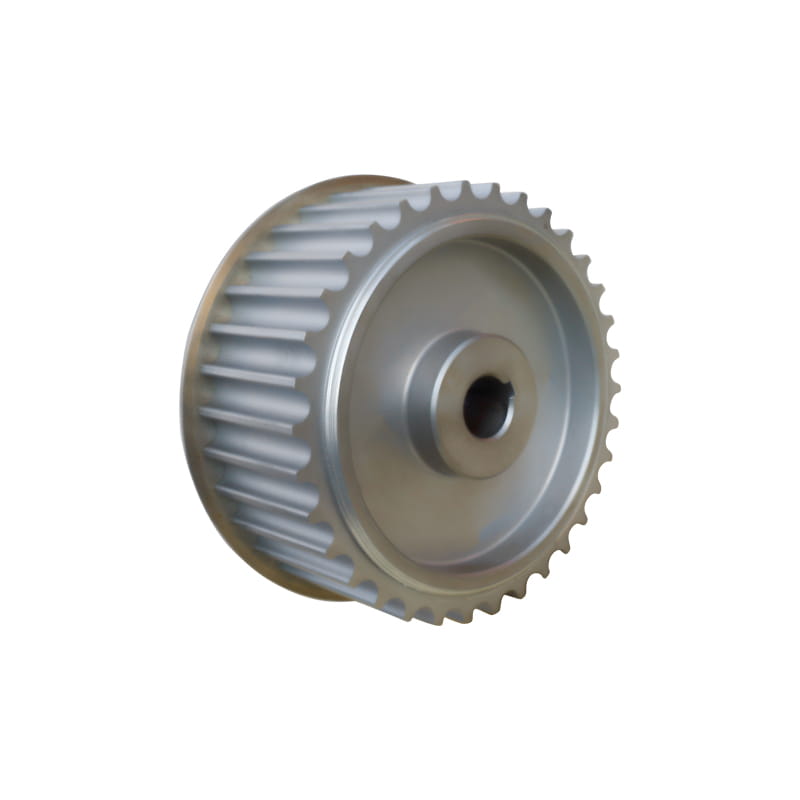
A belt and pulley are a pair, and manufacturing tolerances on both sides have to line up. Even a well-built belt will wear quickly on a worn pulley with a polished groove or a burred flank. Before ordering, confirm the pulley pitch, the number of grooves, and the wear condition of the existing parts. If you are unsure whether the belt profile and the pulley groove will seat correctly, this explanation of tooth profile matching covers the failure signs to look for. A matched synchronous pulley supplied with the belt removes most of that risk from the start.
Custom Builds: Coating, Cleats, Grinding and Food Grade Work
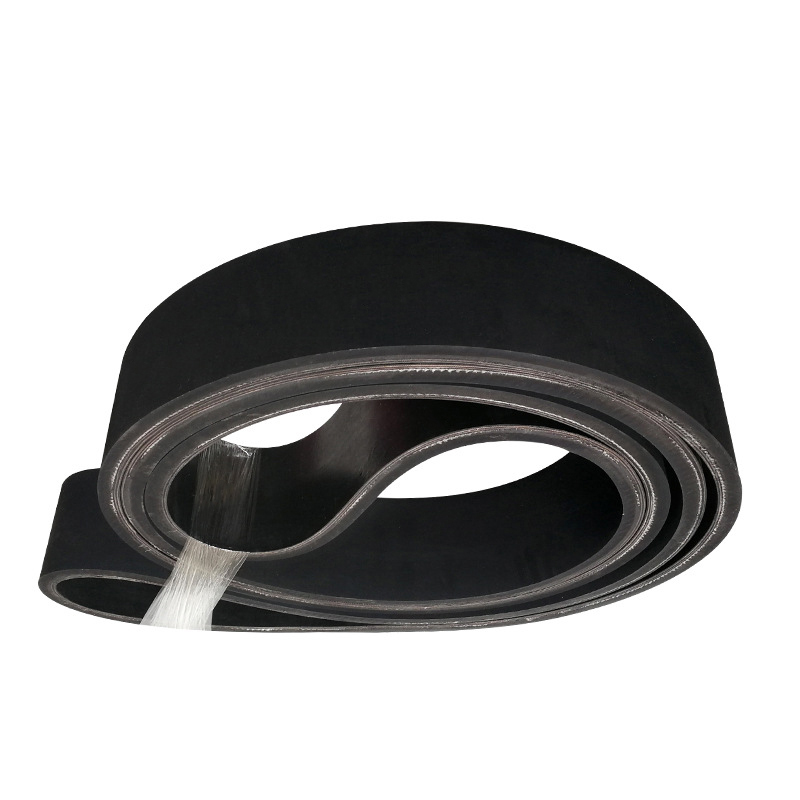
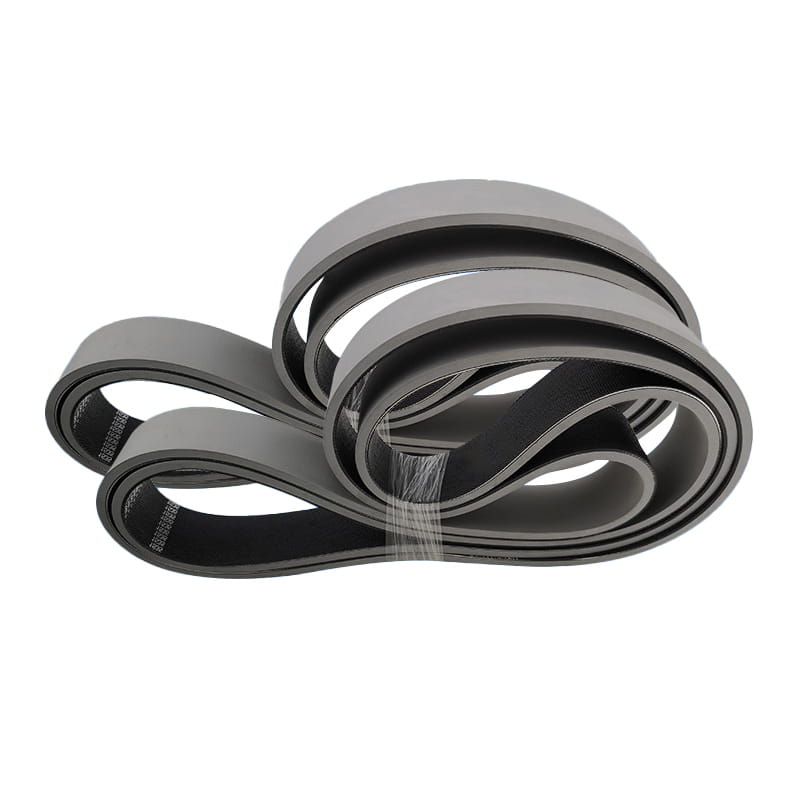
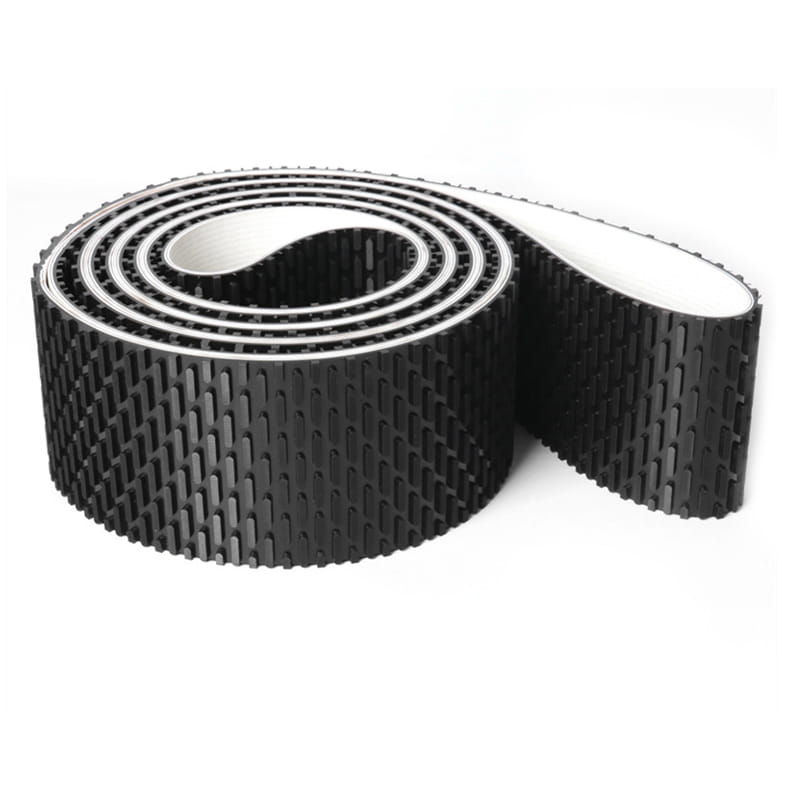
A large share of demand is not catalog work. Belts get rubber coated to grip, cleated to push, ground to a precise thickness, or built with a V-guide to stop tracking drift. Food processing is a good example of how specific this becomes: fish separation belts, nut shelling belts and vegetable cutting belts are all built around the geometry of one machine and one product, so the belt has to be designed with the machine in view rather than selected from a table. The same logic applies to seamless belts for high speed packaging and printing lines, where a joint is not acceptable at all.
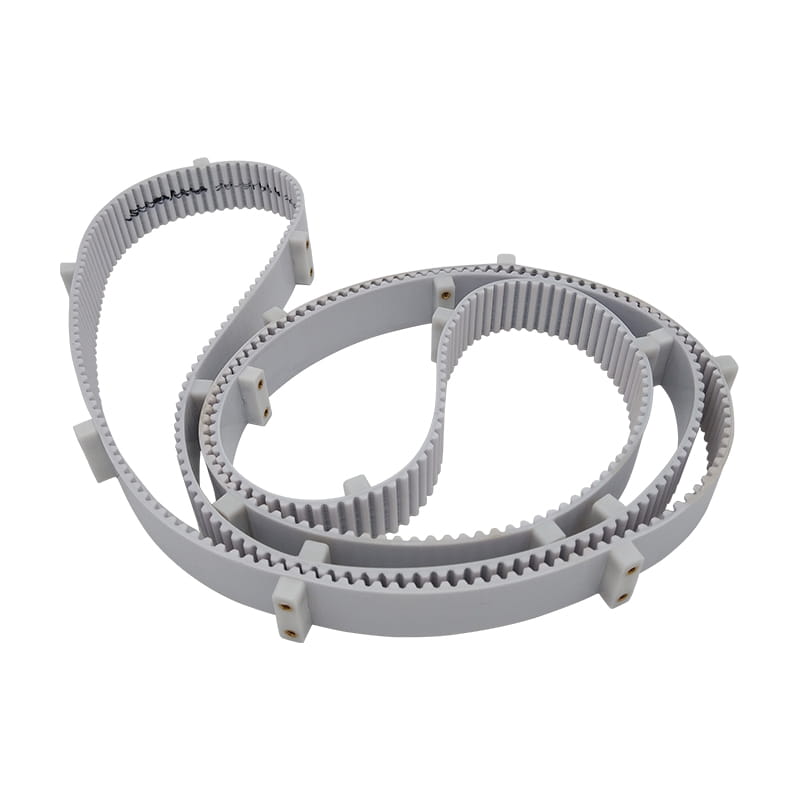 Custom Processed Industrial Belts for Special ApplicationsCustom belt processing can add surface materials and grooves for grip, tracking and positioning; review the listed options when a catalog belt will not fit.View Product →
What to Verify Before You Place the Order
A short list of questions separates a supplier who understands the process from one who forwards an inquiry.
- Cord specification: material, cord count and the tension band used during winding.
- Length verification: the measuring method and the tolerance applied to the finished belt.
- Cure records: temperature, pressure and time, traceable to the batch you receive.
- Hardness data: a sampling report rather than a single quoted figure.
- Test reports: dimensional and mechanical results for the exact profile you are buying.
- Batch marking: a code on the belt that links back to the sleeve and the mix lot.
If a supplier cannot answer the first two, the price conversation is premature. Ordering forty belts from a batch with unknown length behavior costs more in downtime than any discount on the invoice.
How Order Size and Tooling Shape the Price
Three cost drivers dominate. The first is cord type, since aramid and steel cost considerably more than standard glass. The second is tooling, because a non-standard pitch or an unusual length may require a mold that has to be amortized across the order. The third is tolerance level, as tighter length and tooth limits mean more inspection time per sleeve. This is why a small trial order of a custom profile often looks expensive per piece while the same belt at volume looks ordinary. Share the annual usage figure honestly at the quotation stage; a manufacturer can then suggest whether an existing mold fits or whether an open belt joined to length is the more economical route.
Industrial timing belt manufacturing is a process discipline, not a catalog of shapes. Compound consistency, cord tension, mold accuracy and cure control decide whether the belt you install in March is still tracking correctly the following winter. Ask for the process evidence, match the material to the duty cycle, and treat the pulley as part of the same system. That combination is what keeps a drive running quietly instead of writing another unplanned stop into the maintenance log.



 中文简体