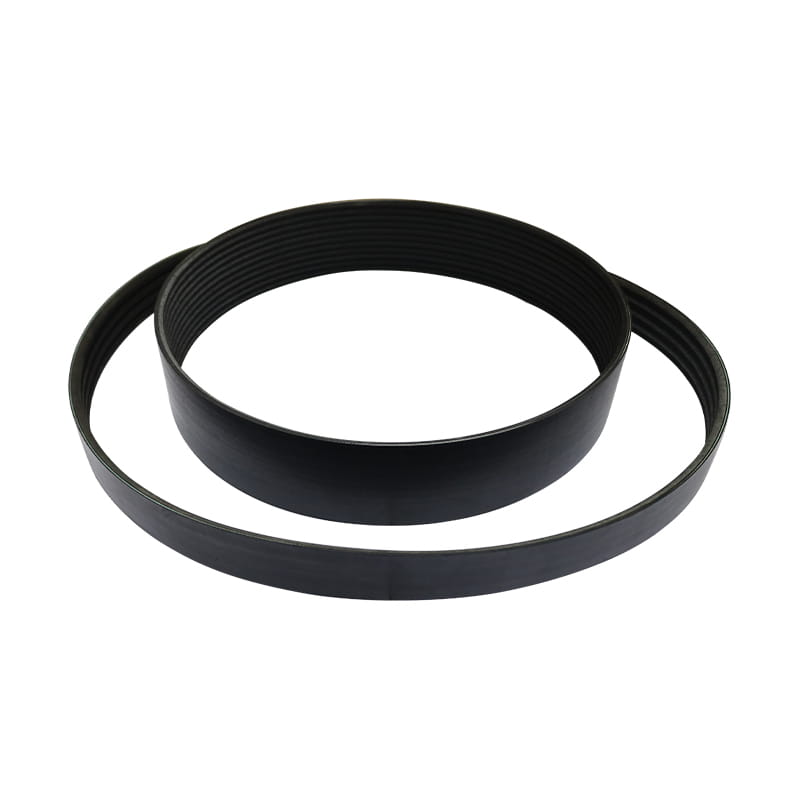
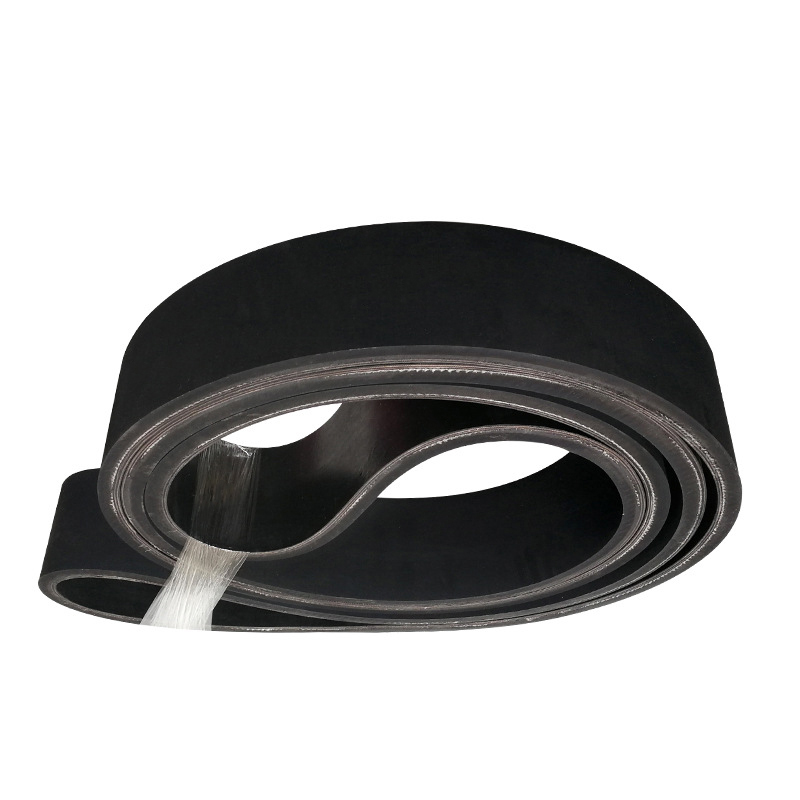
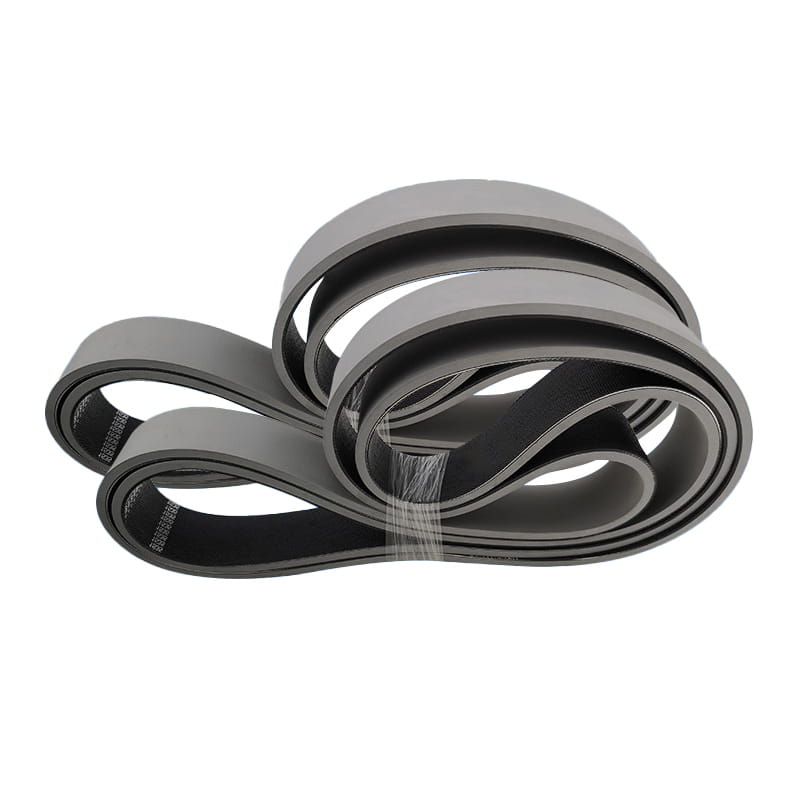
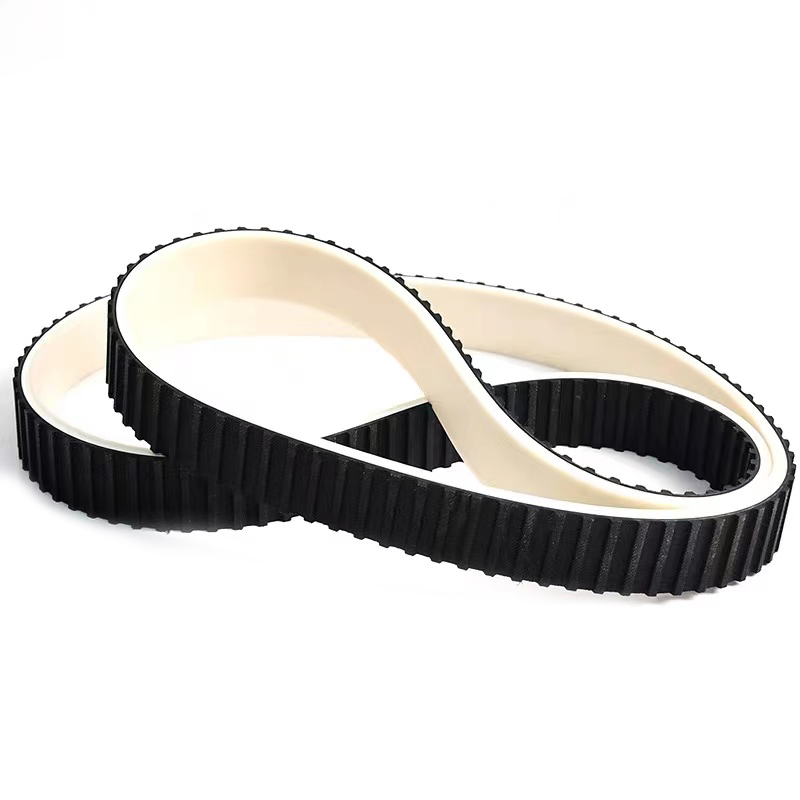
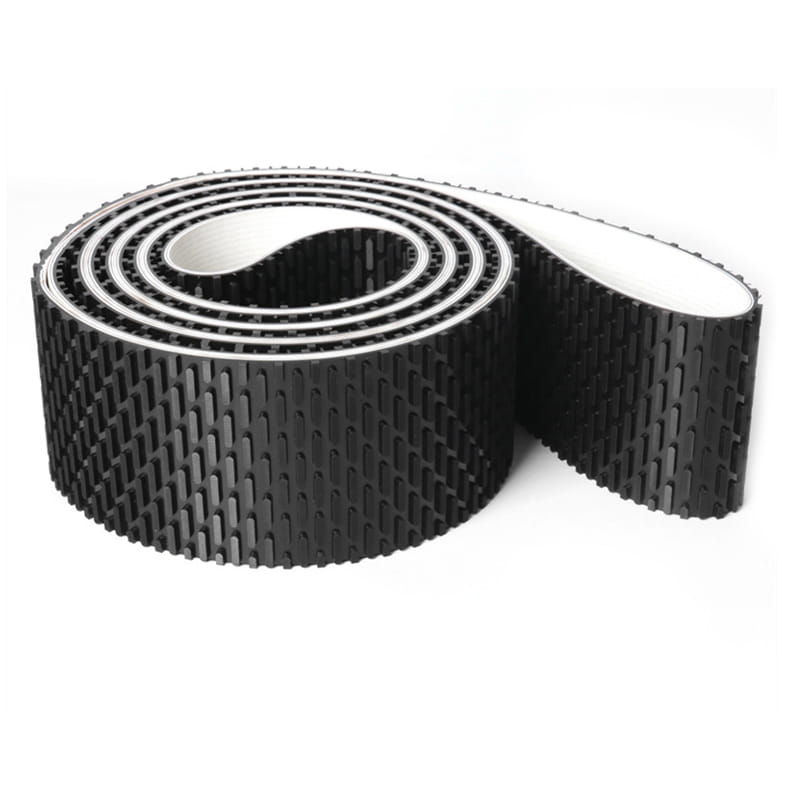
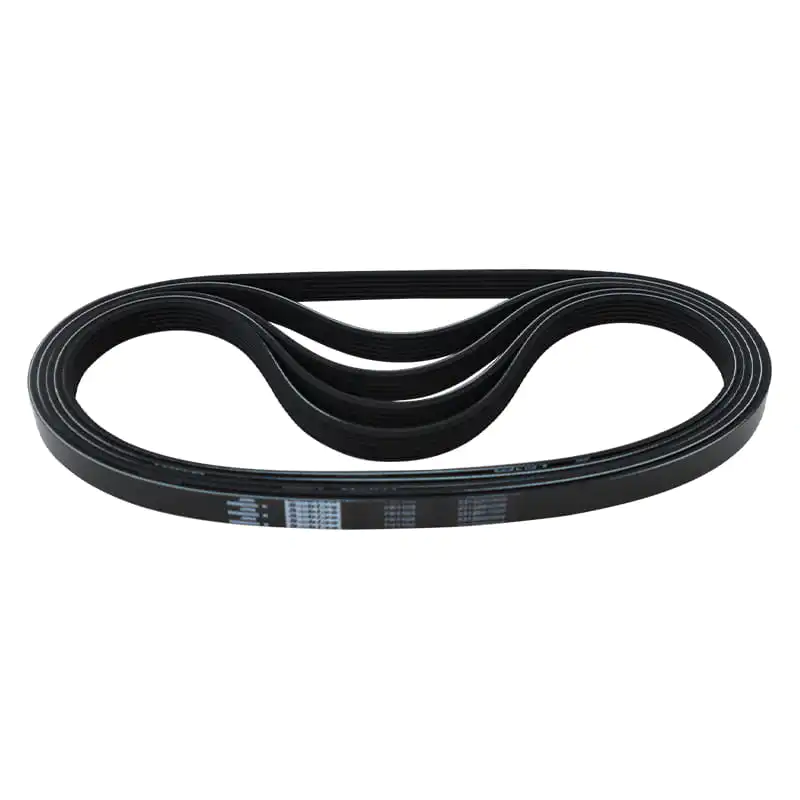
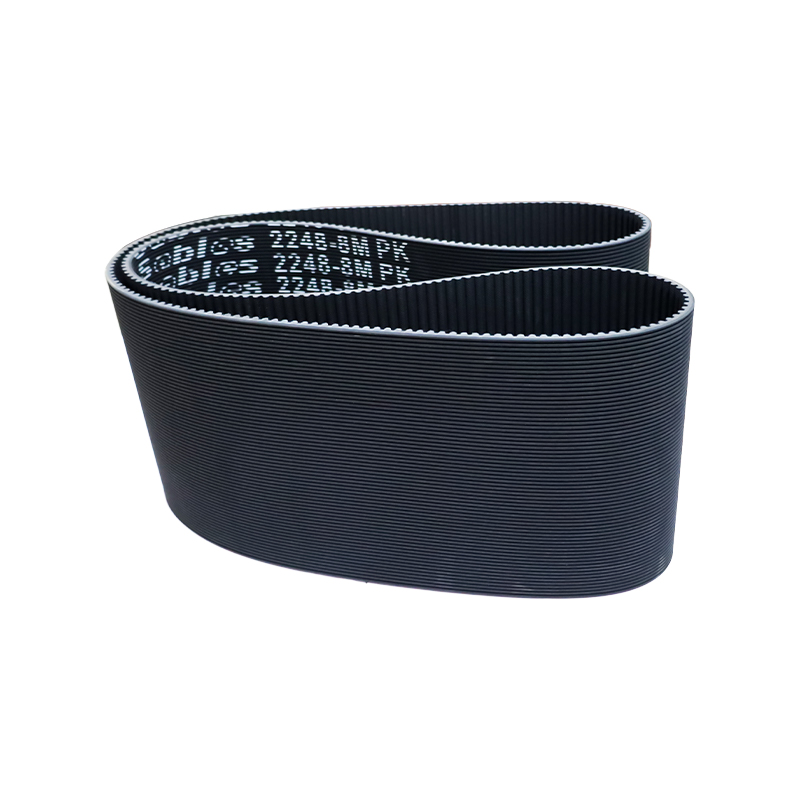
A belt that has to be threaded through a machine frame, or joined after the gearbox and pulleys are already bolted down, is an open end HTD timing belt. It arrives as a straight length, not a loop, and the joint is made at the machine. That is its whole value, and it is also its whole risk, because an open end drive almost never fails at the tooth. It fails at the splice.
The short answer on specification: choose the HTD pitch from the torque and the pulley tooth count, not from whatever pulley happens to be on the shaft; confirm the width against the pulley face; decide the cord and joint type before anyone cuts the belt; and treat joint efficiency as the real rating of the drive. If you expect an open end belt to carry the full catalogue torque of an endless belt of the same pitch and width, the numbers will disappoint you.
What End HTD Means: Open Length, Not a Loop
HTD stands for High Torque Drive, a family of curvilinear tooth profiles built around pitches of 2 mm, 3 mm, 5 mm, 8 mm, 14 mm and 20 mm. The rounded tooth seats deeper in the pulley groove than a trapezoidal tooth, so it carries more load per millimetre of width and runs with less tooth interference at speed.
The word end covers two different situations, and mixing them up is behind a good share of wrong orders:
- Open end or open ended: the belt is supplied in a linear length and closed on site, by vulcanising a rubber belt or welding a polyurethane one.
- End fixation: in a linear actuator or reciprocating drive, both belt ends are clamped to a carriage, so the clamp plate and hole pattern matter as much as the belt.
- Endless: a closed loop moulded as a loop with no joint at all. It is not the same product and cannot replace an open end belt where the frame cannot be split.
For a rubber belt the join is usually a vulcanised finger splice. For polyurethane it is normally a fused weld made on a heated press, which is why PU open end belts are common on clean, high speed machinery where a rubber splice would run hot.
 Open Timing Belts for Spliced and Welded DrivesOpen timing belt series for rubber vulcanised or polyurethane welded joins; compare belt construction and tooth profile before selecting a drive.View Product →
HTD Pitch Selection: Where 5M, 8M and 14M Actually Fit
The table below is a starting filter, not a datasheet. The authoritative figure is the allowable tooth load in the belt maker's catalogue at your pulley tooth count, your speed and your duty cycle. If a pitch looks marginal in the table, it is marginal in service. For background on how the HTD profile compares with STD and GT, see how HTD, STD and GT tooth types differ.
Indicative HTD pitch ranges. Confirm allowable tooth load, minimum pulley teeth and available widths against the belt manufacturer's data for your speed and load profile.
| Pitch |
Length step per tooth |
Common widths |
Typical duty |
Where it shows up |
| 3M |
3 mm |
6, 9, 15 mm |
Light |
Instrument drives, small sliders, light packaging heads |
| 5M |
5 mm |
9, 15, 25 mm |
Light to medium |
Textile winders, printing infeed, small conveyors |
| 8M |
8 mm |
20, 30, 50, 85 mm |
Medium to heavy |
Printing, woodworking, packaging lines, pump drives |
| 14M |
14 mm |
40, 55, 85, 115 mm |
Heavy |
Machine tools, mixers, large conveyors |
| 20M |
20 mm |
115, 170 mm |
Very heavy |
Mills, heavy plant drives, bulk handling |
8M is the workhorse in most industrial plants, and it is also the pitch where open end stock is easiest to find in a range of widths. If your drive sits between 5M and 8M on torque, going up a pitch and keeping the width is usually cheaper than going up a width at the same pitch, because narrow pulleys are easier to align and the belt tracks better.
Joint Strength Sets the Real Rating of the Drive
A vulcanised finger splice works by cutting the two belt ends into interlocking fingers, adding unvulcanised rubber and pressing them under heat. The tensile cords are not continuous through that splice, so the joint carries load in shear through the rubber rather than through the cord. Practical joint efficiency typically lands well below the endless belt rating, and the spread between a good splice and a rushed one is large.
What that means in design terms:
- Ask for a joint efficiency figure in writing and size the drive to it, then apply your service factor on top of that reduced figure.
- Keep the joint on the slack side and on the longest straight run. Never design a layout where the splice has to pass over a small pulley under load on every cycle.
- Avoid parking the machine with the joint sitting on a small pulley under tension overnight, because creep and heat at that spot accumulate.
- Check the splice on arrival: a step of a few tenths of a millimetre across the joint is normal, a visible ridge or a hollow is not. Measure the pitch across five teeth spanning the joint and compare it with the same measurement away from the joint.
Confirming Length and Cut Allowance
For a two pulley drive, the pitch length you need is L = 2C + 1.571 (D + d) + (D - d)(D - d) / (4C), where C is centre distance and D and d are the pitch diameters of the large and small pulleys. Pitch diameter is tooth count multiplied by pitch divided by 3.1416, not the outside diameter of the pulley.
A worked example: 8 mm pitch, 60 teeth driving 30 teeth, centre distance 500 mm. Pitch diameters are 152.8 mm and 76.4 mm, which gives a required pitch length of about 1363 mm. For a moulded loop you would step to 170 teeth, or 1360 mm. For an open end belt you cut to that length plus the splice allowance, which is normally one to two pitches plus the splice length the supplier uses, and the finished length after joining is what has to be confirmed.
Two tolerances decide whether the job runs. Joined belts hold a wider pitch length tolerance than moulded loops, so leave take up of at least 1.5 percent of belt length in the layout. Rubber belts also elongate over the first weeks in service, and a drive with no idler and slotted motor mounts only has a few millimetres of adjustment to give.
Installation, Tension and End Clamping
Alignment first. Aim for shaft parallelism within about 0.25 mm per 100 mm of centre distance and angular misalignment under half a degree. A belt that is fighting misalignment will wear its own edge before the teeth show any distress.
For tension, use the deflection method: press at mid span until the belt deflects about 1.6 percent of the span, so 16 mm on a one metre span, and compare the force needed with the supplier's figure for that pitch and width. Run the drive for 24 to 48 hours, then re tension. Open end belts settle at the splice as well as along the body, and the first re tension is not optional.
On a linear axis, the clamp is the weak point people forget. Use a clamp plate at least as thick as the belt body, grip on the tooth side with a serrated face so the teeth seat in the serrations, and bolt through the plate rather than pinching the belt edge. Pre tension a linear belt by 2 to 5 percent so the carriage does not lag on reversal, and check the clamp bolts again after the first shift.
Failure Signals Worth Logging
Most open end failures announce themselves before the line stops. Keep a simple log and read it:
- A thin dark line at the splice edge is the start of joint separation, and it will not heal.
- Tooth root cracking points to overload or a pulley below the minimum tooth count for that pitch.
- Frayed edges mean misalignment or a flange rubbing, not bad rubber.
- Glazed, shiny tooth flanks indicate under tension and slipping, which raises groove temperature fast.
- Dust packed into the pulley grooves changes effective pitch and wears both parts.
- Elongation beyond the take up range means the belt is finished, even if the teeth still look good.
Matching Belt, Pulley and Material
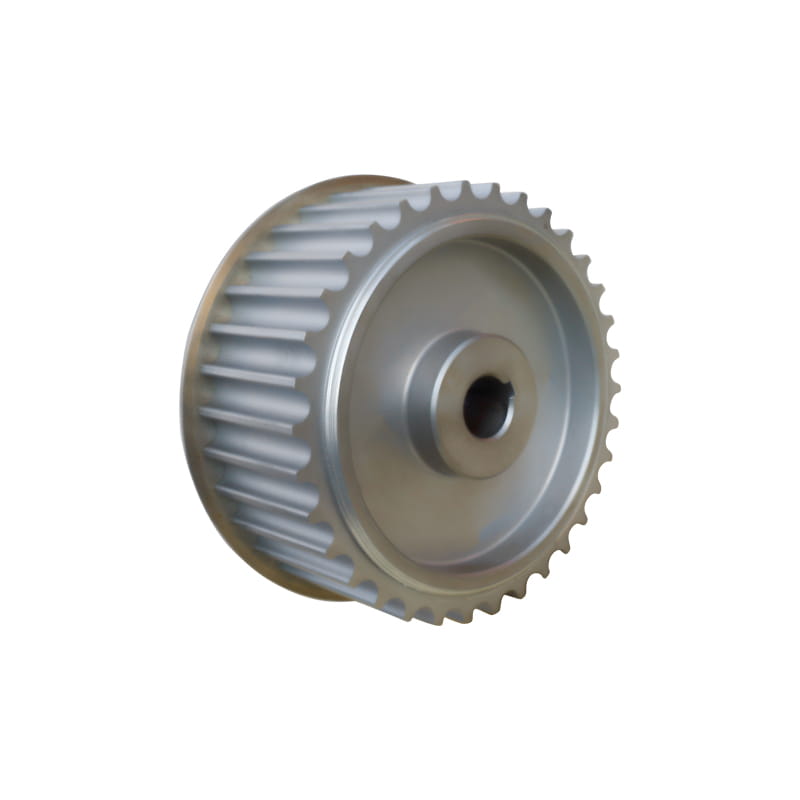
Rubber HTD belts suit general industrial drives, tolerate heat and occasional oil mist, and are the practical choice for larger pitches where a vulcanised splice can be made properly. Buy the belt and the pulley as a pair where possible, because a tooth form that does not match the groove will wear out a good belt in weeks.
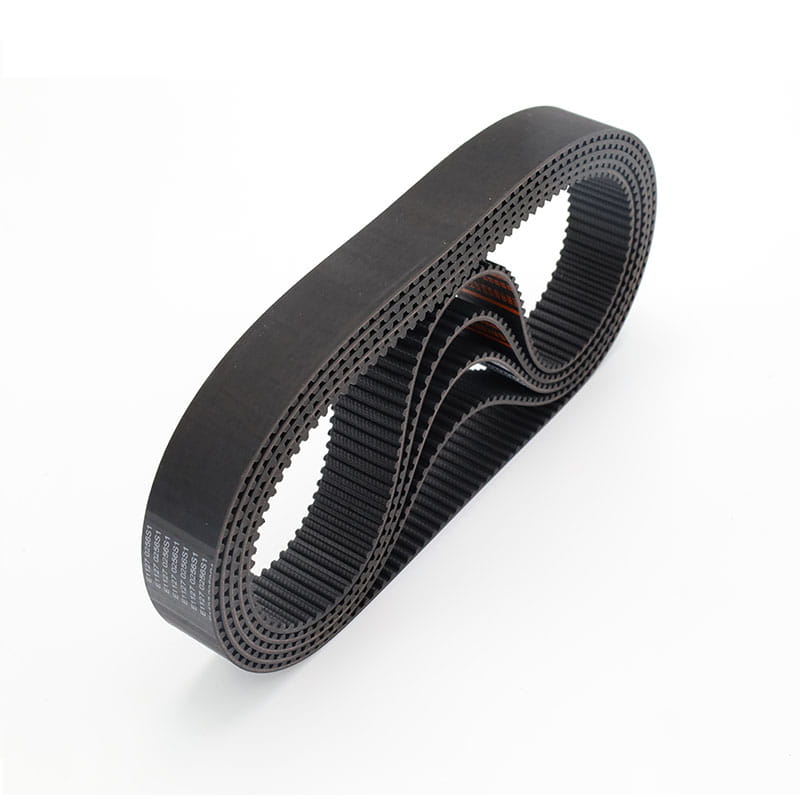 Rubber Synchronous Belts for Industrial Positioning and TransmissionRubber timing belts with glass-fibre cord, chloroprene body and nylon tooth covering, offered in many profiles for positioning, conveying and general industrial drives.View Product →
Polyurethane open end belts are the better fit for clean rooms, food adjacent lines, high speed spindles and drives that see solvents. They weld rather than vulcanise, they hold length well, and they resist abrasion, but they have less tolerance for heat and for running dry against a rough pulley.
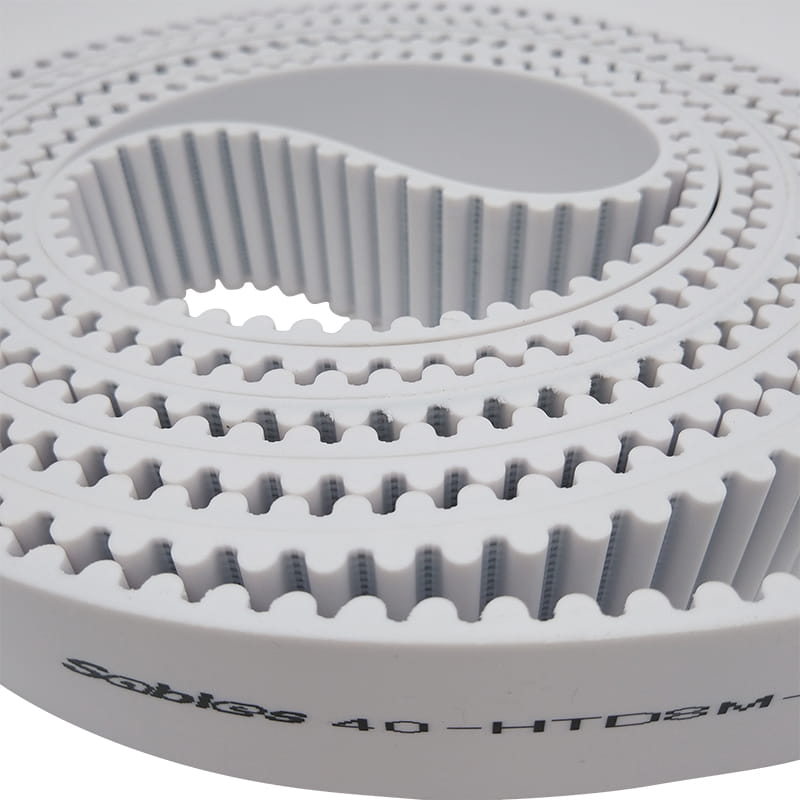 Polyurethane Synchronous Belts for Clean, High-Speed TransmissionPU timing belts with wire or Kevlar cord, stable length, low noise and wear resistance, suited to clean conveying, positioning and high-speed machinery.View Product →
Where the duty is genuinely awkward, such as a joint that must pass a small pulley or a width that no standard mould covers, a special processed belt is usually cheaper than redesigning the drive around a stock item.
What to Put on the Enquiry
Half of all open end belt disputes are specification disputes. A complete enquiry removes them:
- Pitch designation and, if known, the pulley tooth counts.
- Pitch diameter of both pulleys, measured or calculated, not outside diameter.
- Belt width and the usable face width of the pulley.
- Open length supplied, or finished pitch length after joining. Say which one you are quoting.
- Joint type required and the joint efficiency you are designing to.
- Cord type and backing, especially on PU belts.
- Ambient and running temperature, plus any oil, dust or washdown exposure.
- Machine, axis and cycle rate, so the supplier can sanity check the pitch against the duty.
An open end HTD belt is a sound engineering choice as long as the splice is treated as part of the design and not as an afterthought. Get the pitch right, derate for the joint, leave take up in the layout, and re tension after run in. Do those four things and the belt will reach its normal wear life instead of the joint deciding it for you. If you are still comparing profiles and materials, the belt and pulley range is a reasonable place to check what is available in open length before you fix the drawing.



 中文简体