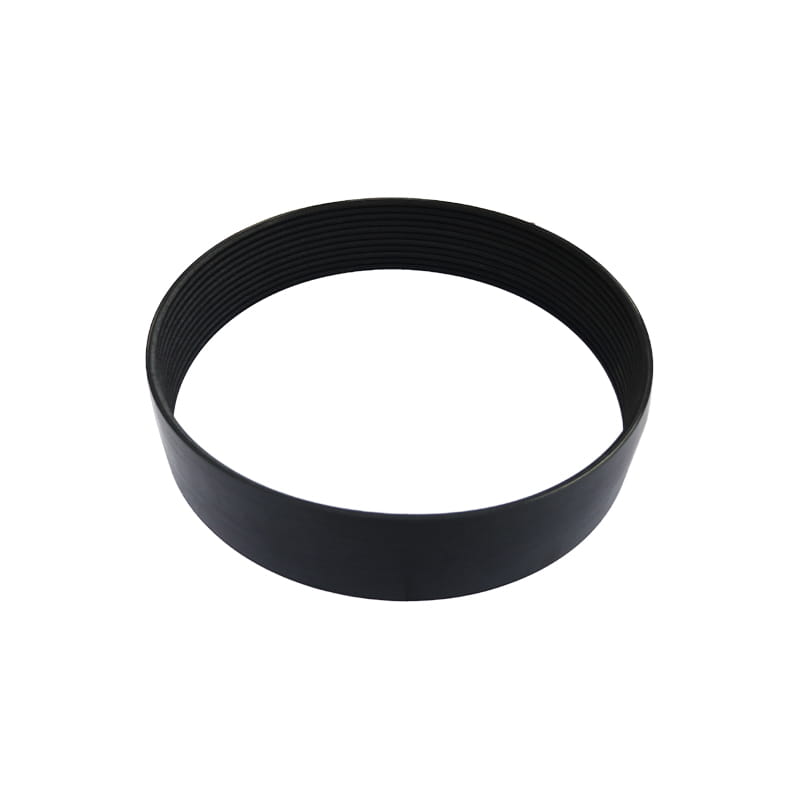
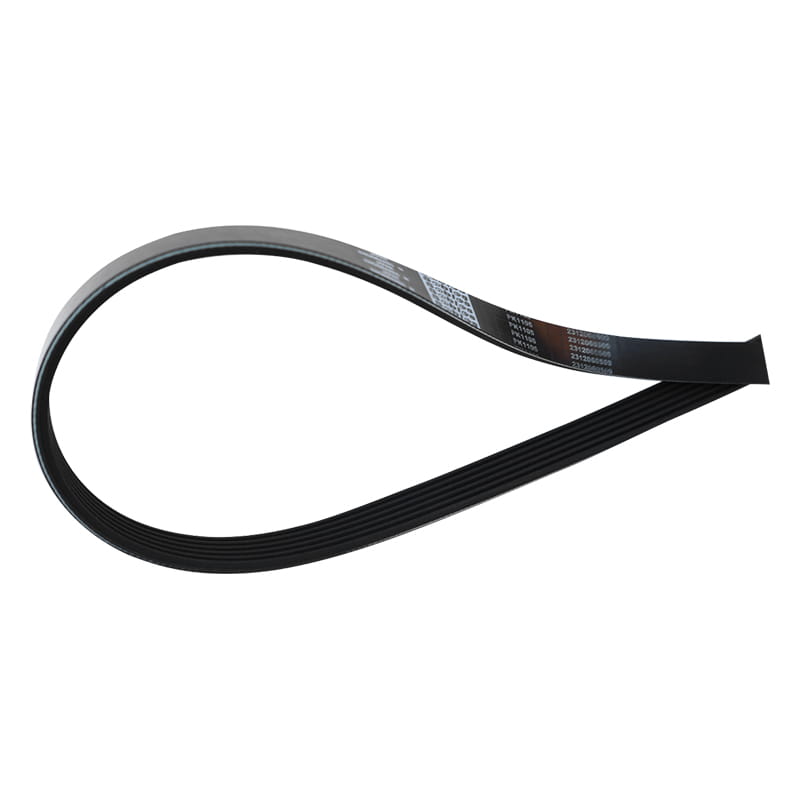
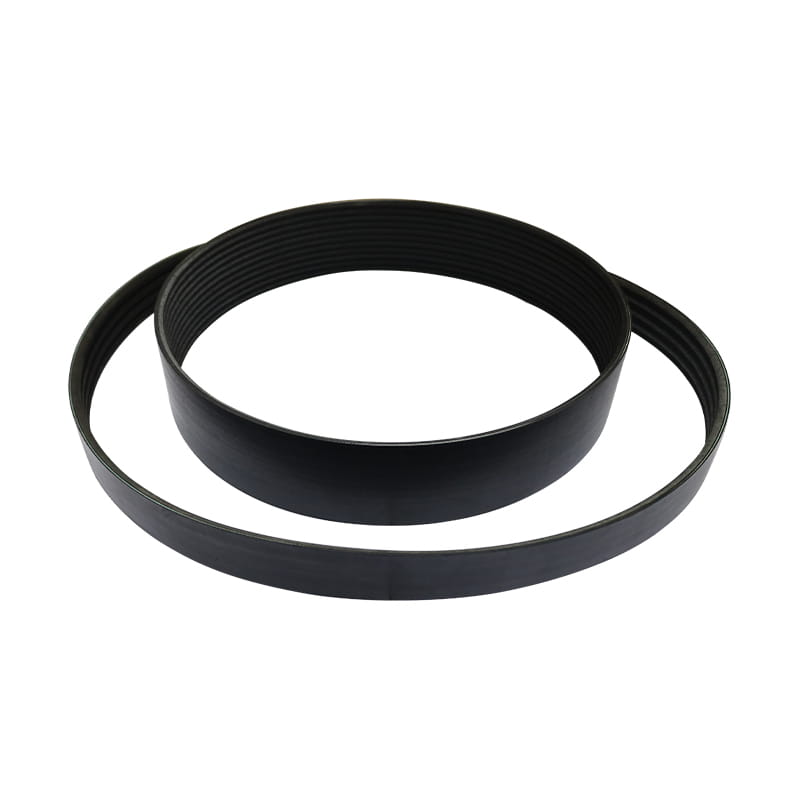
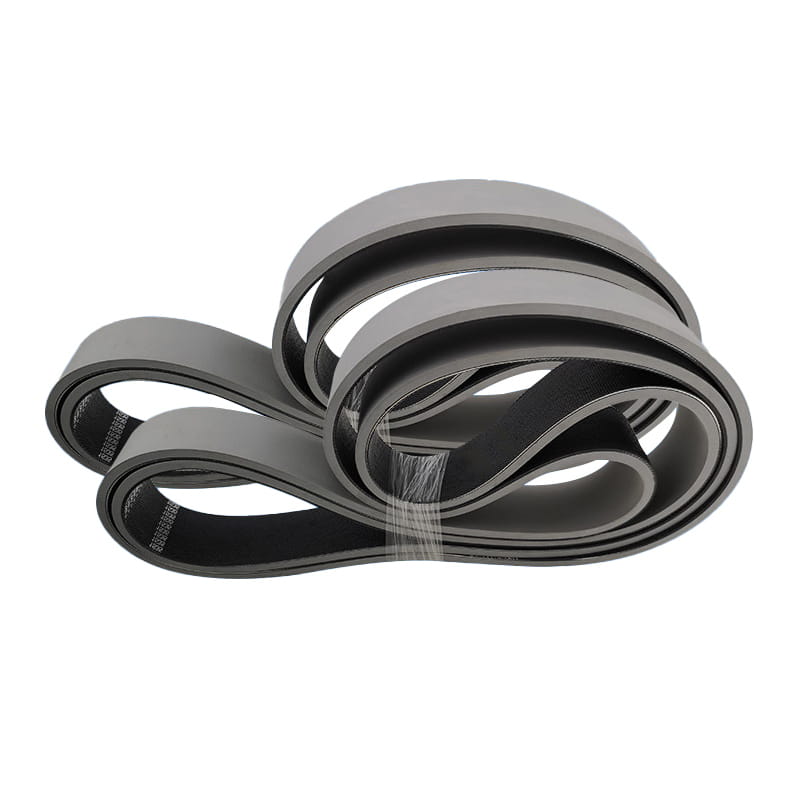
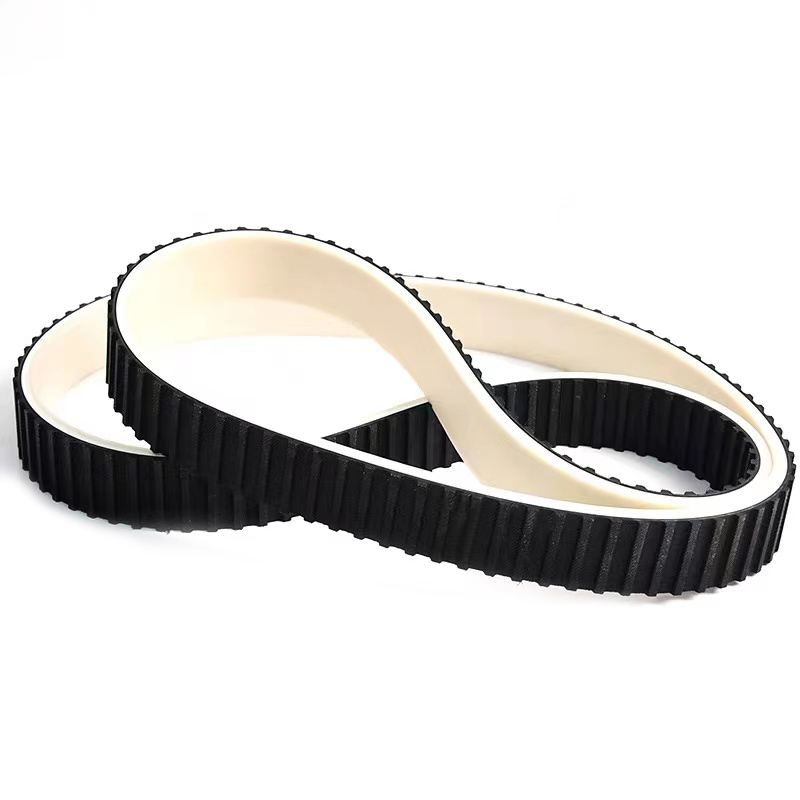
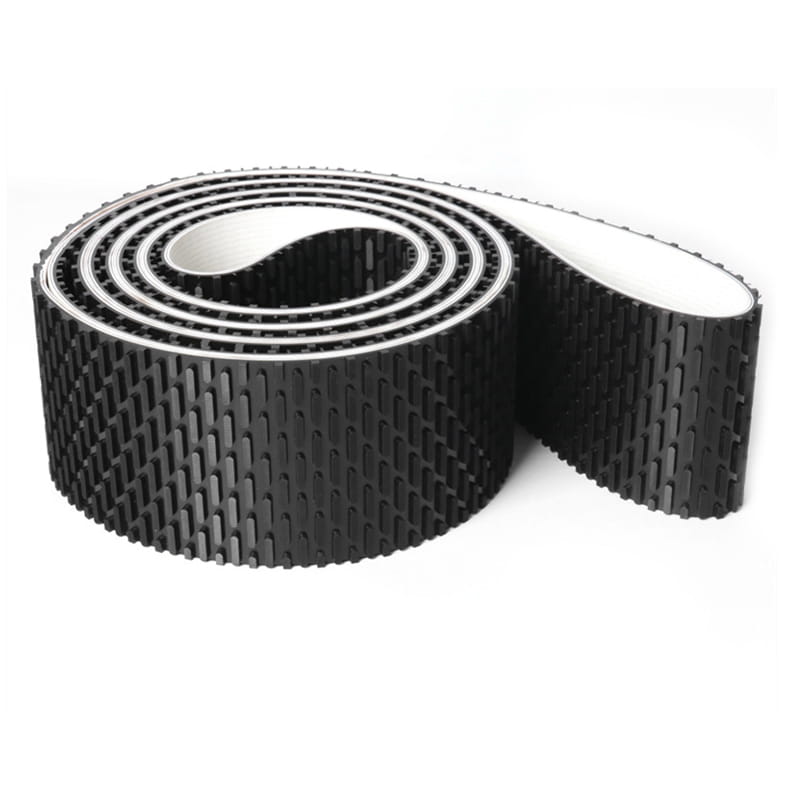
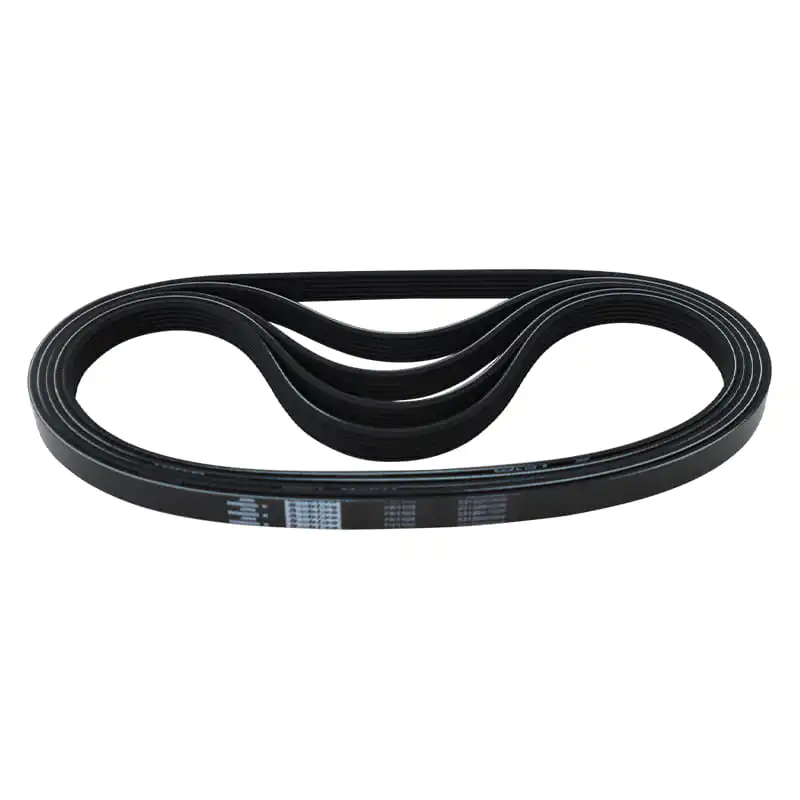
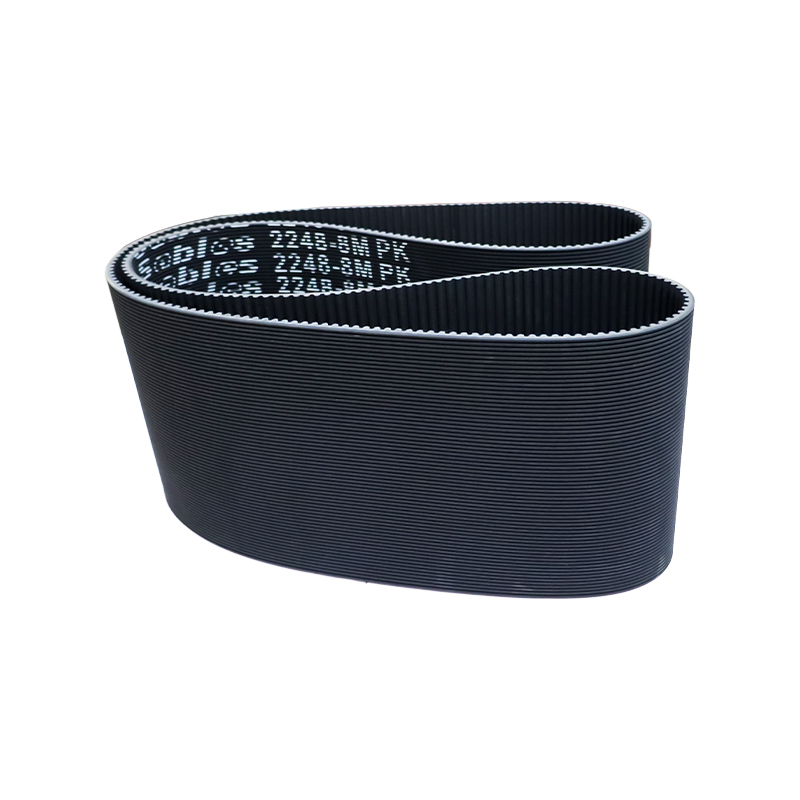
Poly-V belts now solve a problem that has frustrated engineers for years: how to push more power through a drive that is already cramped. The belt uses a thin backing with multiple small V-shaped ribs on the underside, so it grips the pulley over a much larger surface area than a single V-belt of the same width. That extra grip translates into higher torque capacity, less slip, and a quieter drive. For a production line, this means the motor can be downsized or the operating speed increased without redesigning the entire frame.
The practical conclusion is simple: a well-specified poly-V belt drive can outperform a conventional V-belt drive of the same width in power density, speed range, and noise. But the benefits are only realized when the profile, tension, and pulley condition are correct. The following sections give the data and the context needed to make that judgement.
How the Poly-V Belt Achieves Higher Power Density
Poly-V belts are manufactured in several rib profiles. J rib and K rib are the most commonly seen in small industrial drives, while L and M ribs handle heavier loads at lower speeds. The number of ribs, not the width alone, determines the power rating: a 6-rib K profile carries a very different load from a 10-rib K profile even though the backing may look similar. Therefore, when selecting a poly-V belt, always match the rib count to the pulley grooves and the motor power.
The backing's thickness and material also influence performance. A thin backing bends around small pulleys with low internal friction, but it must still support the ribs over their full length. Rubber compounds with aramid or polyester tensile cords provide the necessary fatigue resistance. In practice, a poly-V belt can bend around pulley diameters roughly 20 percent smaller than a classical V-belt of comparable rating, which lets designers shorten center distances and reduce the total drive envelope.
For engineers who already use rubber wide-angle belts in a similar power range, the change to a poly-V profile is often straightforward. If the pulley grooves have the same angle and pitch, the poly-V belt can run on the same center distance but with a thinner backing and lower noise. Our rubber wide-angle belt range shares the same production discipline as our poly-V products, so the transition can be tested with standard pulleys.
Performance Comparison: Poly-V vs Conventional V-Belts
Data from comparative drive tests help turn general claims into usable engineering criteria. The horizontal bar chart below shows the relative belt width required to transmit 10 kW at 3000 rpm, with the classical A-section V-belt normalized to 100. A lower value means a more compact drive.
The horizontal bar chart compares the belt width index for four common drive families, with lower bars representing less required width. In this test, a J-profile poly-V belt fits into roughly 60 percent of the width of a classical A-section V-belt, while a K-profile poly-V belt needs about 75 percent. That difference is not just a housing calculation. A narrower drive reduces the face width of pulleys, shaft loads, and the overall weight of the machine. For design engineers, this opens a clear path to a smaller drive package without reducing power. Even in a retrofit, the extra space can be used for a larger motor, better airflow, or easier access for maintenance.
Typical performance indices for common belt types in an industrial drive application
Belt type
Width index
Efficiency at 3000 rpm
Noise dB
Relative life
Poly-V J profile
60
97%
68
1.2
Poly-V K profile
75
96%
69
1.1
Narrow V SPZ
88
93%
72
1.0
Classical V A
100
91%
74
0.9
Efficiency at High Speed: Where Poly-V Belts Win
Speed changes the picture. Poly-V belts shine at high rotational speeds because the multiple ribs spread the load and reduce the pressure on each rib. The line chart below compares transmission efficiency over a speed range from 0 to 7000 rpm.
The line chart tracks efficiency from a low base speed to 7000 rpm. The two belts are close at 2000 rpm, where a conventional V-belt still holds most of its performance. Above 3000 rpm, the poly-V curve stays almost flat while the V-belt efficiency begins to fall steadily. At 7000 rpm, the gap is roughly 10 percentage points, which means the V-belt is wasting significantly more input power as heat and slip. In long-running machinery, this difference can affect motor current, ventilation, and overall energy costs. For high-speed applications such as spindle drives and compressor units, the poly-V belt therefore offers a measurable economic benefit.
In a high-speed printer or packaging machine, operating above 4000 rpm is common. Here the efficiency gap between a poly-V belt and a conventional V-belt can reach 10 percentage points. That gap appears as heat in the belt and bearings, so it also affects lubrication intervals and component life. Keeping the belt tension at the manufacturer's recommended value is important because overtensioning creates additional friction in the pulley bearings, while undertensioning causes slip and rapid rib wear.
Noise, Vibration, and Service Life
Acoustic measurements are a reliable way to identify poor load distribution or misalignment. The column chart below shows noise levels measured at 3000 rpm for four drive configurations under equal load. Lower values are better.
The column chart compares noise levels for four drive configurations running at the same speed and load. A poly-V belt records about 68 dB, five decibels lower than a standard V-belt and ten lower than a roller chain. Because the decibel scale is logarithmic, a reduction of 3 dB is already a halving of acoustic energy. The extra ribs reduce the pressure fluctuation on each groove, which is the main source of belt whine and vibration. A quieter drive usually signals more balanced load distribution and longer belt life. In factories where operators stand near the equipment, this reduction can also improve the work environment.
In hot or oily environments, the polymer used in the ribs must resist the same contaminants that attack V-belts. A specially compounded ribbed belt can provide better heat resistance, oil resistance, and wear performance without changing the pulley geometry. You can review the detailed comparison of ribbed belt properties to decide whether a standard or upgraded compound fits your maintenance schedule.
Application-Specific Considerations for Poly-V Belts
Poly-V belts are particularly useful in machines where powerful but compact drives are required. Typical applications include:
Printing presses: high-speed line shafts and roller drives
Textile machines: spindles and take-up rollers
Packaging equipment: continuous motion conveyors and servo-assisted drives
Photovoltaic production lines: precise rotary indexing stations
Logistics sorters: belt conveyors with frequent starts and stops
In each case, the drive designer should verify three things before choosing a poly-V belt: pulley groove dimensions, required dynamic load at the highest operating speed, and the available take-up range for tensioning. A common mistake is to buy a belt that has the correct number of ribs but the wrong rib profile for the pulley. Measuring the pulley with a profile gauge takes less than a minute and prevents a costly downtime.
A Balanced View: Weighing the Trade-offs
Selecting a belt is not about finding a single best product, but about balancing the criteria that matter for the application. The radar chart below compares poly-V and conventional V-belts across six decision criteria. Values closer to the outer edge are better.
The radar chart summarizes the strengths of each belt family across six practical criteria. Poly-V belts occupy the outer area in power density, space saving, speed capability, and noise reduction, which matches their popularity in compact machines. Standard V-belts remain strong only in ease of maintenance, because a single belt can be replaced without pulling the whole drive. In service life the two are close, although a clean, correctly tensioned poly-V drive tends to last a little longer. This type of visual comparison helps keep the decision objective when a project has competing priorities. For a design that needs maximum compactness and speed, the poly-V belt is the better choice.
How to Choose a Poly-V Belt Supplier
Once the drive parameters are clear, the remaining question is where to buy the belt. A supplier that manufactures its own rubber timing belts and specialty belts can provide consistent quality and faster sampling than a trader. Ask for test reports that show tensile strength, elongation, and heat aging data for the specific rib profile.
At Jiangxi Kangqi Industrial, our factory produces rubber synchronous belts, ribbed belts, and wide-angle belts under controlled conditions. We support small-batch prototypes and long production runs, and our long-pitch rubber timing belt molding capability extends to large circumference drives. Whether you are an OEM or a maintenance team, sending us the pulley dimensions and operating data is the fastest way to get a suitable recommendation.
Poly-V belts are not a universal replacement for every drive, but where space is tight and speed is high, they offer measurable advantages. Start with the data above, measure the existing pulley, and run a sample before committing to a full changeover.
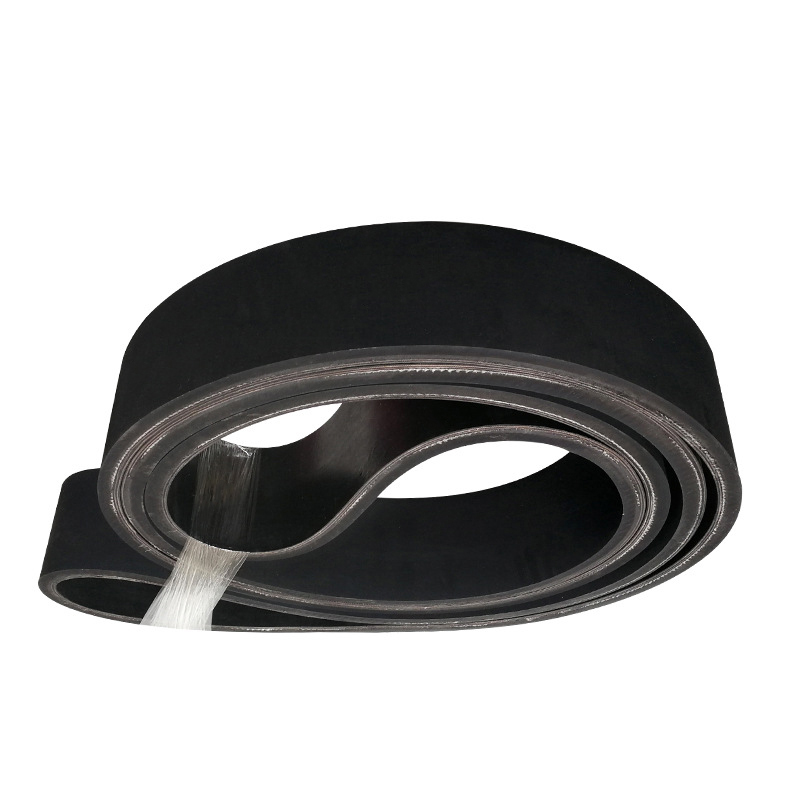
The conveyor belt is composed of surface adhesive, core, and layer glue. In addition, a layer of buffer cloth can be added to the use of high drop impact to make it more impact-resistant.
The surface adhesive
With natural rubber and synthetic rubber as raw materials and in order to enhance wear resistance, crack resistance, aging resistance, and other properties, the surface adhesive has various characteristics such as wear resistance, cutting resistance, heat resistance, flame resistance, cold resistance, acid and alkali resistance, oil resistance, static electricity resistance and so on. Cloth layer core
The cloth layer is composed of natural fiber or chemical fiber alone or a combination of the two, has the same quality after single-step treatment by a mature process, And has good adhesion with rubber. The adhesive layer
The adhesive layer is very important for the adhesive force between the layers of the core of the conveyor belt that is repeatedly flexed. Especially for high-tension conveyor belts, a layer of adhesive with less buckling stress and less fatigue due to internal stress must be used.
Specifications and models can be customized according to customer requirements, with a thickness ranging from 2.0 mm to 8.0 mm.
High-speed, smooth, and low-extension transmission and conveying systems, such as textile machinery, woodworking machinery, grinding machinery, ticket vending machines, vegetable cutting machines, etc. Characteristics: High speed and stability, high tensile strength, and low elongation.
The seamless rubber band produced by woodworking machinery can be used for sanding, correcting, and trimming core materials, planing wood boards, laminated boards, plastic laminated boards, and other machines, and can help the surface to be perfectly machined and selected.
Its special technology lies in the manufacturing method and produces the required size jointless belt. We not only strictly control the quality, but also insist on using imported materials in order to make our sander belt have better performance.
All parts of thickness and strength are absolutely uniform.
It has a good linear operation.
High flexibility can be used for small wheel diameters.
It can maintain flatness and non-deformability under working pressure.
The friction coefficient between the bottom of the belt and the plate surface is very low.
Because the surface layer of the belt is covered with rubber, the adhesiveness is improved and the stability of the conveyor belt is improved.
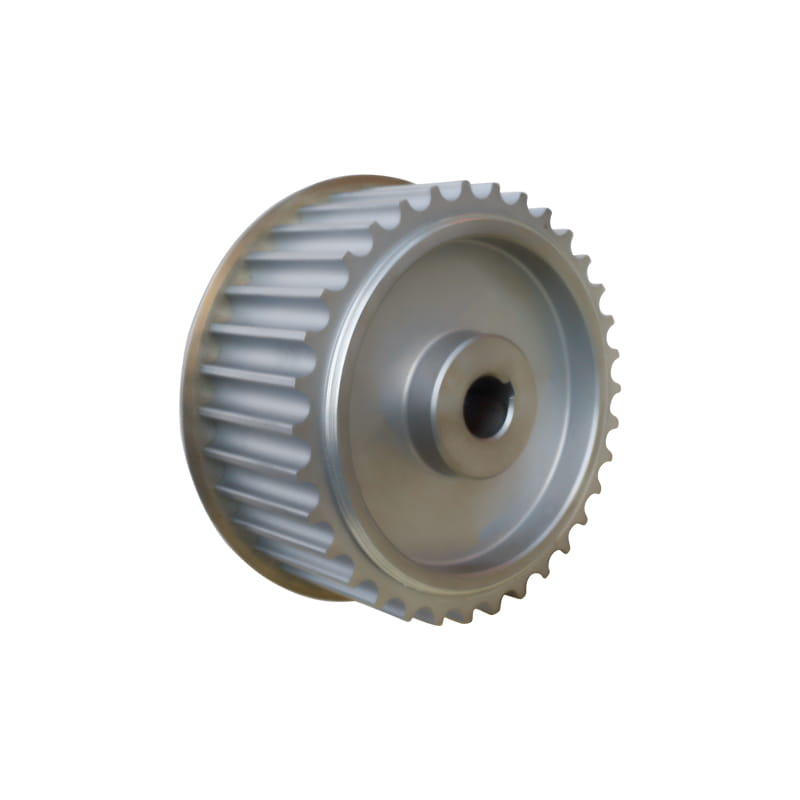
Apply to each field of the synchronous-driven device system. Characteristics:
Ensure coordination with the belt, to enhance the accuracy and lifetime of the driven. According to customer requirements, customization optimum driven solution can divided into 45# steel, aluminium alloy, stainless steel, cast iron, nylon, etc, according to the material.
It is suitable for outdoor transmission equipment, transportation equipment, medical equipment, electric tools, household appliances, and sports equipment. Characteristics:
1. The transmission power of the ribbed belt is higher than that of an ordinary V-belt by 30 % when the space is the same.
2. The transmission system of the ribbed belt has a compact structure, and under the same transmission power, the space occupied by
the transmission device is 25 % smaller than that of the common V-belt.
3. The ribbed belt is thin and flexible and is suitable for transmission with a small pulley diameter and high-speed transmission, with belt
speed up to 40m/ s; Small vibration, less heat, and stable operation.
4. The ribbed belt is heat-resistant, oil-resistant, and wear-resistant, with small elongation and a long service life.



 中文简体
中文简体