On a form fill seal line running 120 cycles per minute, the timing belt is rarely the most expensive item on the bill of materials, but it is often the part that stops production. When that line handles cartons, film and lightly lubricated chains, the choice between a polyurethane timing belt and a rubber timing belt usually decides how often the maintenance team returns to the same pulley.
The short answer first. Polyurethane timing belts are the better default for high speed positioning drives that run clean, see oil mist or cutting fluid, and need to hold belt length between service intervals. Rubber timing belts remain the better default when a drive runs hot, takes heavy shock loads, or sits in hot humid air where hydrolysis attacks polyurethane. Most plants end up needing both, and the quickest way to choose is to compare real operating conditions against a small set of measurable properties instead of a general material preference.
What a Polyurethane Timing Belt Is Made Of
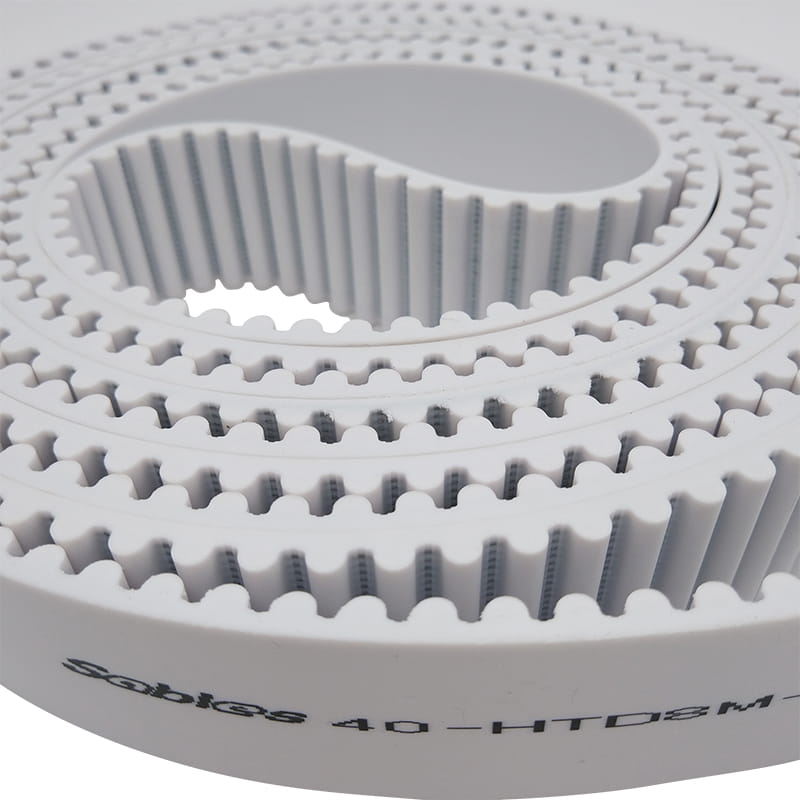
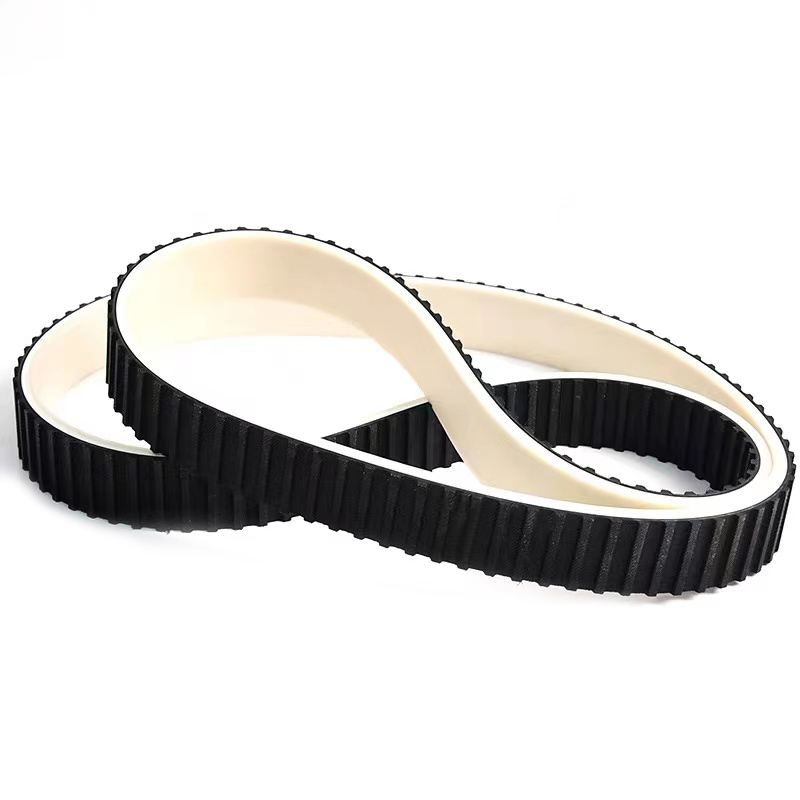
A polyurethane timing belt is molded as one piece. The body is thermoplastic polyurethane, normally between 85 and 95 Shore A, and the tensile cord is co extruded inside the body instead of being bonded in a second operation. Because the teeth are molded rather than cut, the tooth flanks stay smooth and the belt keeps its pitch over the full length, which is what allows a drive to repeat its position cycle thousands of times per shift.
The cord carries the load. Galvanized steel cord is standard for high torque drives because it stretches very little and holds tension; stainless cord appears where washdown or corrosion is a factor; aramid cord is chosen when weight and flex fatigue matter more than absolute stiffness. Cord choice, not belt color, is usually the real difference between two belts that share the same tooth profile and sit at the same price point.
Profiles follow the usual international families: T5, T10, AT5 and AT10, plus the HTD family in 3M, 5M, 8M and 14M pitches. These dimensions are published in belt drive standards, so a correctly specified belt should interchange between makers without re machining the pulleys. A PU belt can be supplied open for on site splicing or as an endless welded belt for a fixed center distance.
Typical property ranges for polyurethane and rubber timing belts. Ranges vary by compound and cord type, so confirm values with the belt supplier before release.
PU belts tend to appear in the same group of machines again and again, because those machines share the same combination of speed, cleanliness and chemical exposure.
Packaging and form fill seal equipment, where the belt drives film feed and sealing jaws at high cycle rates.
Printing, labelling and finishing lines, where registration accuracy and low dust matter more than raw torque capacity.
Photovoltaic and battery cell handling, where particle generation is controlled and the belt runs in a dry environment.
Logistics sortation and cross belt systems, where hundreds of belts must behave identically over years of start stop cycles.
Wire and cable machinery, where drawing and stranding drives sit close to lubricants and fine metal debris.
Food processing and light conveying, where washdown chemistry rules out unprotected rubber.
Temperature: The First Number to Check
Continuous operating temperature ceiling by belt material, degrees C
Silicone
200 deg C
Rubber (HNBR)
100 deg C
Polyurethane
80 deg C
Indicative ceilings for continuous duty. Short term peaks may be higher.
The horizontal bars above show how much continuous heat each elastomer can normally absorb before aging accelerates. Polyurethane sits near 80 degrees C, which is below the 100 degrees C typical of nitrile or HNBR rubber and far below silicone. That single number explains why a PU belt mounted near a hot dryer drum or a heated platen tends to harden, glaze and crack within a few months, even though the same belt lasts years on a cool drive. It also explains why PU belts are so common on drives that run at ambient temperature but at high speed, where heat comes from internal flexing rather than from the surroundings. As a working rule, if the measured air temperature around a PU belt stays below 60 degrees C, the material is comfortable; between 60 and 80 degrees C, life shortens and the belt should be re checked at every service; above 80 degrees C, specify rubber or silicone instead. Measure the temperature after the machine has run at full load for at least one hour, because a cold start reading is always misleading.
Why Belts Fail: Alignment Comes Before Material
Reported causes of premature timing belt failure, share of inspected drives
38%
26%
18%
11%
7%
Misalignment
Over tension
Worn pulley
Chemical attack
Other
Illustrative distribution from industrial drive service checks.
The column chart shows why swapping a rubber belt for a polyurethane belt rarely fixes a drive that is already failing. Misalignment is the largest single cause, and it damages a PU belt even faster than a rubber one because the stiffer cord concentrates the load on one edge of the tooth. Over tension is next, and it is the mistake most often made during a quick repair, because a belt that feels tight by hand is usually already too tight by design standards. Worn pulleys follow, and the classic sign is a belt that lasts a few weeks, then strips teeth while the pulleys look acceptable to the eye. Chemical attack accounts for a smaller but very predictable share, and it is nearly always a polyurethane belt sitting in hot humid air or in contact with a specific cutting fluid. The practical lesson is to check shaft alignment within about 0.5 mm, confirm pulley runout and groove wear before installing anything new, and re tension the drive to the supplier figure rather than to feel.
Elongation and Re tensioning Over Service Life
Polyurethane belt with steel cordRubber belt with fiberglass cord
Indicative elongation curves for a correctly tensioned drive at ambient temperature.
The two curves show how differently the two belt families settle into service. A rubber belt stretches quickly during the first few hundred hours, then keeps creeping, which is why maintenance schedules usually call for a re tension check after the first week and again after the first month. A polyurethane belt with steel cord takes a much smaller initial set and then stays almost flat, so the drive keeps its center distance and the position accuracy of the axis does not drift. That stability is the main reason PU belts are chosen on indexing and registration drives, where a 0.5 mm change in belt length shows up as a visible print error. The trade off is that a PU belt has less tolerance for a mistake, because once it is over tensioned there is very little stretch left to absorb the mistake quietly. If elongation on a PU belt passes roughly 0.8 percent of the nominal length, or if the belt can be deflected far beyond the supplier figure, replace it rather than re tension it again.
Polyurethane Against Rubber, Property by Property
Polyurethane timing beltRubber timing belt
Relative ratings on a five point scale, drawn for comparison rather than as measured test data.
The radar plot puts the two materials side by side on the six properties that decide most industrial applications. The orange shape reaches furthest toward abrasion resistance, oil and chemical resistance, low noise and length stability, which matches the field experience of PU belts on packaging, printing and clean handling lines. The blue shape reaches furthest toward heat tolerance and hydrolysis resistance, which is why rubber belts keep their place in curing ovens, humid washdown areas and older machines with generous pulley diameters. Where the two shapes overlap, the choice is usually decided by the cost of the belt against the cost of a stop, not by the material itself. A useful habit is to read the chart from the inside out: any axis where a drive scores below three points will dominate the failure history, whatever the belt is made of. It is also worth remembering that PU belts run quieter and cleaner, which matters in food, medical and electronics areas where black rubber dust is not acceptable at all. If a drive is weak on both heat and hydrolysis, neither material is a perfect answer and the drive layout itself should be reviewed.
Matching the Belt to the Pulley
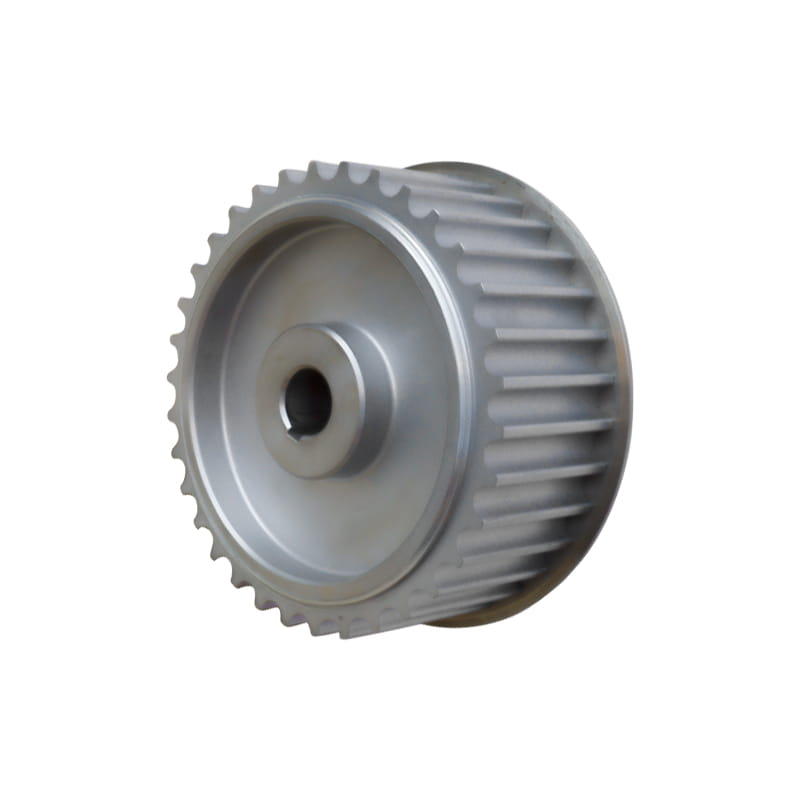
A belt is only half of a drive. Pulley tooth form, groove wear and runout set the limit on how well any polyurethane timing belt can perform, and inspectors regularly find pulleys whose grooves have widened by more than 0.2 mm after a few years of abrasive service. A worn pulley lets the belt sit deeper in the groove, changes the effective pitch and accelerates tooth shear at the point where the belt enters the mesh. Check the flanges as well, because a bent flange will guide the belt into the side wall and produce the frayed edge that is often blamed on the belt itself. Set shaft alignment within roughly 0.5 mm and parallel misalignment within about 0.1 degrees per 100 mm of center distance for high speed indexing drives. Where the belt is an open length, the joint quality decides the belt life, so the splice must be square, clean and cured exactly to the supplier instruction.
Rubber is not the outdated option. On a drive that runs above 80 degrees C, takes repeated shock loads from a jam, or works in hot humid air for most of the shift, a rubber timing belt will usually outlast a polyurethane belt and cost less to replace. Rubber also tolerates larger pulleys, more misalignment and rougher re tensioning practice, which suits older machines and drives maintained in the field. Where a plant already stocks one belt family and the failure history is acceptable, switching material purely to gain a small technical advantage often adds risk instead of removing it. The sensible approach is to keep both families available, use PU where accuracy and cleanliness pay for themselves, and use rubber where heat and abuse are the dominant conditions.
Record the exact center distance and confirm the belt length code, including whether an endless belt or an open length is required.
Measure the steady state air temperature around the belt after one hour at full load, then compare it with the material ceiling.
Confirm the tooth profile and pitch on the pulley, not only on the old belt, because the two can disagree after a repair.
Check pulley groove wear, flange condition, shaft alignment and runout before installing new belts.
Note any oil mist, cutting fluid, ozone, UV or steam near the drive, since each one rules out certain compounds.
Ask for the cord type in writing, because two belts with the same profile can differ by a factor of several in stiffness.
A polyurethane timing belt is not a universal upgrade, and treating it as one is how plants end up replacing belts every few months. Use the temperature chart to screen the drive, the failure column chart to fix the machine before blaming the material, the elongation curves to set a realistic re tensioning schedule, and the radar plot to compare the two materials on the properties that actually decide life. When the drive runs cool, clean and fast, PU will hold its length and its accuracy for years. When it runs hot, damp and rough, rubber still earns its place. Choosing between them on measured conditions rather than habit is the difference between a belt that is a consumable and a belt that is a recurring problem.
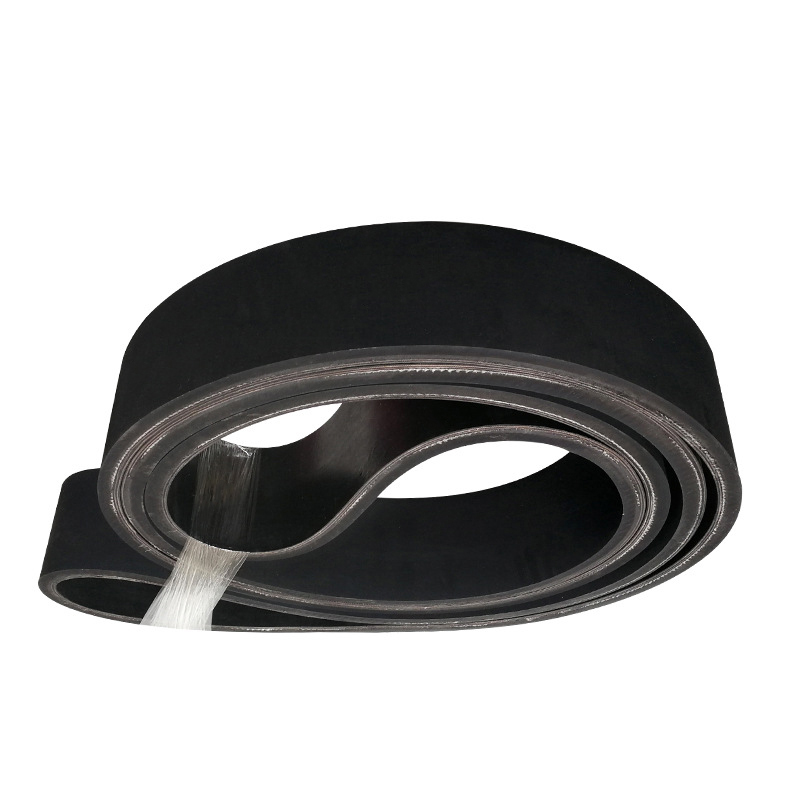
The conveyor belt is composed of surface adhesive, core, and layer glue. In addition, a layer of buffer cloth can be added to the use of high drop impact to make it more impact-resistant.
The surface adhesive
With natural rubber and synthetic rubber as raw materials and in order to enhance wear resistance, crack resistance, aging resistance, and other properties, the surface adhesive has various characteristics such as wear resistance, cutting resistance, heat resistance, flame resistance, cold resistance, acid and alkali resistance, oil resistance, static electricity resistance and so on. Cloth layer core
The cloth layer is composed of natural fiber or chemical fiber alone or a combination of the two, has the same quality after single-step treatment by a mature process, And has good adhesion with rubber. The adhesive layer
The adhesive layer is very important for the adhesive force between the layers of the core of the conveyor belt that is repeatedly flexed. Especially for high-tension conveyor belts, a layer of adhesive with less buckling stress and less fatigue due to internal stress must be used.
Specifications and models can be customized according to customer requirements, with a thickness ranging from 2.0 mm to 8.0 mm.
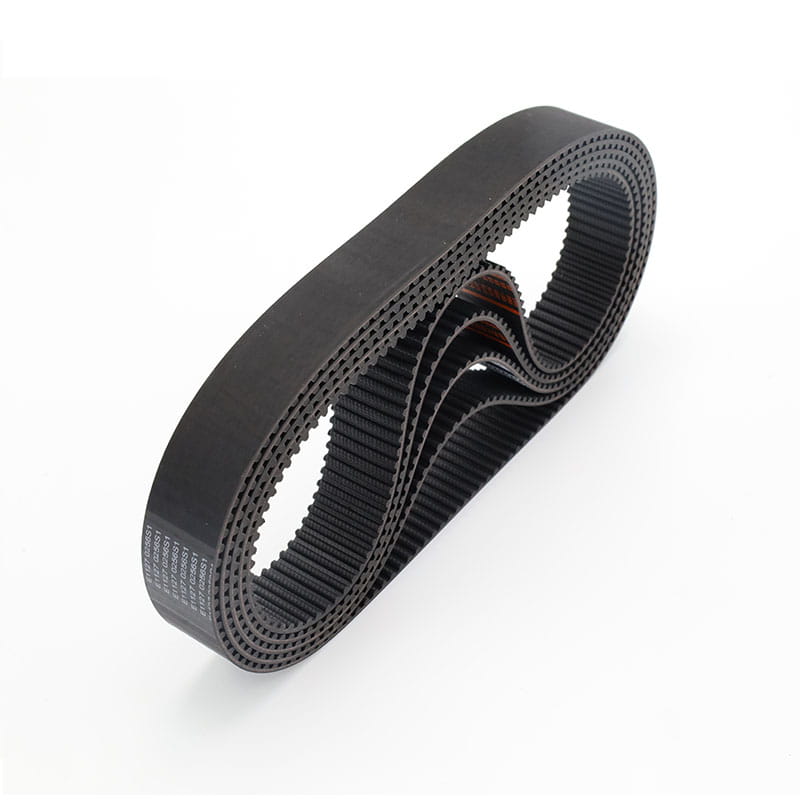
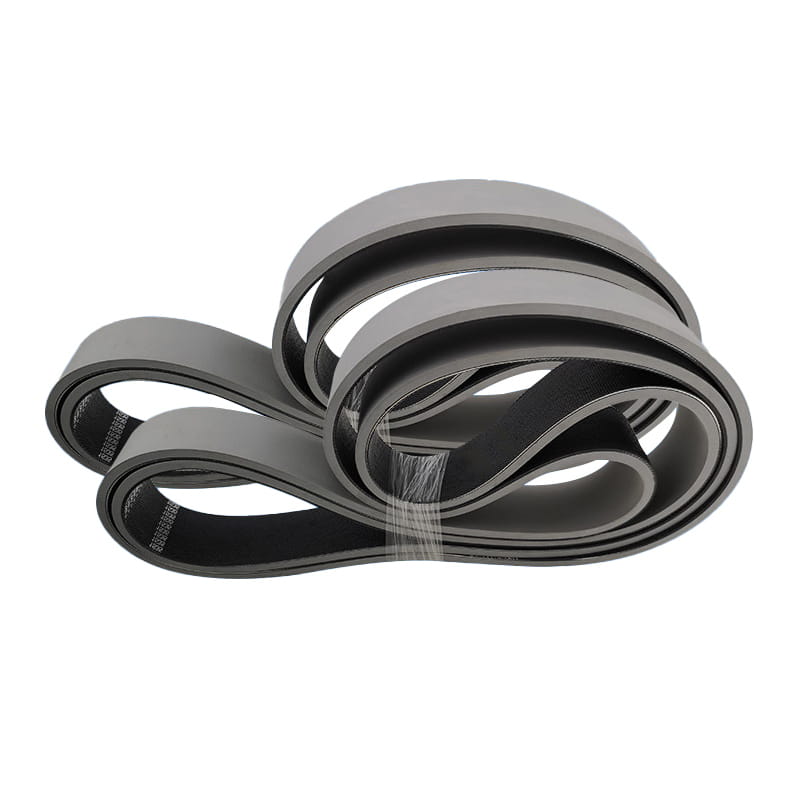
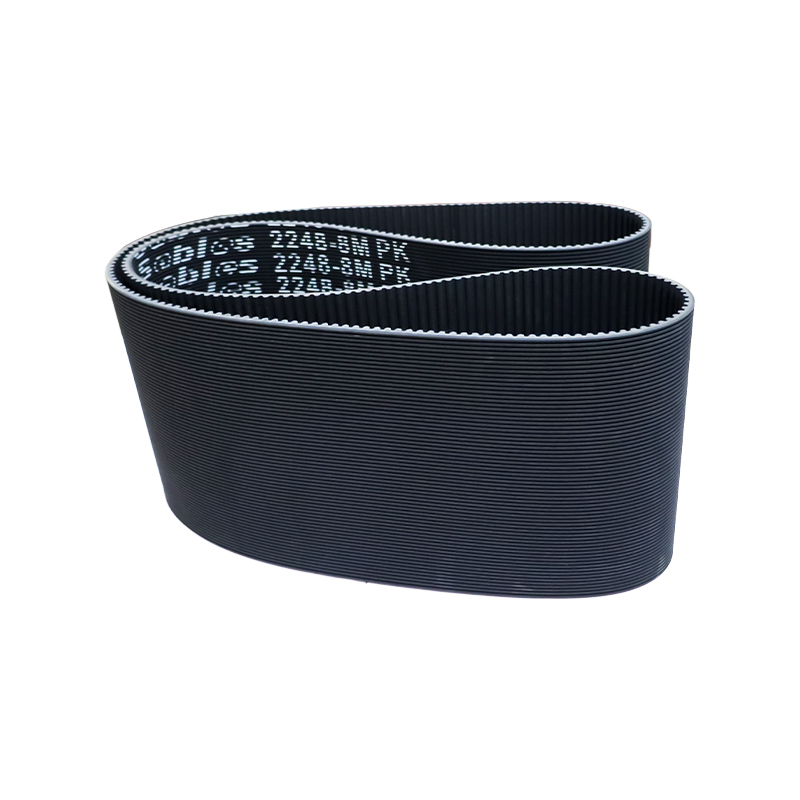
High-speed, smooth, and low-extension transmission and conveying systems, such as textile machinery, woodworking machinery, grinding machinery, ticket vending machines, vegetable cutting machines, etc. Characteristics: High speed and stability, high tensile strength, and low elongation.
The seamless rubber band produced by woodworking machinery can be used for sanding, correcting, and trimming core materials, planing wood boards, laminated boards, plastic laminated boards, and other machines, and can help the surface to be perfectly machined and selected.
Its special technology lies in the manufacturing method and produces the required size jointless belt. We not only strictly control the quality, but also insist on using imported materials in order to make our sander belt have better performance.
All parts of thickness and strength are absolutely uniform.
It has a good linear operation.
High flexibility can be used for small wheel diameters.
It can maintain flatness and non-deformability under working pressure.
The friction coefficient between the bottom of the belt and the plate surface is very low.
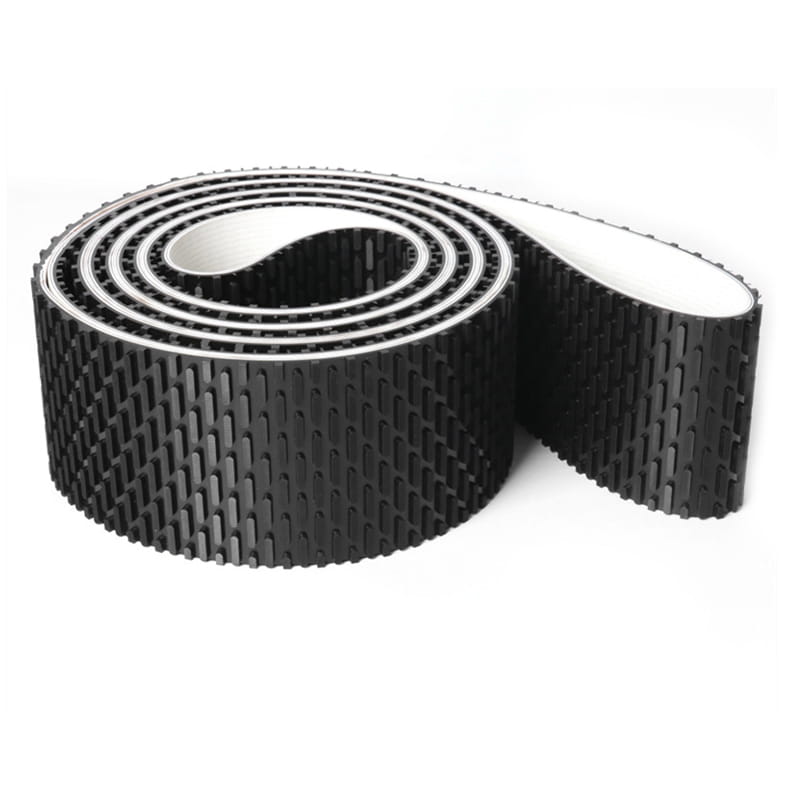
Because the surface layer of the belt is covered with rubber, the adhesiveness is improved and the stability of the conveyor belt is improved.
Apply to each field of the synchronous-driven device system. Characteristics:
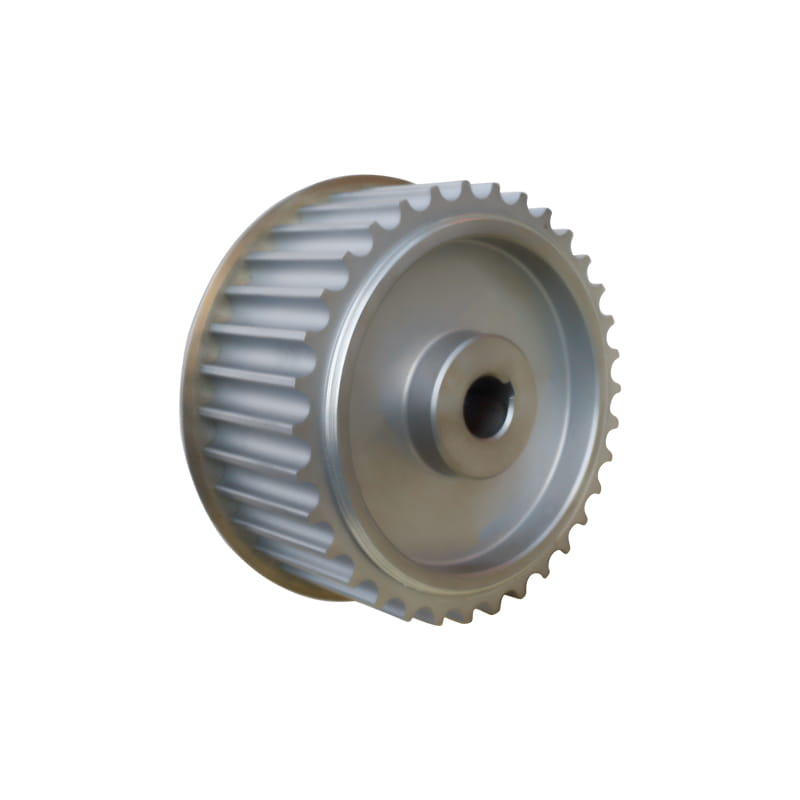
Ensure coordination with the belt, to enhance the accuracy and lifetime of the driven. According to customer requirements, customization optimum driven solution can divided into 45# steel, aluminium alloy, stainless steel, cast iron, nylon, etc, according to the material.
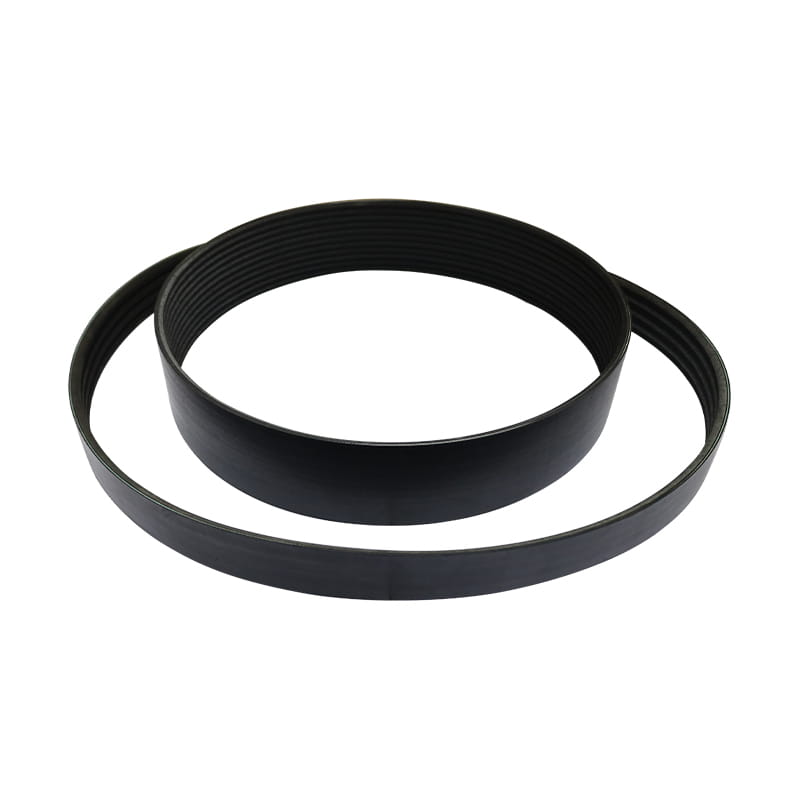
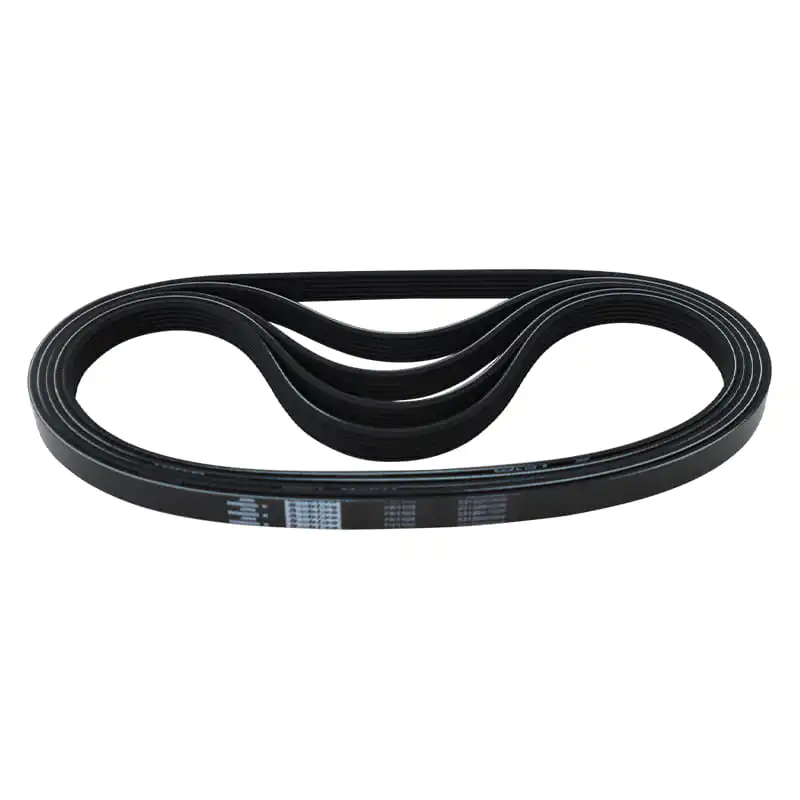
It is suitable for outdoor transmission equipment, transportation equipment, medical equipment, electric tools, household appliances, and sports equipment. Characteristics:
1. The transmission power of the ribbed belt is higher than that of an ordinary V-belt by 30 % when the space is the same.
2. The transmission system of the ribbed belt has a compact structure, and under the same transmission power, the space occupied by
the transmission device is 25 % smaller than that of the common V-belt.
3. The ribbed belt is thin and flexible and is suitable for transmission with a small pulley diameter and high-speed transmission, with belt
speed up to 40m/ s; Small vibration, less heat, and stable operation.
4. The ribbed belt is heat-resistant, oil-resistant, and wear-resistant, with small elongation and a long service life.



 中文简体
中文简体