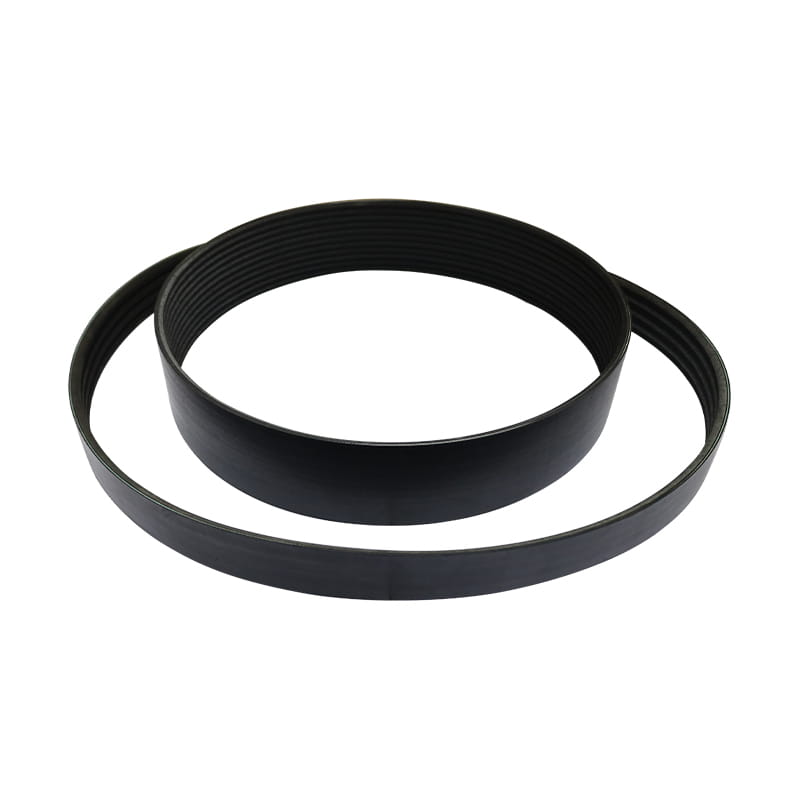
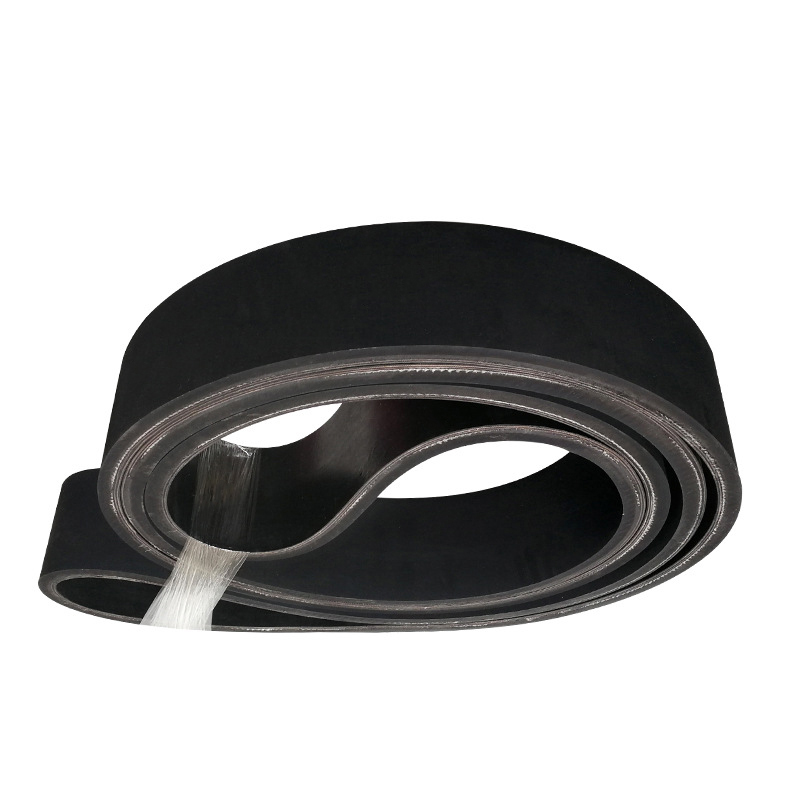
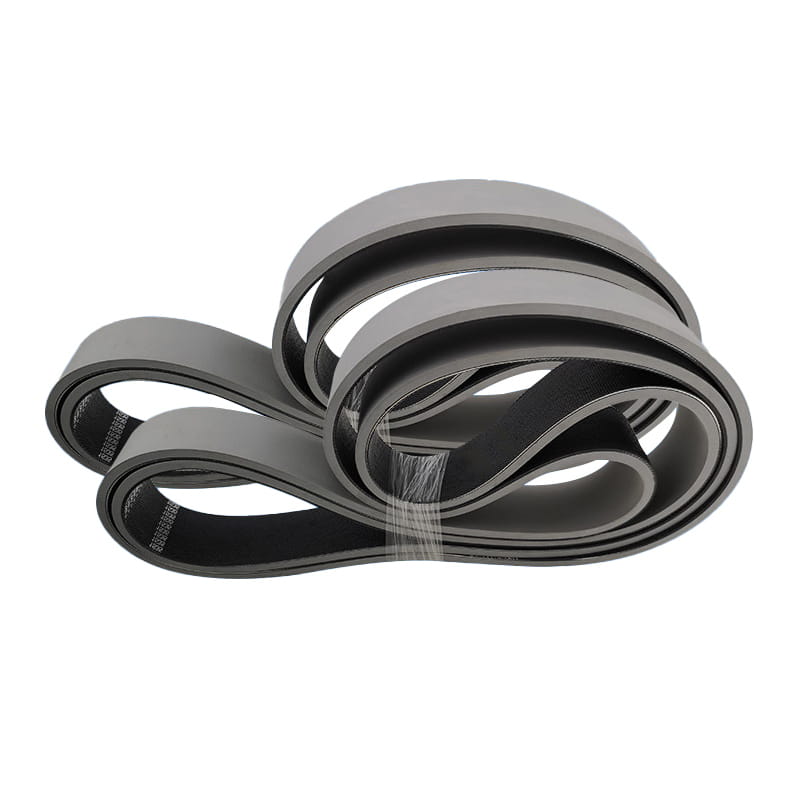
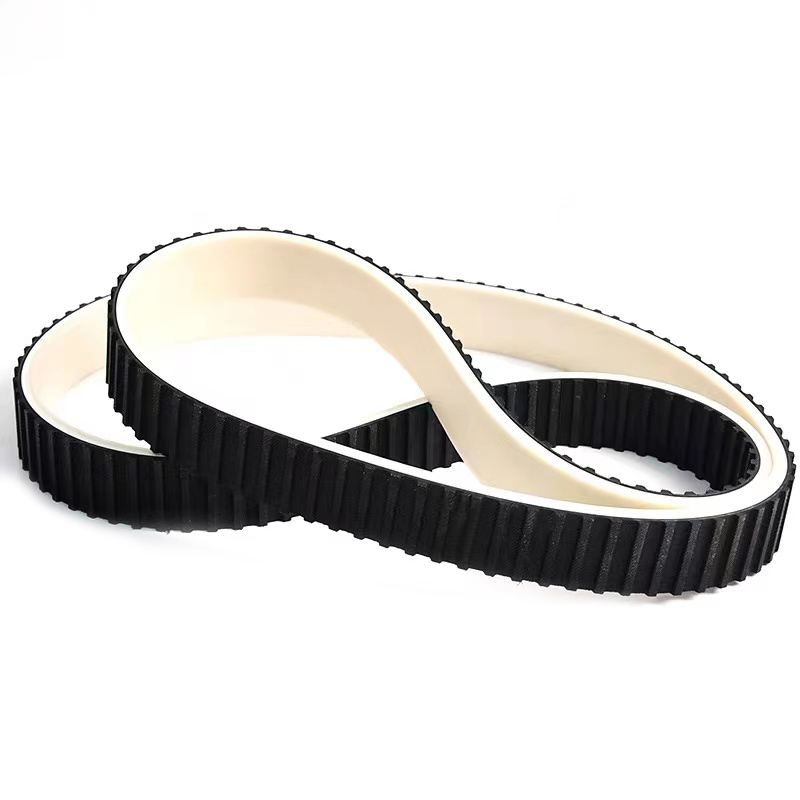
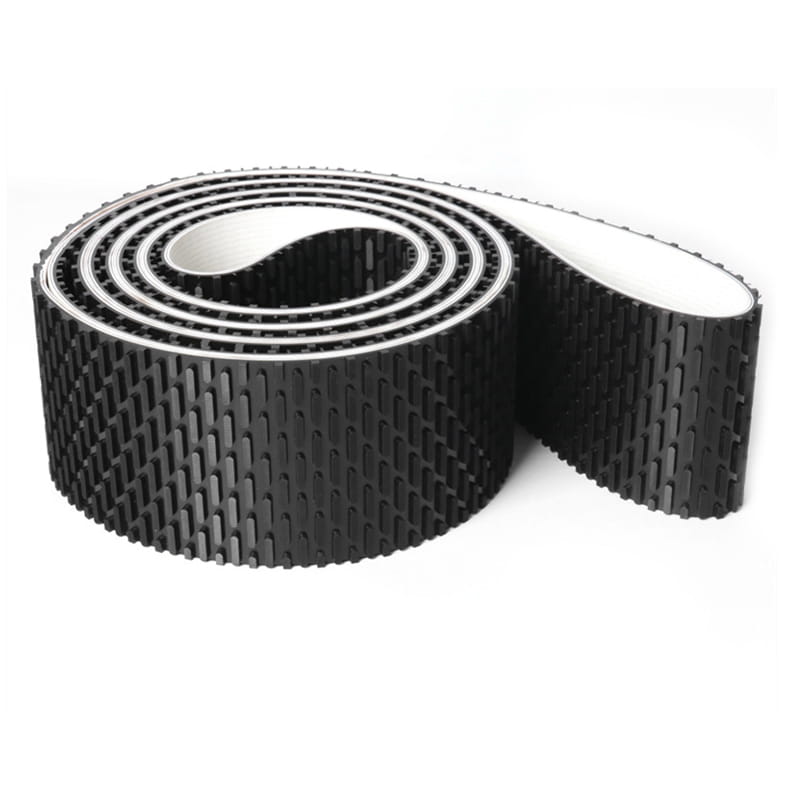
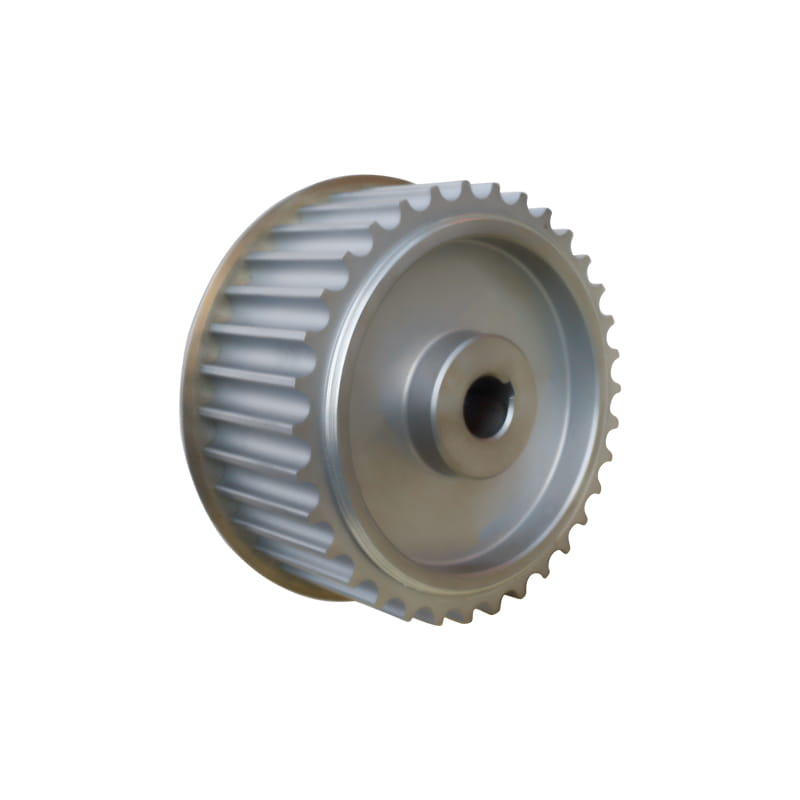
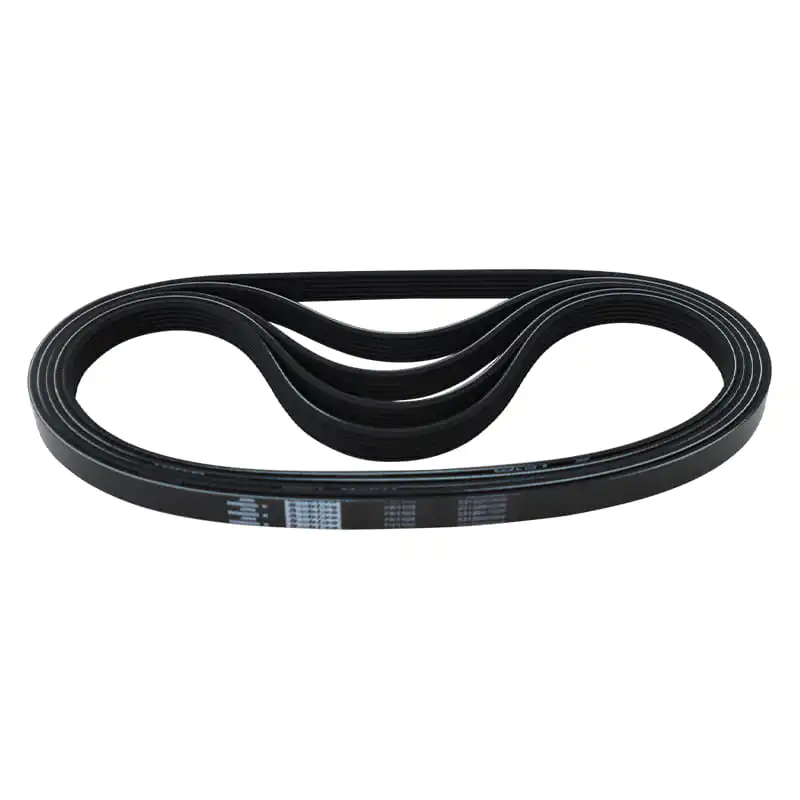
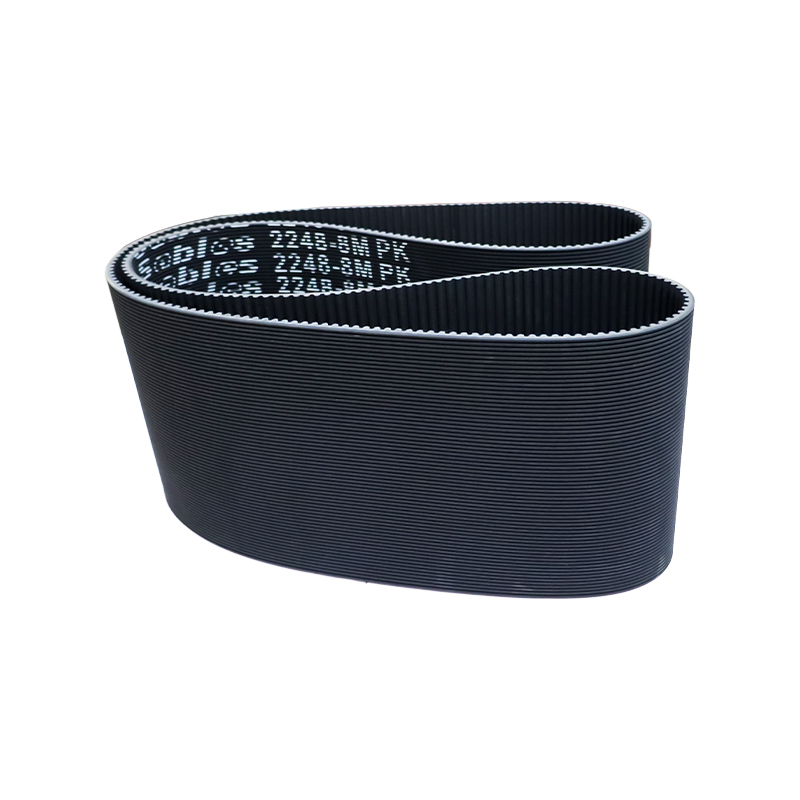
In the fast-paced world of industrial machinery, efficiency is the currency of success. For decades, the standard V-belt has been the workhorse of power transmission, found in everything from automotive engines to heavy-duty factory equipment. However, as precision engineering demands higher performance and smaller footprints, a new contender has emerged to redefine the standards of drive systems: the Rubber Wide-Angle Belt.
By rethinking the fundamental geometry of friction-based drives, this innovative belt technology is solving long-standing issues of wear, tension loss, and power dissipation. Today, we explore how this "wide-angle" approach is transforming the landscape for precision machinery manufacturers worldwide.
Understanding the Shift: From 40° to 60°
To appreciate the impact of the Rubber Wide-Angle Belt, one must first look at the mechanics of a traditional V-belt. Standard industrial V-belts typically utilize a wedge angle of 40°. While effective, this 40° angle limits the amount of surface area that can come into contact with the pulley, especially under high-load conditions.
The Wide-Angle Belt breaks this mold by increasing the wedge angle to 60°. While 20 degrees might seem like a minor adjustment, the physical implications are profound. Based on the principles of transmission dynamics, this wider angle significantly expands the supported area on both sides of the belt.
Comparison Table: Standard V-Belt vs. Rubber Wide-Angle Belt
| Feature |
Standard V-Belt |
Rubber Wide-Angle Belt |
Impact on Performance |
| Wedge Angle |
40° |
60° |
Higher stability and surface contact |
| Contact Area |
Moderate |
High |
Increased power transmission |
| Load Distribution |
Concentrated at the core |
Evenly distributed |
Reduced heat and wear |
| Tension Stability |
Prone to gradual drop |
Highly stable |
Lower maintenance requirements |
| Primary Use |
General industrial use |
High-speed, precision machinery |
Specialized for accuracy |
![A high-quality 3D render of a Rubber Wide-Angle Belt wrapped around a precision pulley, showing the 60-degree wedge angle and the internal fiber reinforcement layers.]
Four Pillars of Superiority: Why Manufacturers are Switching
The transition to Wide-Angle technology isn't just about a change in shape; it’s about a change in results. Engineering tests have highlighted four primary advantages that make these belts the preferred choice for the "precision machinery" sector.
1. Uniform Load Distribution and Enhanced Durability
In a standard belt, the stress of the load often concentrates in specific zones, leading to "hot spots" and uneven thinning of the rubber. Because the Rubber Wide-Angle Belt features a broader base and a 60° angle, the mechanical load is spread evenly across the entire contact surface. This uniformity prevents localized overheating and ensures that the belt wears down at a much slower, more predictable rate. For a factory owner, this translates directly into fewer replacements and less downtime.
2. Maximized Transmission Force
In friction-driven systems, contact is king. The more surface area the belt shares with the pulley, the more force it can transmit without slipping. By increasing the wedge angle, the Wide-Angle Belt naturally settles more effectively into the pulley grooves. This allows for higher torque transmission even in compact drive systems where smaller pulley diameters are required.
3. Strengthening the Drive Core
One of the hidden enemies of belt efficiency is "concave deformation." This occurs when the center of the belt bows inward under pressure, causing the internal cords (the core) to shift out of alignment. The wide-angle design provides superior lateral rigidity. By resisting this deformation, the belt ensures that the internal drive core remains straight and strong, maintaining a consistent drive characteristic throughout the life of the product.
4. Solving the Tension Drop Dilemma
Anyone who has worked with industrial belts knows the frustration of "initial stretch." Standard belts often require frequent re-tensioning shortly after installation. The Rubber Wide-Angle Belt is engineered with high-modulus materials that, when combined with the 60° geometry, significantly minimize the problem of tension drop. Once installed, these belts hold their "grip" longer, ensuring that the machine runs at peak efficiency from day one.
Applications in the Precision Machinery Industry
The unique profile of the Rubber Wide-Angle Belt makes it particularly well-suited for industries where "close enough" is never good enough. We are seeing a massive surge in adoption across several key sectors:
-
CNC Machining Centers: Where high-speed spindles require vibration-free power transmission to maintain sub-micron tolerances.
-
Medical Equipment: Devices like centrifuges and scanners benefit from the smooth, quiet operation of wide-angle drives.
-
Textile Industry: Precision looms require consistent tension to prevent thread breakage; the wide-angle belt provides the stability needed for 24/7 operation.
-
Printing Presses: High-speed color alignment depends on a drive system that does not slip or vibrate.
Technical Specifications and Material Composition
While the geometry is the star of the show, the materials used in a Rubber Wide-Angle Belt are equally important. Manufacturers typically use high-grade chloroprene or EPDM rubber compounds reinforced with high-strength polyester or aramid cords.
| Component |
Material Function |
Benefit to User |
| Top Cloth |
Wear-resistant bias-cut fabric |
Protects the belt from environmental debris |
| Tension Member |
High-modulus treated cords |
Prevents stretching and maintains timing |
| Compression Rubber |
60° Angle specialized compound |
Provides the grip and heat resistance |
| Bottom Fabric |
Low-noise ribbing |
Ensures quiet operation in office or lab settings |
![An infographic showing the cross-section of a 60-degree Wide-Angle Belt compared to a 40-degree V-Belt, illustrating how the wider angle creates more side-wall contact.]
The Economic Argument: Cost vs. Value
Many procurement managers initially look at the unit price of a belt. While wide-angle belts may carry a slight premium over "bargain-bin" V-belts, the Total Cost of Ownership (TCO) is significantly lower.
Consider a standard production line:
-
Labor Costs: Every time a belt is replaced, a technician must stop the machine, which costs money.
-
Energy Efficiency: A belt that slips or deforms wastes electricity. The 60° angle ensures near-total energy transfer.
-
Part Longevity: Because the wide-angle belt reduces vibration, it also extends the life of the bearings and pulleys it interacts with.
When you add up the savings in energy, maintenance labor, and spare parts, the Rubber Wide-Angle Belt usually pays for itself within the first few months of operation.
Looking Toward the Future of Transmission
As we move into the era of Industry 4.0, machines are becoming smarter and more compact. Small, high-powered motors need transmission components that can keep up. The Rubber Wide-Angle Belt is the perfect partner for this evolution. Its ability to deliver high power in a small physical space—without the noise or maintenance of chains—makes it the "future-proof" choice for designers.
Engineers are no longer satisfied with the limitations of 40° technology. By embracing the 60° wide-angle philosophy, they are unlocking higher speeds, greater precision, and unprecedented reliability.
Conclusion
The Rubber Wide-Angle Belt represents a significant leap forward in friction drive technology. By simply widening the perspective—and the angle—manufacturers have solved the age-old problems of wear, tension loss, and power inefficiency. For any industry focused on precision, the choice is clear: the wide-angle advantage is the key to staying competitive in a demanding market.



 中文简体
中文简体