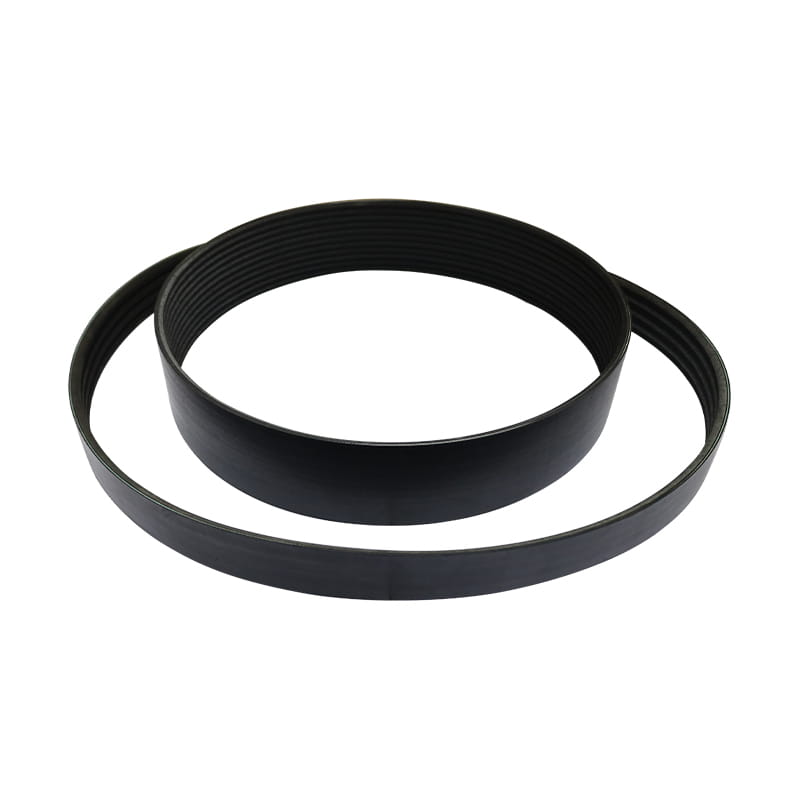
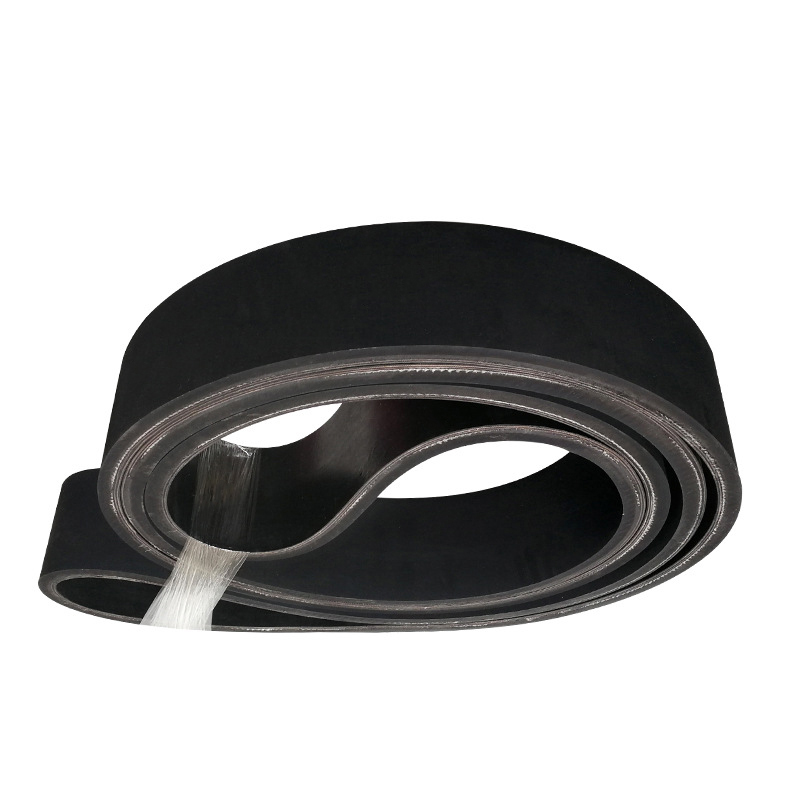
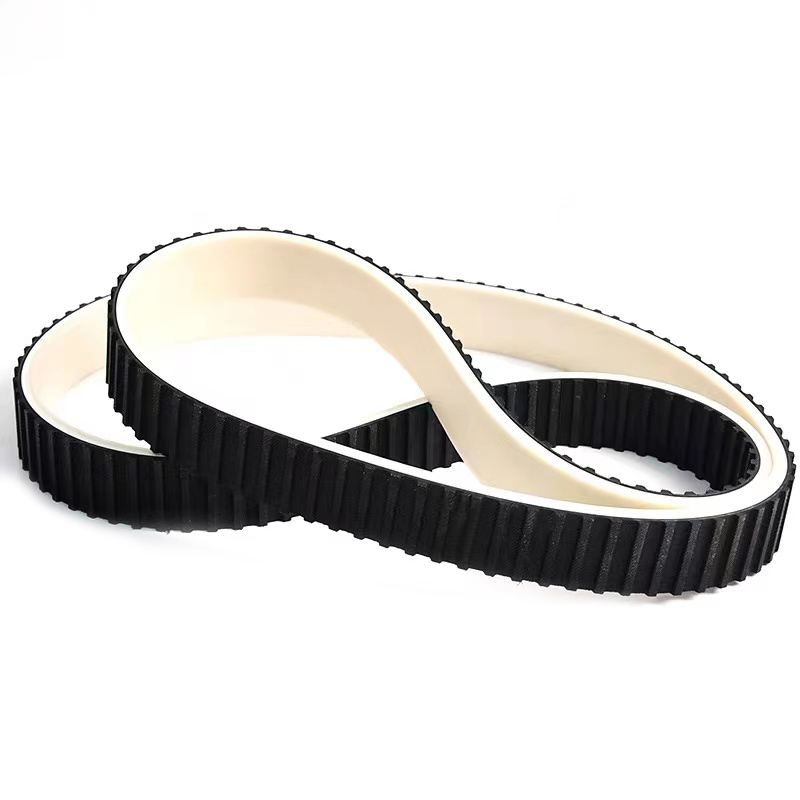
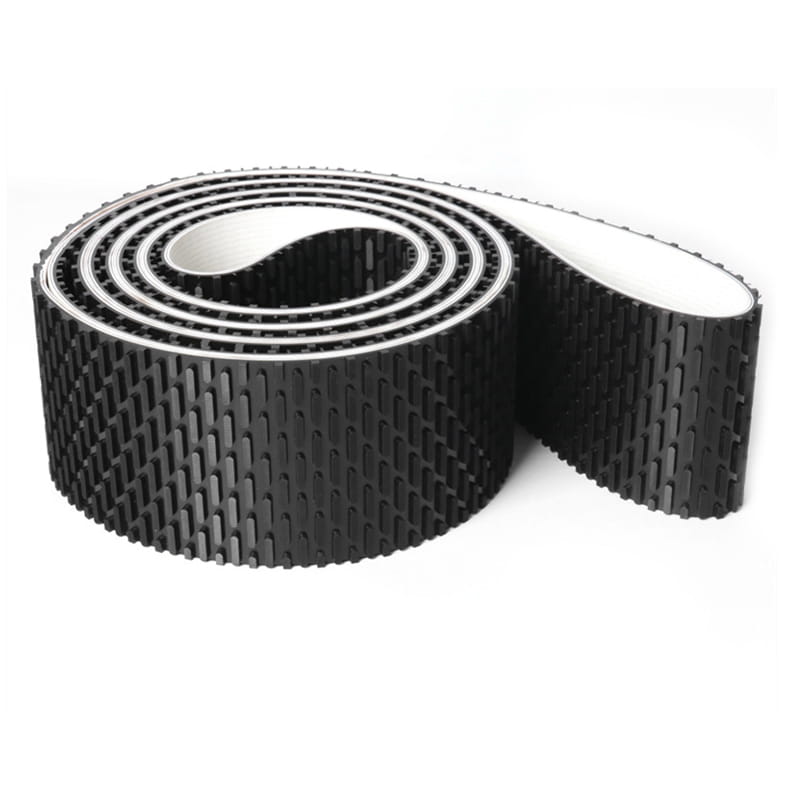
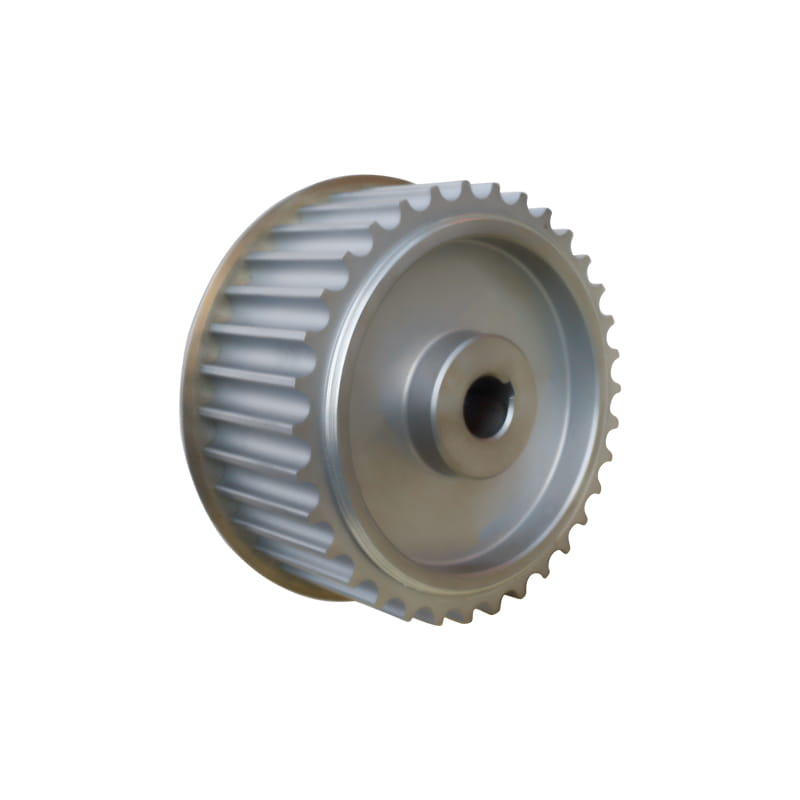
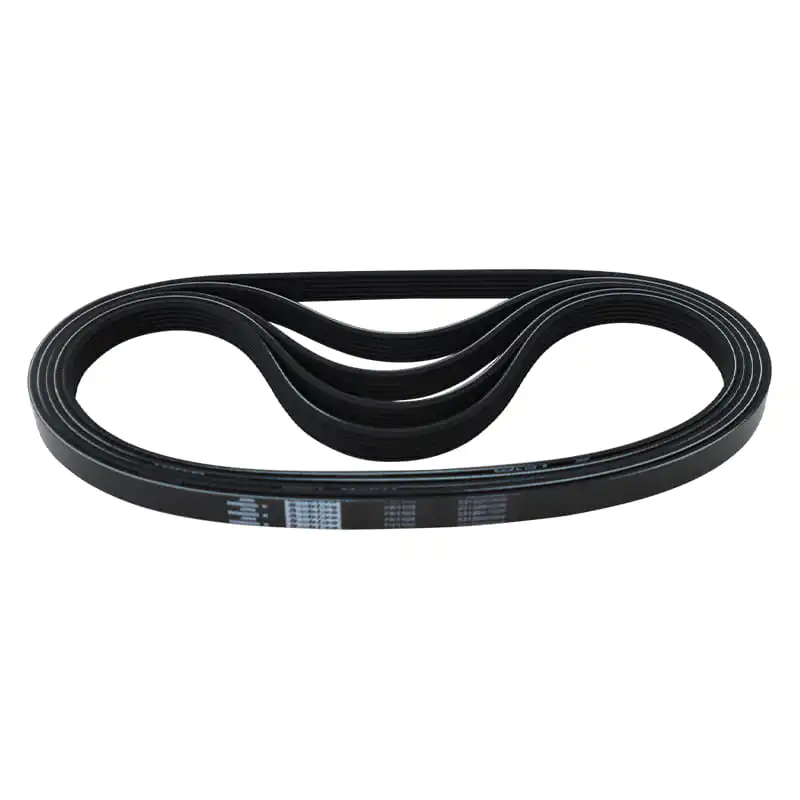
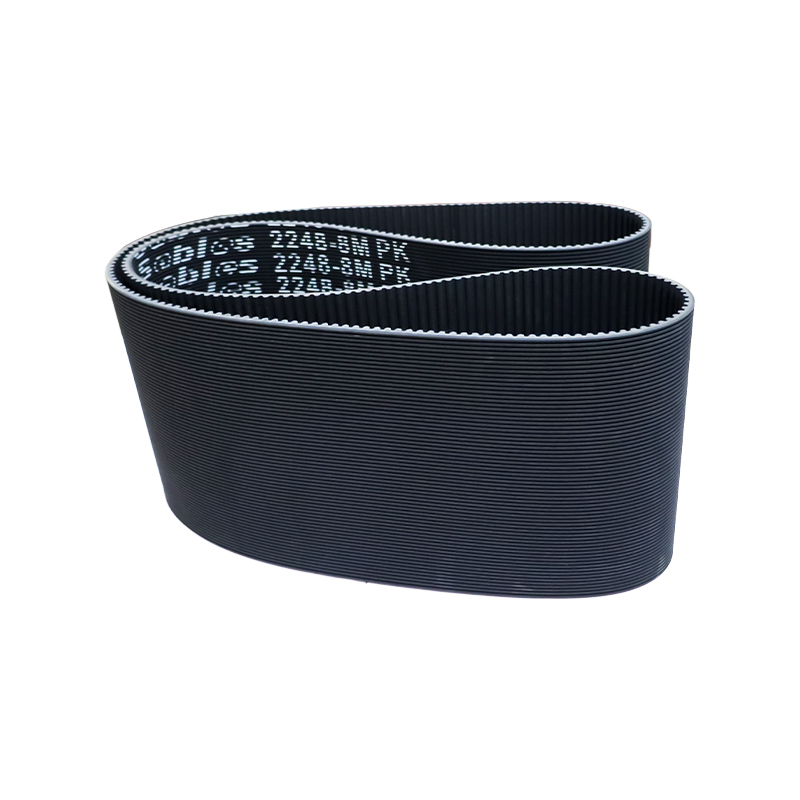
Flat belts are used primarily for power transmission between rotating shafts and for conveying materials across industrial, agricultural, and commercial applications. In power transmission, they transfer rotational force from a driving pulley to one or more driven pulleys, enabling machinery to be driven from a central power source. In conveying, they form the moving surface that carries goods, packages, bulk materials, and components from one location to another. Flat belts are one of the oldest and most versatile mechanical drive elements in engineering, with active use in textile mills, sawmills, printing presses, food processing lines, packaging systems, agricultural equipment, and many other industries.
Their defining characteristic is a flat, uniform cross-section—no teeth, grooves, or V-profile—which allows them to run quietly at high speeds, tolerate slight misalignment, and transmit power over long centre distances between pulleys that would be impractical for chain or gear drives.
Power Transmission: Driving Machinery from a Central Source
The original and historically most important use of flat belts is power transmission—linking a rotating drive shaft to one or more machines or sub-systems. This application was the foundation of the industrial revolution, when a single steam engine or water wheel drove dozens of machines simultaneously through an overhead line shaft system connected to individual machines by flat belts. While modern factories use individual electric motors for most machines, flat belt power transmission remains widely used in specific contexts where its advantages over other drive types are decisive.
Long-Distance Power Transmission
Flat belts can transmit power over centre distances of several metres to over 10 metres between drive and driven pulleys, far exceeding the practical range of V-belts (typically limited to 5 metres or less without intermediate support) and chain drives (limited by weight sag and lubrication requirements). This makes flat belts the preferred solution in sawmills, quarries, agricultural processing facilities, and textile mills where machinery must be positioned far from the prime mover.
High-Speed Power Transmission
Flat belts operate efficiently at high peripheral speeds—quality textile and synthetic flat belts are designed for belt speeds of 25 to 50 metres per second (5,000 to 10,000 ft/min), significantly higher than the practical speed limits of V-belts (typically 30 m/s maximum) and roller chains (typically 20 m/s maximum). At these speeds, flat belts run with low vibration and noise, making them suitable for high-speed machine tools, grinding spindles, and precision textile machinery where smooth, quiet power delivery is essential.
Speed Ratio Changes Through Stepped Pulleys
Flat belts can be shifted laterally from one diameter step to another on a stepped cone pulley while the machine is running—a speed-change mechanism that was standard on metal lathes and milling machines for over a century and is still used in some workshop equipment today. The flat belt's uniform width and minimal bending stiffness allow it to be shifted manually with a belt fork, enabling discrete speed changes without stopping the machine, changing gears, or using a variable-frequency drive.
Cross-Belt and Quarter-Turn Drive Configurations
Unlike V-belts and synchronous belts, flat belts can be installed in crossed (reverse direction) and quarter-turn configurations to transmit power between shafts that are not parallel. A crossed flat belt reverses the rotation direction of the driven shaft relative to the driver—useful where a driven machine must rotate opposite to the drive motor without additional gearing. A quarter-turn drive connects shafts at 90 degrees to each other. Both configurations are unique to flat belt drives and are impractical or impossible with other belt types.
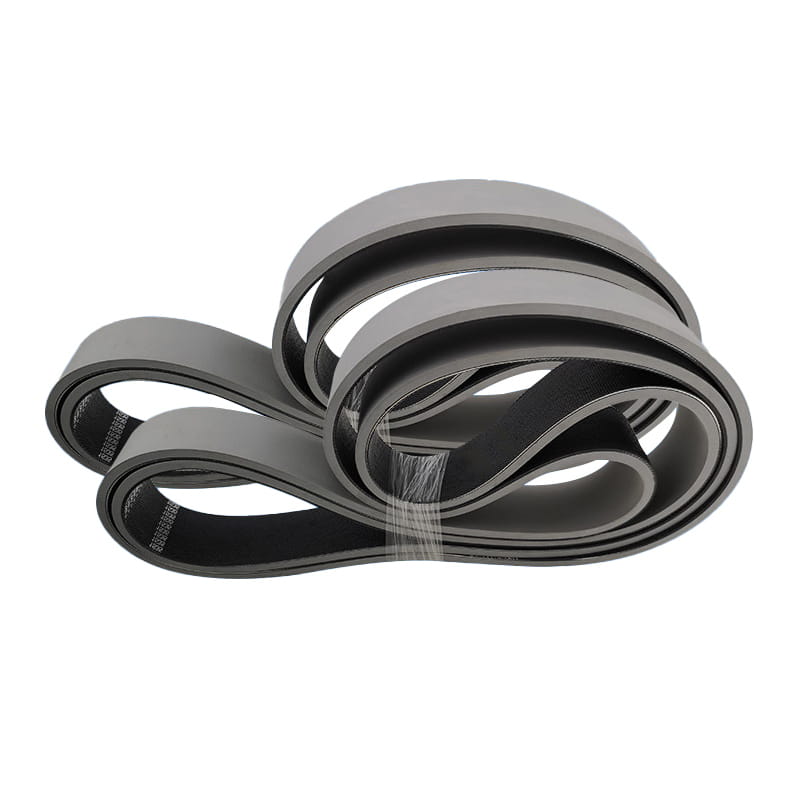
Conveyor and Material Handling Applications
Flat belts form the moving surface of countless conveyor systems across manufacturing, logistics, food processing, and mining. As a conveyor belt, the flat profile provides a smooth, continuous surface on which items can be placed, accumulated, sorted, inspected, and transferred—functions that are central to modern production and distribution operations.
Light Parcel and Package Conveying
Flat belts are the standard conveying medium in parcel sorting facilities, courier hubs, airport baggage handling systems, and e-commerce fulfilment centres. Their smooth surface allows packages of any shape—boxes, bags, envelopes, polybags—to be transported without snagging, and their gentle acceleration and deceleration characteristics minimise damage to fragile contents. Large sortation facilities may operate flat belt conveyor networks with total belt lengths of several kilometres, handling hundreds of thousands of parcels per day.
Food Processing and Hygienic Conveying
Food-grade flat belts made from polyurethane, silicone, or approved thermoplastic elastomers are used extensively in food processing lines to transport baked goods, fresh produce, meat products, dairy items, confectionery, and packaged foods. Food-grade flat belts are designed to be:
- Resistant to oils, fats, acidic food juices, and cleaning chemicals
- Non-porous and easy to clean, preventing microbial harbourage
- Compliant with FDA, EU, and other food-contact material regulations
- Compatible with high-pressure washdown and steam cleaning without delamination or swelling
In bakeries, flat belts carry bread loaves through proofers and ovens at temperatures up to 200°C (392°F) in the case of heat-resistant silicone or PTFE-coated belts, enabling continuous, automated production at rates that would be impossible by manual handling.
Textile and Fabric Handling
Flat belts have been integral to textile production for over two centuries. In spinning mills, looms, and finishing machines, flat belts both transmit power to machine components and convey yarn, thread, and fabric through sequential processing stages. The smooth surface of a flat belt is essential in textile applications to avoid snagging or damaging delicate fibres—a requirement that eliminates ribbed and toothed belt alternatives from most textile conveying roles.
Printing and Paper Handling
Commercial printing presses, paper mills, and document processing equipment use flat belts extensively for paper feeding, transport, and stacking. The flat profile allows precise, gentle contact with the paper surface without marking, and the high-speed capability of flat belts matches the demanding throughput requirements of modern printing presses operating at 30,000 to 100,000 impressions per hour. Thin, flexible flat belts with precisely controlled thickness and surface smoothness are specified for applications where paper must be guided without wrinkling or offset of wet ink.
Industrial and Manufacturing Applications by Sector
Flat belts serve specific and critical functions across a wide range of industries. The following examples illustrate the breadth and specificity of their industrial applications.
Sawmills and Wood Processing
Large sawmill band saws and circular saws are driven by flat belts from high-power electric motors, taking advantage of the flat belt's ability to transmit high power at high speeds over long centre distances. The slip characteristic of flat belts also provides a degree of overload protection—if a saw blade encounters an unexpected hardwood inclusion that would stall a direct-drive motor, the belt will slip momentarily rather than transmitting the full stall torque to the machine structure. Log conveying within sawmills also uses heavy-duty flat belts with cleated surfaces to carry logs through debarking, cutting, and sorting stages.
Agricultural Equipment
Combine harvesters, threshing machines, grain elevators, and seed processing equipment all rely heavily on flat belts. In a combine harvester, flat belts transfer power from the main engine to the cutting header, threshing drum, cleaning shoe, and grain elevator—often with multiple flat belts running simultaneously. The dusty, chaff-laden environment of grain harvesting is well tolerated by flat belts, which are less sensitive to contamination than chain drives and require no lubrication that could contaminate the grain.
Mining and Quarrying
Heavy-duty flat belts are used in mining and quarrying for ore conveying, crusher drives, and screening equipment. Large open-cast mining operations use flat belt conveyors extending over kilometres to transport extracted ore from the pit face to processing facilities, replacing truck haulage on continuous operation routes and delivering significant energy and operating cost savings. The belt widths in major mining operations can exceed 2,400 mm (8 feet), carrying material at rates of thousands of tonnes per hour.
Packaging and Bottling Lines
Flat belts accumulate, space, and transport bottles, cans, cartons, and sachets between filling, capping, labelling, inspection, and palletising stations on high-speed packaging lines. The smooth surface minimises container toppling and allows containers to accumulate without jam-up. Side-flexing flat belt variants navigate curved sections of conveyor tracks, enabling compact line layouts that minimise plant floor area.
Flat Belt Materials and Their Specific Uses
The material composition of a flat belt determines its suitability for specific operating conditions—temperature, chemical exposure, required friction coefficient, and mechanical loads. Modern flat belts are not simply flat strips of a single material; they are engineered laminates combining structural tension members with functional surface layers.
Common flat belt materials and their primary applications and key performance characteristics
| Material |
Temperature Range |
Key Properties |
Typical Applications |
| Leather |
Up to 70°C |
High friction, flexibility, established reliability |
Heritage machinery, workshop line shafts |
| Rubber (fabric-reinforced) |
-25°C to 80°C |
High tensile strength, oil-resistant grades available |
Mining conveyors, agricultural equipment |
| Polyurethane (PU) |
-30°C to 80°C |
Excellent abrasion resistance, food-grade grades, precise thickness |
Food processing, packaging, precision conveying |
| Silicone |
-60°C to 200°C |
High-temperature resistance, non-stick surface, food-safe |
Bakery ovens, drying tunnels, high-temp food lines |
| PTFE-coated fabric |
Up to 260°C |
Extreme temperature resistance, non-stick, chemical inertness |
Composite curing, electronics manufacturing, specialty chemical processing |
| Thermoplastic elastomer (TPE) |
-20°C to 60°C |
Lightweight, flexible, weldable endless joins |
Light conveying, postal sorting, airport baggage |
| Nylon / polyamide fabric |
Up to 100°C |
Very high speed capability, low elongation, thin profile |
Textile machinery, high-speed drive applications |
Flat Belts vs. Other Belt Types: When Flat Is the Right Choice
Flat belts compete with V-belts, synchronous (toothed) belts, and round belts in many power transmission applications. Understanding when flat belts outperform these alternatives clarifies their specific value and appropriate selection criteria.
Flat Belts vs. V-Belts
V-belts use a wedge-shaped cross-section that generates higher friction force per unit of belt tension through a wedging action in the pulley groove—allowing them to transmit more power per unit width than a flat belt at equivalent tension. V-belts are therefore preferred for compact, high-torque power transmission at moderate centre distances. However, flat belts outperform V-belts in:
- Very high speed operation — flat belts can operate at 40 to 50 m/s with low heat generation; V-belts generate more heat through wedging friction at high speeds
- Long centre distance drives — flat belts are more stable over long spans due to their lower bending stiffness and lighter weight
- Conveying applications — the flat surface is essential for carrying items; V-belts cannot serve this function
- Non-parallel shaft drives — crossed and quarter-turn flat belt configurations have no V-belt equivalent
Flat Belts vs. Synchronous (Toothed) Belts
Synchronous belts provide positive engagement (no slip) and maintain precise speed ratios—essential for timing-critical applications such as camshaft drives, servo motor drives, and indexing conveyors. Flat belts cannot maintain exact speed ratios due to inherent slip at the pulley contact. However, flat belts are preferred where:
- Overload slip protection is needed — flat belt slip under overload protects driven machinery; synchronous belts transmit full overload torque until belt failure or motor tripping
- Very large pulley diameters are used — flat belts run efficiently on large-diameter pulleys; synchronous belts on large sprockets add significant cost and weight
- Speed ratios are adjusted by pulley diameter changes — flat belt systems are easily reconfigured; synchronous belt drives require matched sprocket and belt pitch changes
Specialty and Emerging Applications of Flat Belts
Beyond their traditional roles in power transmission and bulk conveying, flat belts have found increasingly specialised applications in modern technology and precision industries.
Electronics and Semiconductor Manufacturing
Cleanroom-rated flat belts transport silicon wafers, printed circuit boards, and electronic components through automated assembly and inspection equipment. These belts must be anti-static (ESD-dissipative) to prevent electrostatic discharge damage to sensitive components, non-particle-generating to maintain cleanroom air quality, and dimensionally precise to ensure accurate positioning in automated handling systems. Specialised flat belt formulations for electronics conveying meet ISO Class 5 (Class 100) cleanroom compatibility requirements.
Medical Device Manufacturing and Pharmaceutical Processing
Medical device assembly lines and pharmaceutical tablet/capsule production use flat belts that meet stringent cleanability and material compliance requirements. Belts in these applications must be compatible with isopropyl alcohol, hydrogen peroxide, and other sterilisation agents used to maintain contamination control, while leaving no extractable chemical residues that could contaminate pharmaceutical products.
Treadmill and Fitness Equipment Surfaces
The running surface of treadmills is a flat belt—typically a multi-layer construction with a low-friction underside for smooth running over the deck and a textured upper surface for grip. Treadmill flat belts are engineered to withstand continuous high-speed operation, the dynamic impact loading of running (several times body weight), and heat generated by friction with the deck. Consumer treadmill belts typically operate at speeds up to 20 km/h (12.4 mph) for periods of hours, requiring belts with high abrasion resistance and dimensional stability.
Optical Sorting and Quality Inspection Lines
High-speed optical sorting systems for agricultural produce (nuts, seeds, grains, fruits), recycled materials, and pharmaceutical tablets require flat belts with highly consistent surface colour and texture so that machine vision cameras can accurately distinguish product colour from belt background. Specially formulated flat belts in specific colours (typically black, grey, or white depending on the product being sorted) with non-reflective surfaces are produced for these applications, where sorting rates of 100,000 pieces per minute or more place extreme demands on belt precision and stability.
Key Advantages That Make Flat Belts the Preferred Choice
Across the diverse applications described above, flat belts are selected over competing drive and conveying technologies because of a specific set of performance advantages that are uniquely suited to demanding operating conditions:
- High-speed operation — belt speeds of 25 to 50 m/s with low vibration and noise, surpassing most alternative drive types
- Long centre distance capability — effective power transmission over spans of several metres without intermediate support
- Slip-based overload protection — controlled slippage at overload protects driven machinery from damage that would result from rigid drive connections
- Tolerance for misalignment — flat belts can accommodate greater shaft misalignment than chain drives or toothed belts without significant performance loss
- Versatile drive configurations — open, crossed, and quarter-turn installations enable drive between non-parallel shafts
- No lubrication required — flat belts require no oil or grease, eliminating contamination risk in food, pharmaceutical, and clean manufacturing environments
- Dual function as conveying surface — a single flat belt can simultaneously transmit power and carry goods, reducing system complexity compared to separate drive and conveyor mechanisms
- Wide range of material options — from food-grade silicone to PTFE-coated glass fibre, enabling flat belts to operate in extreme temperatures, chemical environments, and cleanroom conditions where other belt types cannot function



 中文简体
中文简体