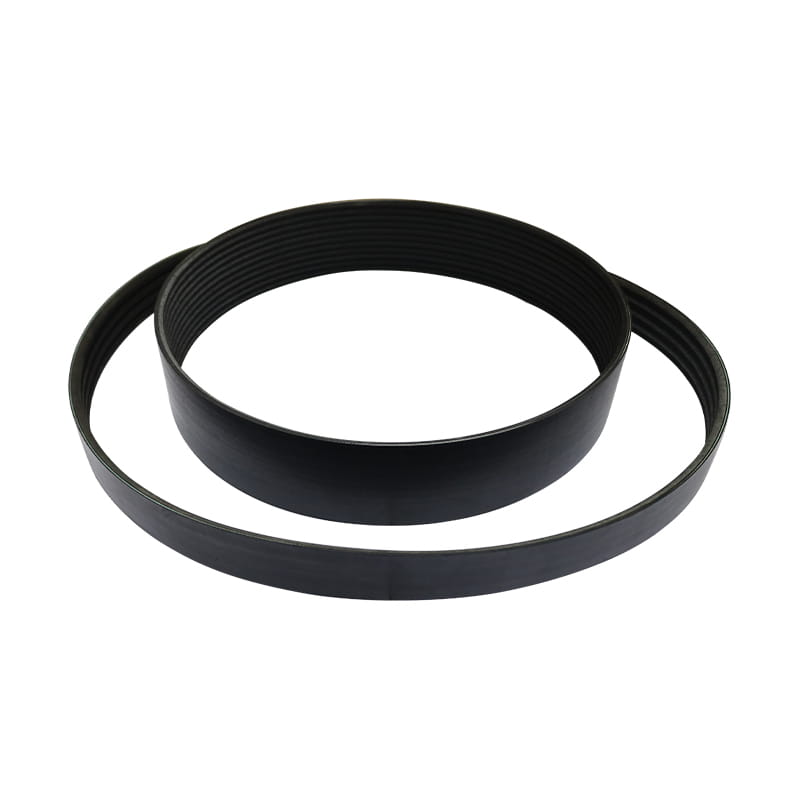
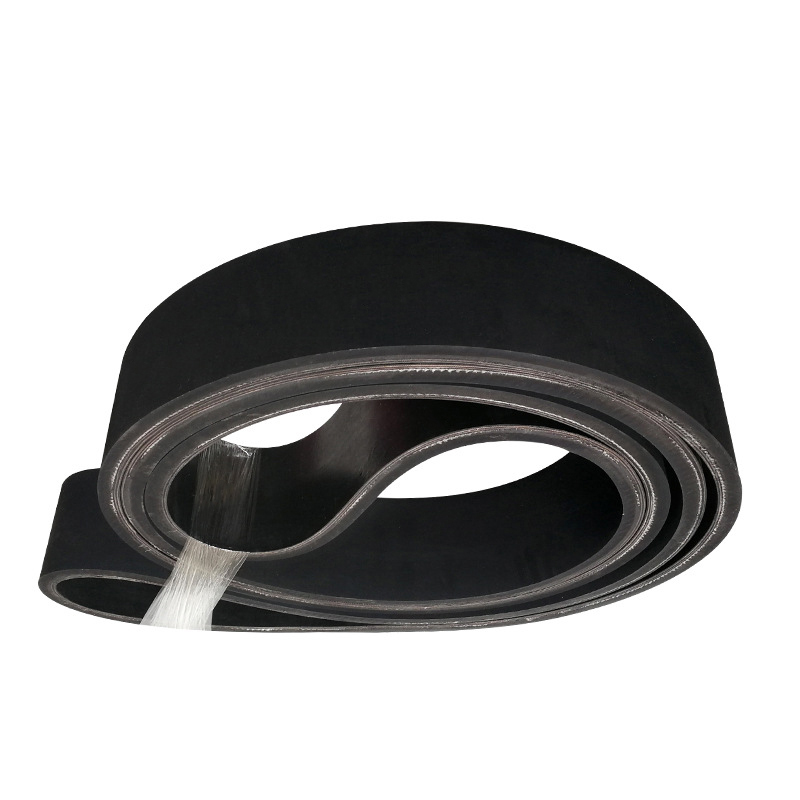
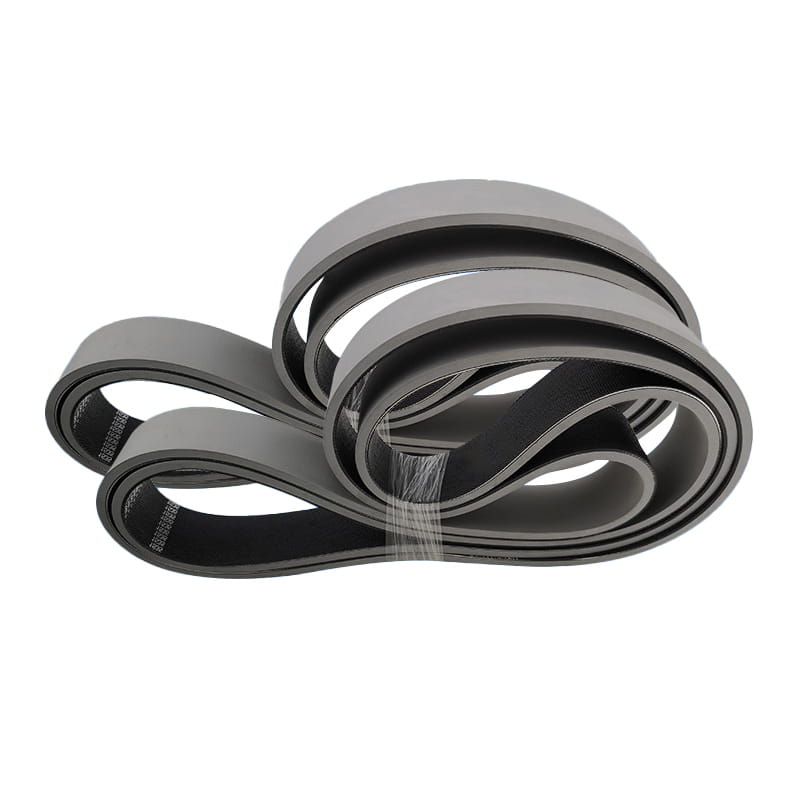
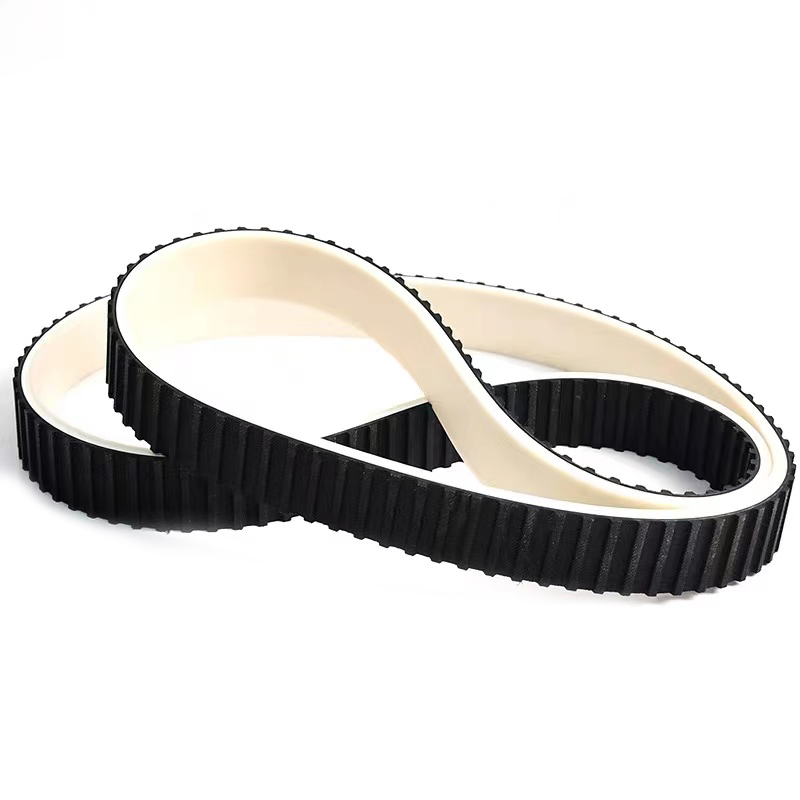
A maintenance planner at a packaging plant pulls a worn belt off a high speed cartoner and checks the replacement specification: 70A durometer, 5 mm pitch, 15 mm width. The replacement arrives marked 80A. It fits the pulleys, tensions correctly, and fails after three weeks with sheared teeth at the drive pulley. Nothing about the fit was wrong. The hardness was.
The short answer is that 70A sits in the middle of the Shore A hardness scale, and on an industrial belt that number sets the balance between grip and flex. Go softer and the belt grips well but deforms, heats up and wears quickly. Go harder and it resists abrasion but cracks at the tooth root on small pulleys. Around 70A keeps both sides of that trade in balance for most drives. The sections below explain how the reading is taken, where it holds up, and how to check it before a shipment reaches your storeroom.
What a 70A Durometer Reading Actually Means
A durometer is a spring loaded gauge. A blunt indentor is pressed against the rubber surface, and the depth of penetration converts into a number between 0 and 100. Shore A is the scale used for soft to medium rubber; above roughly 95A the Shore D scale takes over.
Two measurement details matter more than most buyers expect. The reading falls with time, because rubber creeps under the indentor, so the one second value is higher than the fifteen second value. Thin samples also read harder than they really are, which is why test standards ask for a sample of about 6 mm or more.
Shore A reference values for familiar materials, which helps put a quoted belt hardness into context.
| Material example |
Typical Shore A |
| Rubber band |
20 |
| Pencil eraser |
40 |
| Shoe sole |
55 to 60 |
| Car tire tread |
70 |
| Leather drive belt |
80 |
| Hard hat shell |
90 |
| Golf ball cover |
95 |
A belt at 70A feels close to car tire tread. It is firm enough to hold a tooth profile under load and flexible enough to wrap a small pulley without cracking.
Why 70A Became the Default Hardness for Rubber Timing Belts
Timing belts fail in two ways: the tooth shears, or the backing cracks. Hardness pushes those failures in opposite directions, and 70A is roughly the point where neither dominates on a typical industrial drive.
At 55A to 60A a compound conforms to the pulley groove and grips well, but it deflects under torque. The tooth root flexes further than intended, internal friction raises running temperature, and the belt creeps, so tension drops and re-tensioning becomes routine.
At 80A to 90A the belt resists abrasion and holds its shape, but it has less room to bend. On a small pulley the backing cracks first, usually as a fine line that opens into a full break.
Around 70A a belt wraps pulleys down to about 20 teeth without distress, keeps tooth engagement under moderate torque, and still absorbs small misalignment and shock. That is why the number appears on so many datasheets.
One caution: two belts can both read 70A and still age at completely different rates when the polymer base or the cord construction differs.
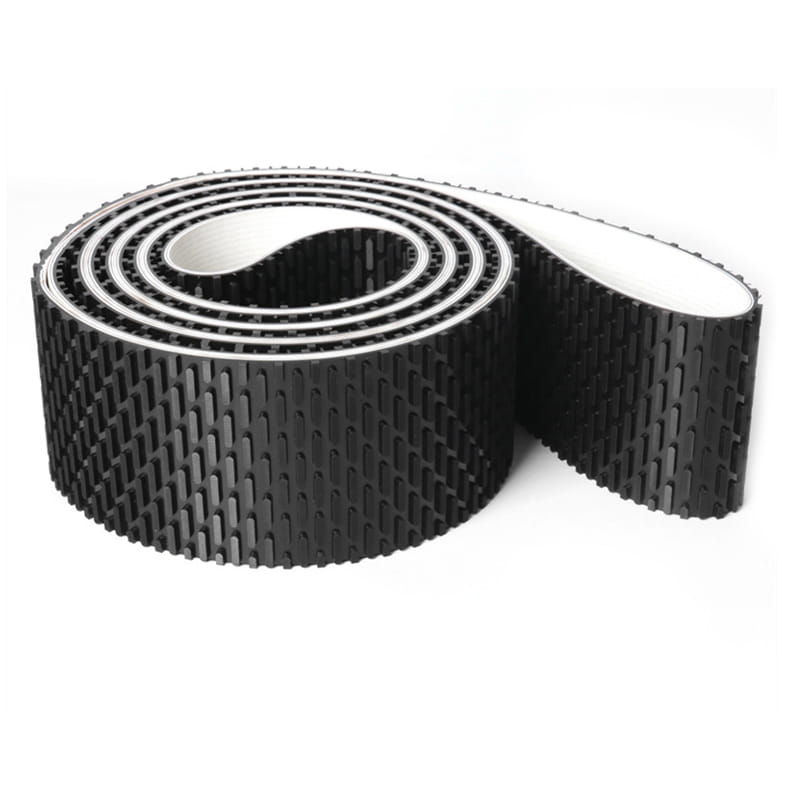
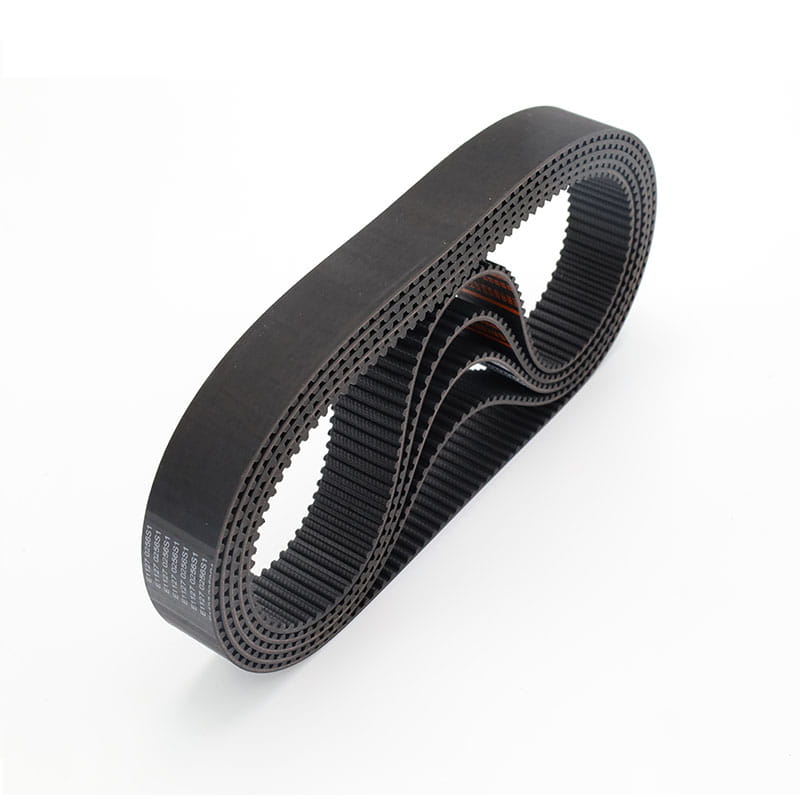 Rubber Synchronous BeltProducts RecommendedView Product →
Where 70A Works and Where It Runs Into Trouble
Treat these lists as a first filter rather than a full specification.
A 70A rubber belt is usually a good fit for:
- Printing and packaging machines running at steady speed with moderate torque
- Textile machinery where heat build up is limited and oil stays contained
- Logistics sorters and light conveying lines
- Wire and cable equipment with frequent start and stop cycles
- Home appliance drives, where noise matters as much as service life
- Photovoltaic line handling, when the belt is kept clean and dry
Step away from 70A when:
- Torque is high and pulley diameter is small, because the tooth root will flex beyond its limit
- Oil or grease reaches the belt continuously, unless the compound is a nitrile or HNBR grade built for it
- Continuous temperature sits above roughly 80 C, where silicone compounds last longer
- Speed is high and the line must stay clean, where polyurethane is usually the better answer
- Abrasive dust is heavy, where a harder surface helps but alignment has to be exact
How Hardness Interacts With Pulley Geometry and Load
Hardness does not act alone. The same 70A belt behaves differently on a 16 tooth pulley and a 40 tooth pulley at identical torque, because a small pulley forces the backing into a tighter bend and raises stress in both the cord and the rubber. A drive that runs cool on a large pulley can crack a belt on a small one, even when the belt matches its datasheet.
Pulley condition matters too. A worn or polished groove lets the belt sit deeper, which changes the effective pitch and loads the tooth flanks unevenly. The belt then looks like the fault when the pulley caused it.
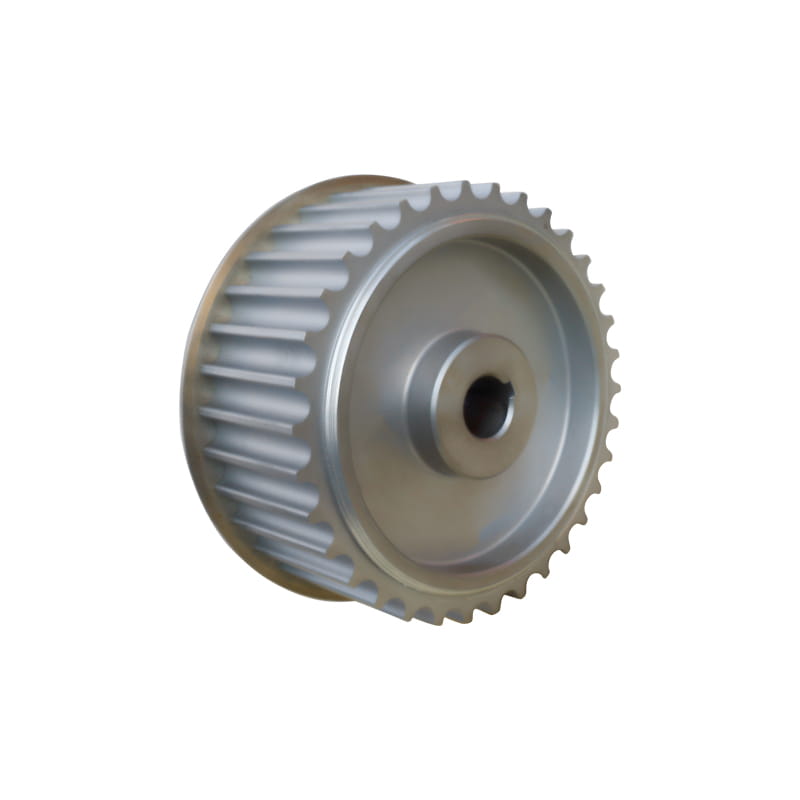
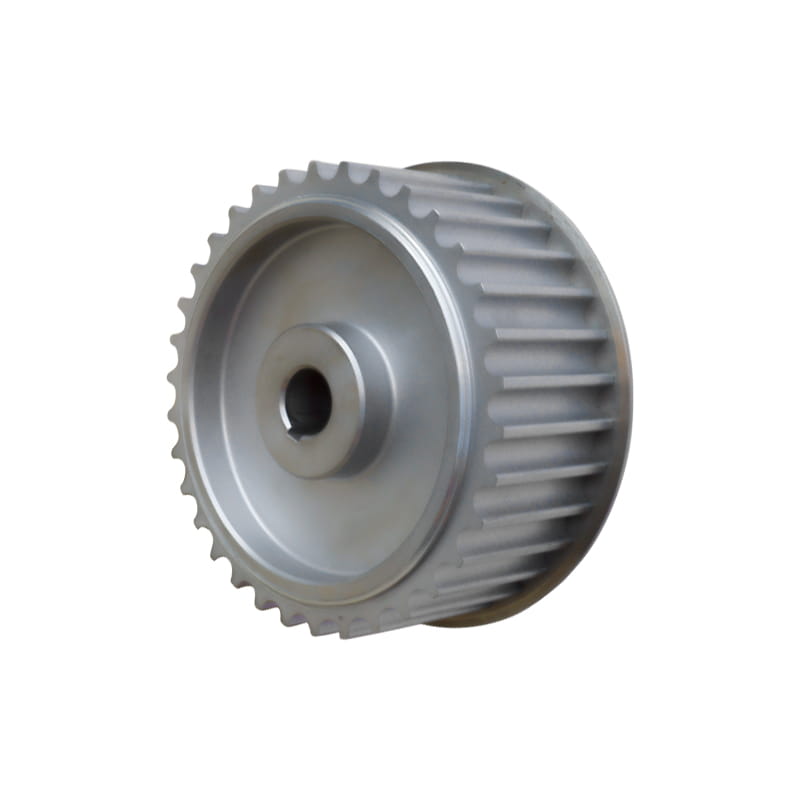 Synchronous PulleyScope of application:View Product →
Comparing 70A Rubber With Polyurethane and Silicone Belts
When a drive falls outside the comfortable range of 70A rubber, the answer is usually a different material rather than a different hardness.
Belt material comparison at typical hardness ranges, showing why 70A rubber remains the general purpose choice.
| Material |
Typical Shore A |
Flex and grip |
Oil resistance |
Heat resistance |
Typical use |
| Rubber (CR or NBR) |
70 |
Balanced |
Moderate |
Up to about 80 C |
General timing, flat and conveying drives |
| Polyurethane |
85 to 95 |
Low flex, high grip |
Good |
Moderate |
High speed, clean lines, abrasion |
| Silicone |
40 to 70 |
High flex |
Fair |
High |
Hot environments and release surfaces |
| HNBR rubber |
70 |
Balanced |
High |
Up to about 120 C |
Oil rich or hot drives |
Polyurethane deserves a closer look when a line runs fast and must stay clean. PU belts hold their shape at higher hardness, resist oil better than standard rubber, and can be made thinner, which suits small pulleys at speed. The trade is less tolerance for misalignment and shorter life under shock loads.
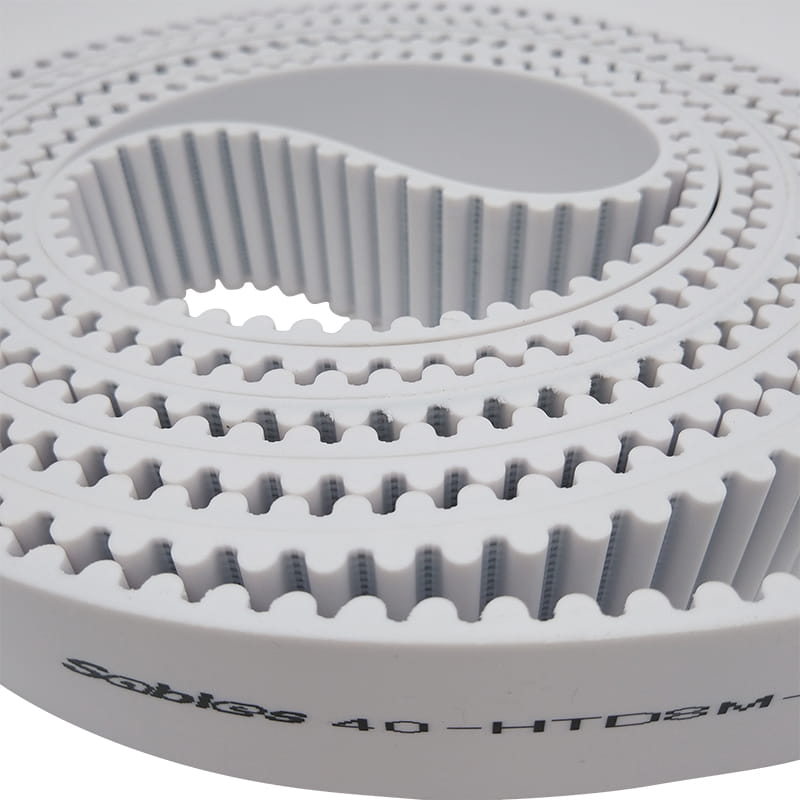 PU Synchronous BeltProducts RecommendedView Product →
Reading a Datasheet: What a Real 70A Specification Looks Like
A usable specification does not just say 70A. It says 70A plus or minus 5, measured with a type A durometer, on a sample at least 6 mm thick, conditioned at room temperature, and read one second after contact. Anything less is a sales figure.
Ask three questions before approving a sample:
- Was the reading taken on the finished belt or on a laboratory plaque of the compound? Curing and cord placement change the surface the gauge actually touches.
- Was it taken on the back of the belt or on the tooth side? Belts with a fabric back can read differently on the two faces.
- Is the value for a new belt or an aged one? Rubber stiffens with heat and time, so an old sample can read several points harder than the same belt out of the box.
If you are designing a new drive rather than replacing a belt, geometry matters more than the hardness number. Pitch, pulley tooth count, wrap angle and take up set the load the compound has to survive, and our guide to synchronous belt drive design walks through those calculations.
Common Procurement Mistakes That Trace Back to Hardness
Most hardness problems appear months after the purchase order, so they are rarely traced back to the original decision. These patterns are worth watching.
- Approving a sample because it fits and looks right. Fit says nothing about durometer.
- Accepting about 70A without a tolerance. A supplier at 63A and one at 78A are both about 70A, and neither will match the original belt.
- Mixing belts from two suppliers on one drive, which splits the load unevenly and shortens the life of both.
- Storing belts in a hot room for a year, then expecting the original reading on installation.
- Assuming a harder belt always lasts longer. On small pulleys the opposite is usually true.
- Replacing belts without inspecting pulleys, since hardness cannot compensate for a worn groove or a bent shaft.
How to Verify 70A Before You Accept a Shipment
A bench check takes about ten minutes and catches most of the variance.
- Condition the sample at room temperature for at least an hour.
- Use a calibrated type A gauge and press the foot flat on the belt back, away from the edges.
- Take five readings along the length and average them. A single reading on a molded surface is not reliable.
- Repeat on the tooth side if the application is sensitive to tooth stiffness.
- Record the results against the supplier test report and keep them with the batch number.
If the average falls more than five points from specification, hold the batch and ask for a re-test of the finished belt. For replacement drives, the goal is to match the belt that came off the machine rather than to find the hardest belt available.
70A durometer is not a marketing figure. It is the point on the Shore A scale where an industrial belt keeps enough grip to drive the load and enough flexibility to survive the pulleys it wraps, which is why it appears on so many datasheets for timing, flat and conveying belts. Treat it as a specification with a tolerance, check it the way you check dimensions, and the service life you calculate is the service life you will get.
Jiangxi Kangqi Industrial makes rubber timing belts and special belts for printing, packaging, textile, logistics and appliance drives, and supplies matched pulleys for the same systems. If a drive keeps falling short of the belt you specified, send us the pulley details, the load and the environment, and we will quote a compound and a hardness that fit the application rather than the catalogue.



 中文简体