A packaging plant replaced the same timing belt three times in six weeks before anyone measured the pulley. The drive pulley carried 0.35 mm of radial runout and a worn groove floor, and every new belt failed within days. The belt was never the problem.
If you want a belt drive pulley system that holds speed, runs quietly and gives predictable belt life, treat the pulleys and the belt as one matched set. Fix the groove profile, the diameter ratio, the center distance and the tensioning method before you order anything, then hold alignment and runout tolerances on the shafts. Working in that order removes most of the failures seen on high speed packaging, textile and printing lines.
Match the Pulley First, Choose the Belt Second
Pulleys set the speed ratio, the wrap angle and the bending stress the belt sees on every revolution. A worn or wrongly profiled pulley will destroy a correctly specified belt long before the belt reaches its rated hours. In practical terms, a pulley that costs a small fraction of the belt price decides whether that belt lasts 8,000 hours or 800.
Two measurements tell you more than any catalogue: the groove profile of the pulley and the pitch or datum diameter. Both should be checked with the belt removed and the shaft stationary. If either is out of specification, replacing the belt is only a temporary fix.
What a Belt Drive Pulley System Contains
A complete drive train normally has four elements:
- Driver pulley, keyed or bushed to the motor shaft, which defines the input speed
- Driven pulley on the machine shaft, which sets the output speed through the diameter ratio
- Idler or tensioner pulley, used to set tension or to increase wrap angle
- The belt itself, sized to the center distance and the required power
Any of the four can fail the system. Bushing wear, a seized idler bearing or a pulley machined to the wrong groove angle will all show up as belt edge wear, noise, or a belt that climbs off the pulley under load.
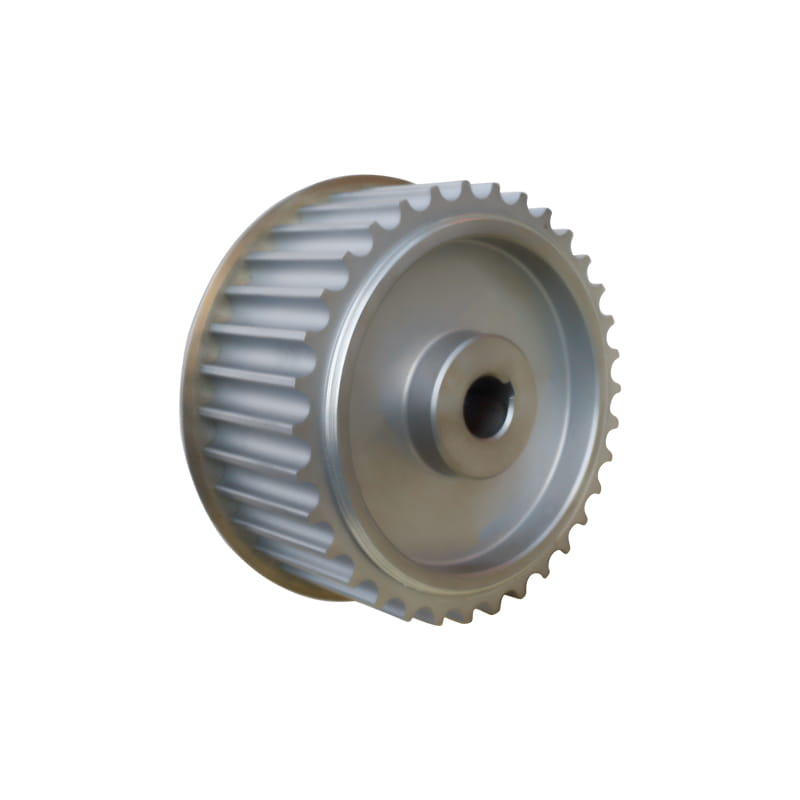
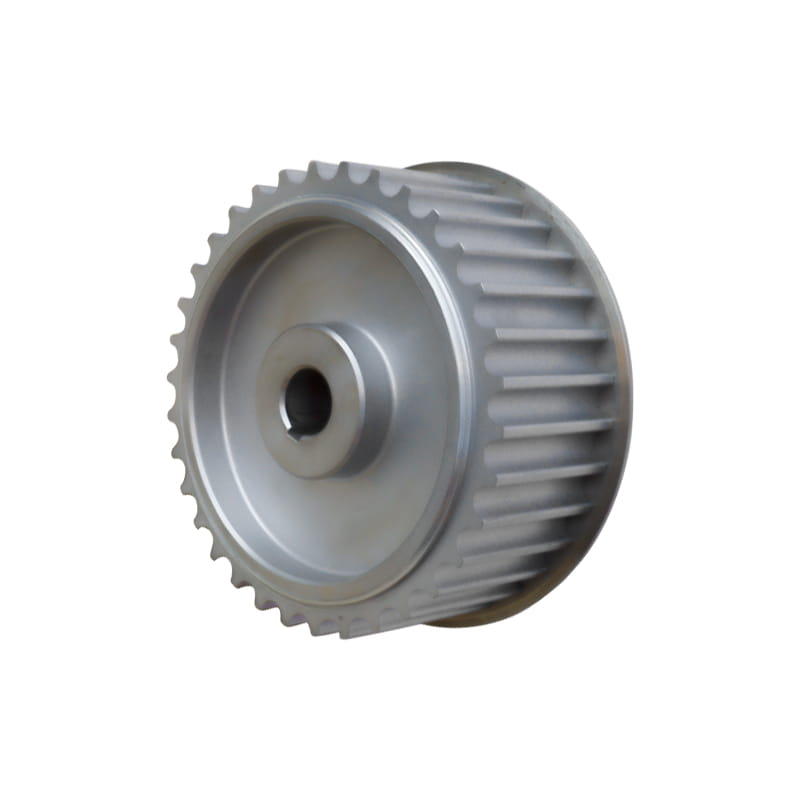 Synchronous Pulley for Timing Belt Drive SystemsTiming pulley intended for synchronous drive systems; checking tooth profile and belt pairing helps avoid wear, noise, and load failures.View Product →
Groove Profile and Belt Type Have to Match
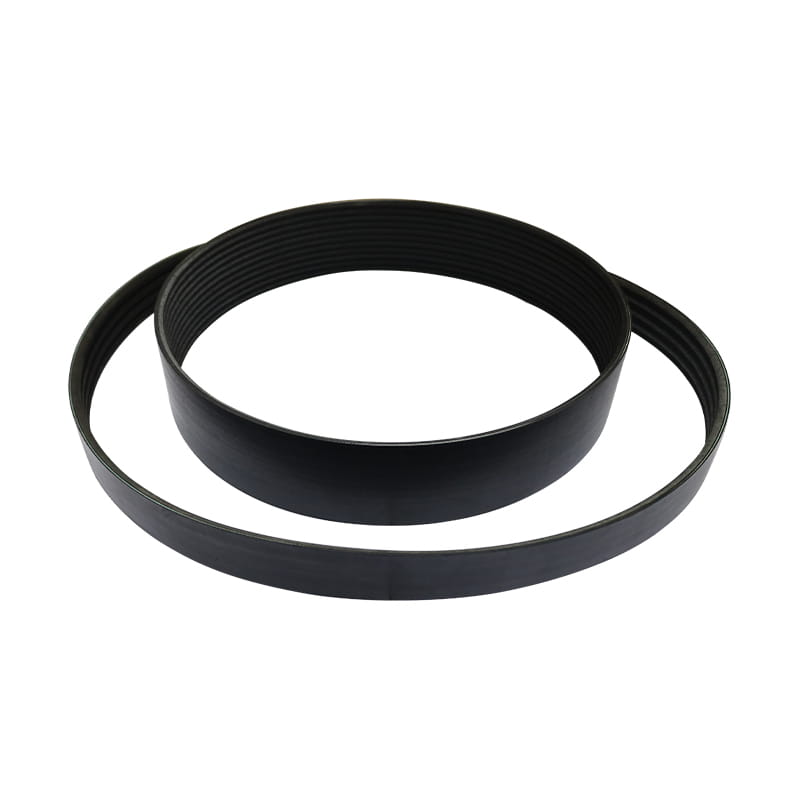
Belt families are not interchangeable, and neither are their pulleys. A classical V-belt in a narrow profile groove sits too deep, slips under load and overheats. A timing belt running on a pulley with the wrong tooth form wears the tooth flanks and drifts in effective pitch within a few hundred hours. The table below shows the combinations that work in normal industrial service.
Belt and pulley combinations for common industrial drives, with the failure that appears when they are mismatched.
| Belt type |
Pulley profile |
Typical surface speed |
Mismatch symptom |
| Classical V-belt, A to C section |
Groove angle 34 to 38 degrees |
Up to 25 m/s |
Belt seats too deep, slips and glazes |
| Narrow V-belt, SPZ to SPB |
Narrow groove with matched datum width |
Up to 40 m/s |
Edge wear and belt turnover in the groove |
| Flat belt |
Crowned flat pulley, 0.5 to 1 degree crown |
Up to 60 m/s |
Belt tracks off centre, frayed edges |
| Ribbed or multi V-belt |
Matched rib pitch, 3.56 mm for PJ |
Up to 50 m/s |
Ribs shear, noise and heat build up |
| Synchronous belt, HTD or GT |
Tooth form matched to belt pitch |
Up to 80 m/s |
Tooth flank wear, pitch drift, ratcheting |
| PU timing belt |
Steel or aluminium pulley, matched tooth form |
Up to 80 m/s |
Belt climbs under shock load |
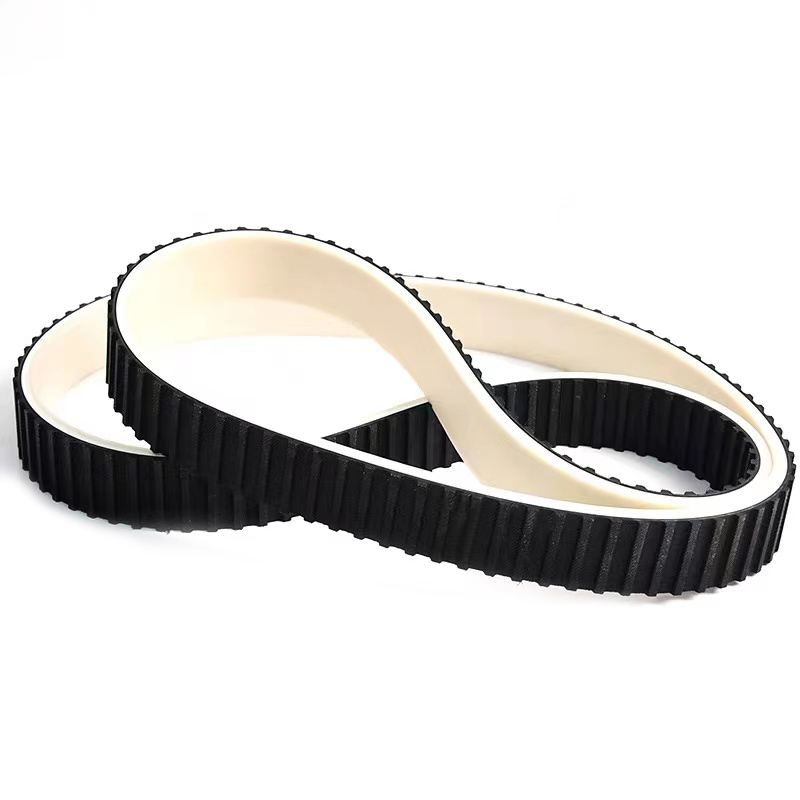
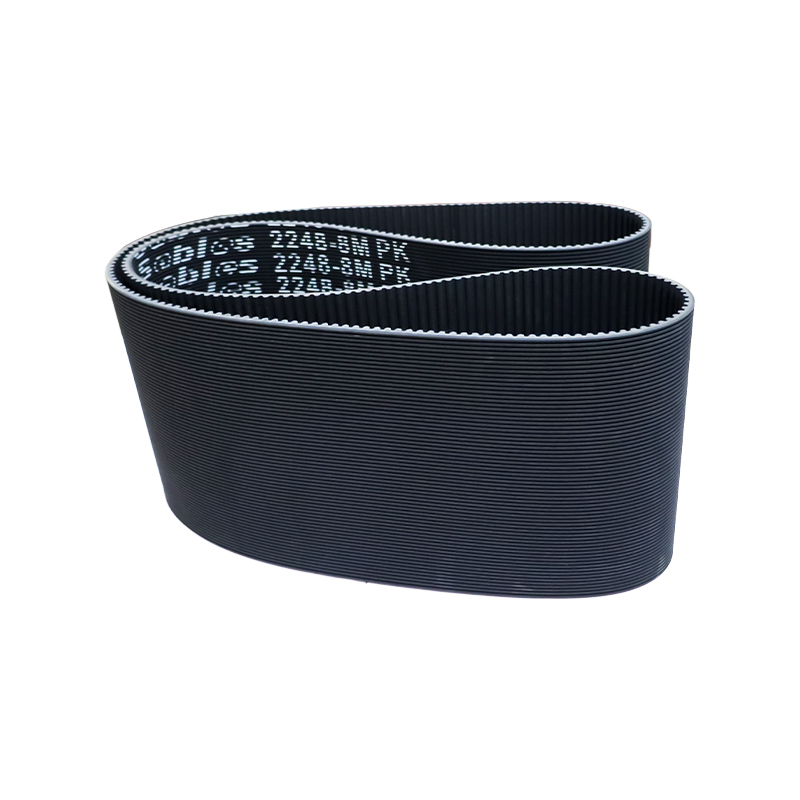
In repair work the belt pitch and the pulley tooth profile must be confirmed as a pair, ideally from the belt backing print and the pulley marking rather than from memory. Rubber synchronous belts remain the default choice for general industrial drives because they tolerate slight misalignment and damp vibration well, while their tooth form still holds a precise ratio.
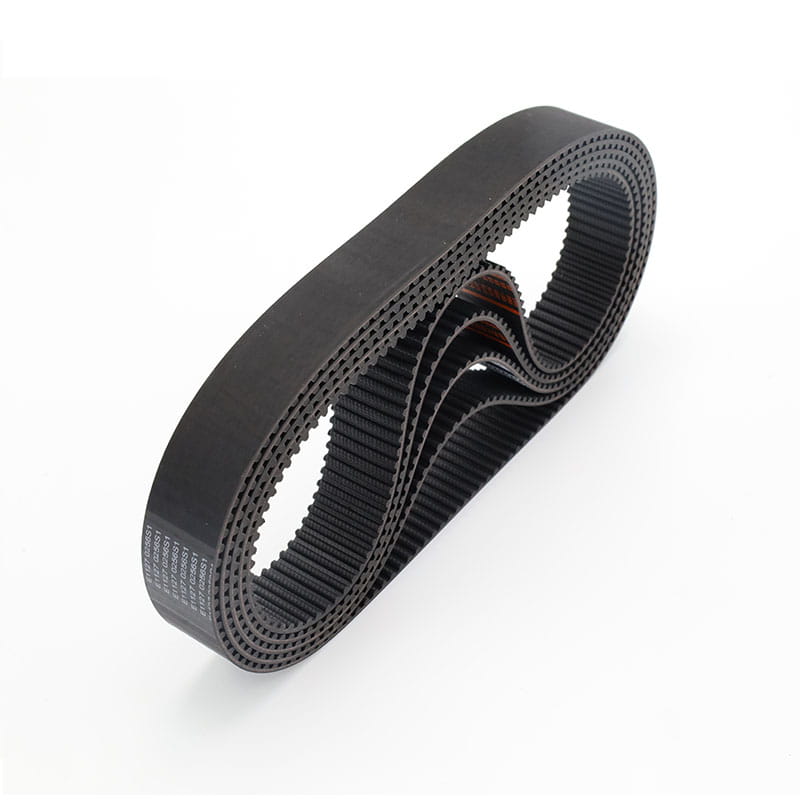 Rubber Synchronous Belt for General Industrial Timing DrivesRubber timing belt for synchronous power transmission and positioning; confirm pitch and pulley tooth profile as a matched pair during repair.View Product →
Diameter Ratio, Speed and Center Distance
Speed ratio is the driven diameter divided by the driver diameter, but the constraint that really matters is minimum pulley diameter. A small pulley forces the belt to bend sharply, and bending fatigue is what ends belt life on high ratio drives. V-belt drives usually need at least 120 degrees of wrap on the small pulley. Timing drives need enough teeth in mesh, typically six or more at full load.
Center distance then fixes belt length. Where you have design freedom, a center distance between one and two times the sum of the two pulley diameters keeps wrap angle reasonable and reduces bearing load. Where space is tight, an idler on the slack side recovers wrap angle without reversing the belt direction.
For the full ratio and center distance calculation sequence, the site's own design guidelines for synchronous belt drives follow the same steps.
Tension and Alignment Decide Belt Life
Tension is where most installations go wrong. A timing belt should be tight enough that it does not jump teeth under peak torque, but loose enough that it can still be twisted about 90 degrees by hand at mid span on a short drive. V-belts run looser. Over tensioning loads the bearings, wears the pulley grooves and produces a whine that is often blamed on the belt.
Alignment tolerances are tighter than most people expect. Angular misalignment should stay under about 0.5 degrees, and parallel misalignment under roughly 0.5 mm for every 100 mm of center distance. Both figures are easy to check with a straight edge and a feeler gauge, and both are cheap to correct before the belt is fitted. The field procedure for installation of a rubber synchronous belt covers the same checks in sequence.
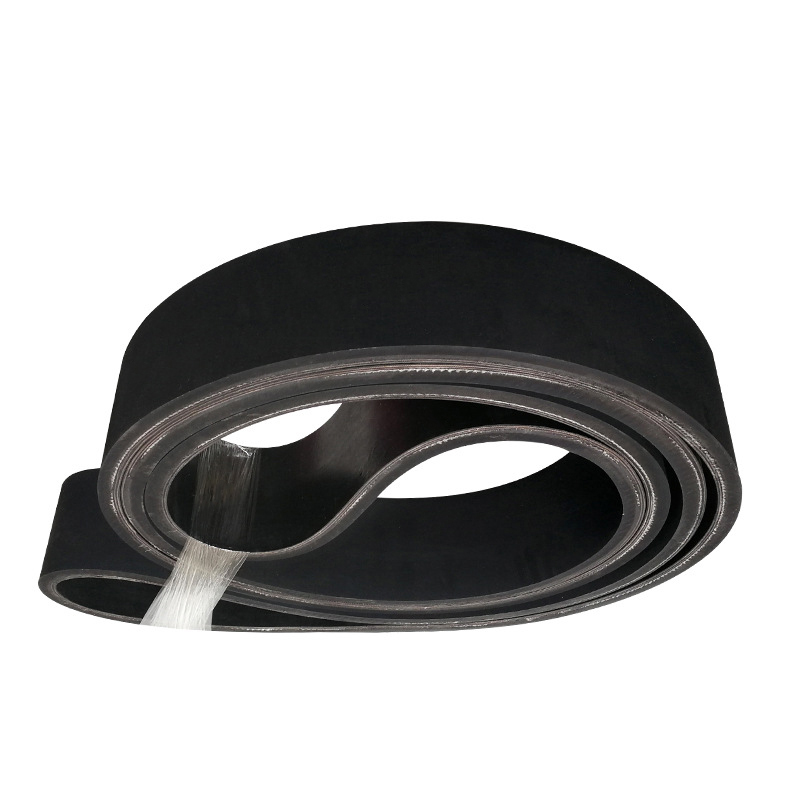
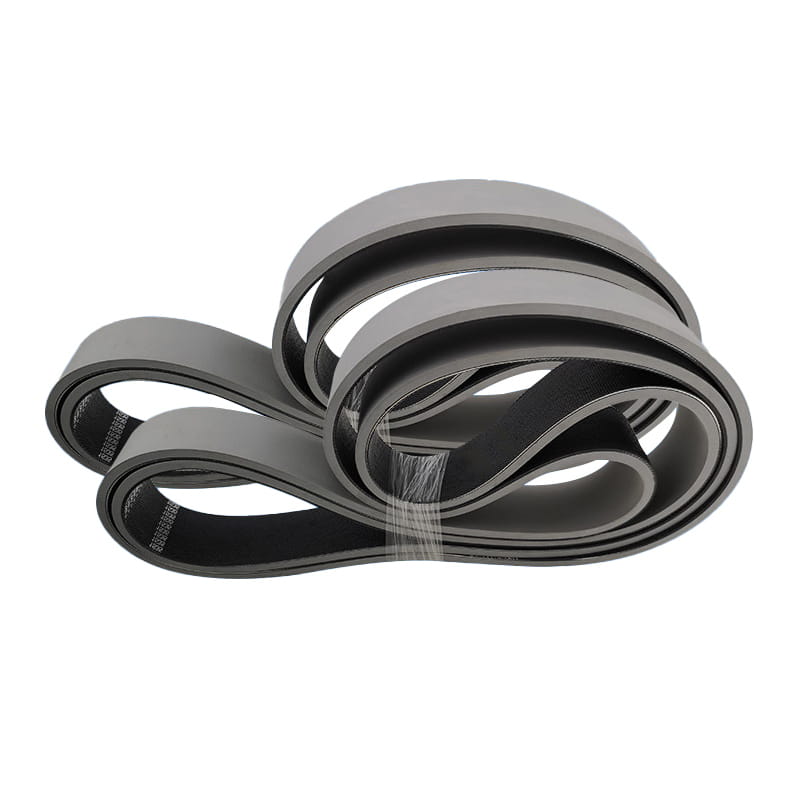
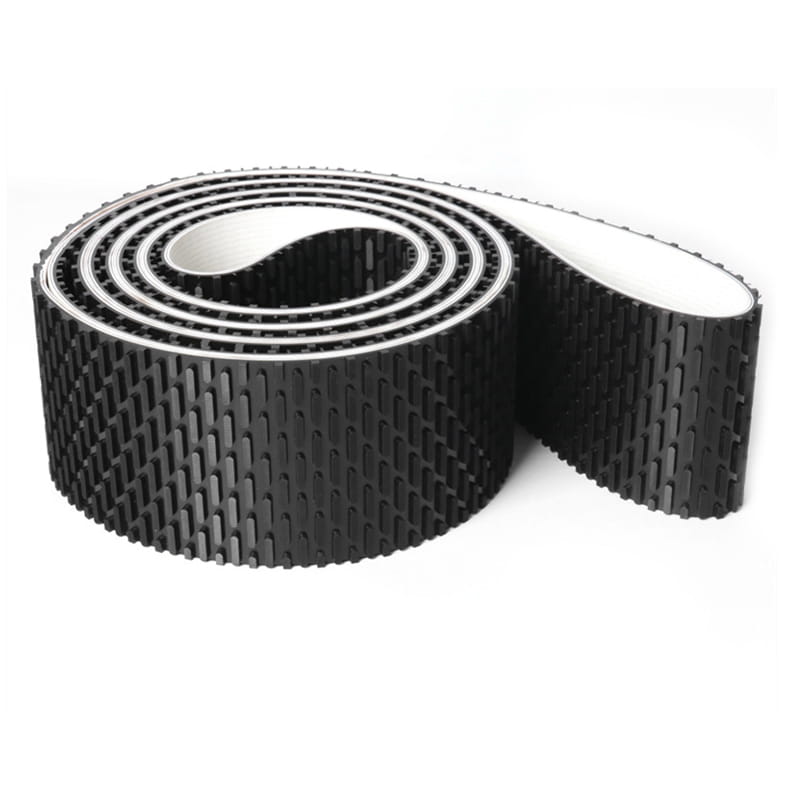
On high speed packaging and printing lines, PU timing belts hold their length better than rubber when ambient temperature climbs and oil mist is present, which is why they are often specified for those positions.
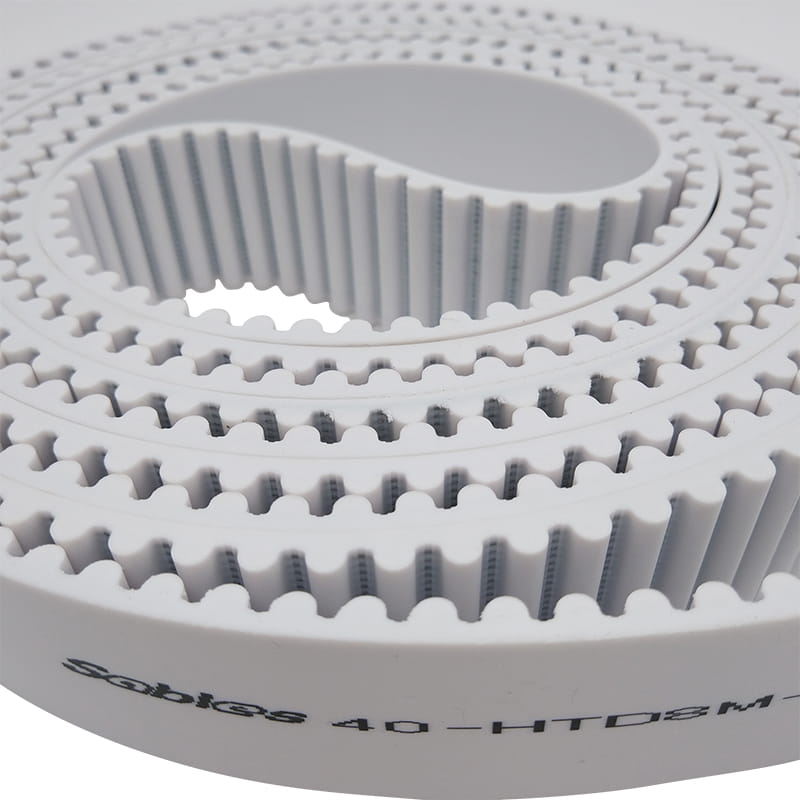 PU Synchronous Belt for Precision Linear and Conveying DrivesPolyurethane timing belt for precise positioning and transport; stable length and low noise suit packaging, printing, and other demanding drive positions.View Product →
A Practical Selection Checklist
- Record motor power, input speed and the output speed the machine actually needs.
- Measure the existing pulley diameters and count grooves or teeth.
- Confirm the belt profile from the belt backing or the pulley marking, not from memory.
- Check available center distance and whether a tensioner can be fitted.
- Define the environment: temperature, oil, dust, washdown and shock load.
- Decide between standard and custom lengths before lead time becomes the constraint.
- Order pulley and belt together so profile and pitch are guaranteed to match.
On the purchasing side, the main risk is a split supply. A belt from one source and a pulley from another may both sit inside their own tolerances and still not mesh correctly. Buying the pair from one maker removes that risk, and it settles responsibility when a drive fails early.
Maintenance and Replacement Practice
Re tension a new belt after the first 24 to 48 hours of running, then write the setting down. Belts creep and settle, and an untensioned new belt is the most common cause of a repeat failure inside the first month.
Inspect the pulley at every belt change. Run a finger along the groove floor for steps and ridges, check tooth flanks for wear, and measure runout with a dial gauge. Grooves worn by more than about 0.5 mm are usually better replaced than reused, because a new belt quickly wears into the old shape.
Keep spares from the same production batch where the drive is critical, and store them away from direct sunlight, ozone sources and tight bends. For lines that run continuously, a spare pulley set on the shelf costs far less than one unplanned stop.
Most belt drive pulley system problems are decided before the belt is ever fitted. Match the groove or tooth profile, keep the diameter ratio and wrap angle inside sensible limits, and set alignment and tension to written values, and the drive will run to its rated life. Get any of those wrong and the belt becomes a consumable. For drives outside the standard range, including long pitch synchronous belts produced in molds up to 8600 mm and belts for printing, packing, textile, photovoltaic and food machinery, it pays to involve the belt and pulley maker at the specification stage rather than after the third failure.



 中文简体
中文简体