A maintenance technician pulls a worn belt from a packaging machine, lays it flat on the bench, and reaches for a tape measure. The tape reads 1,870 mm. The replacement label says 1,850 mm. Before ordering, the technician needs to know which dimension the manufacturer meant, because a tape measure alone does not answer the question.
Drive belts are not measured by one universal method. V-belts may be specified by outside length or datum length. Synchronous belts are specified by pitch length and tooth count. Flat belts and conveyor belts use cut length or inside circumference, plus width and thickness. The measurement method follows the belt type and the standard printed on the old belt or listed in the machine manual.
Start With the Belt Type, Not the Tape Measure
The first check is the belt construction and cross-section. A wrapped V-belt, a timing belt, a flat belt, a ribbed belt, and a conveyor belt all use different reference lines. Measuring a timing belt around its outer back gives a number that is larger than its pitch length. Measuring a V-belt around its outside gives a number that may not match the datum length used in the catalog.
Look for markings before measuring. Numbers such as A42, SPB 2360, HTD 8M 800, 100 T10 500, or 3/16 x 12 often include section, pitch, tooth count, width, and length. If the markings are gone, identify the profile with a gauge or calipers. The table below shows the common references.
Length reference is not the same for every drive belt; confirm the standard before using a tape measure.
| Belt type |
Primary length reference |
Other dimensions to record |
Common measurement mistake |
| V-belt |
Outside length, datum length, or pitch length |
Top width, height, section letter |
Assuming the number after the section is outside length |
| Timing or synchronous belt |
Pitch length along the cord line |
Tooth pitch, tooth count, width, tooth profile |
Measuring the outer back instead of the pitch line |
| Flat belt |
Cut length or inside circumference |
Width, thickness, joint type |
Using outside length on an endless belt |
| Ribbed or multi-V belt |
Effective length |
Number of ribs, rib pitch, width |
Counting ribs on only one side of the belt |
| Conveyor belt |
Overall length or inside circumference |
Width, thickness, edge condition, cleats |
Leaving out coatings, cleats, or sidewalls |
V-Belts: Outside Length, Datum Length, and the Formula
For classic V-belts, the letter section controls the cross-section. A, B, C, D, Z, SPZ, SPA, SPB, and SPC are common examples. The number after the letter is usually a nominal length, but that length may be inside length, outside length, datum length, or effective length. A belt marked A42 is not necessarily 42 inches around the outside.
Outside length is measured around the outer surface of the belt. Datum length is measured along the neutral axis, where the belt bends without adding or reducing length. Pitch length is close to datum length for many V-belts. For replacement, use the same reference as the original catalog listing. If only pulley dimensions are available, calculate the open-belt length with this formula:
L = 2C + (pi/2)(D + d) + (D - d)^2 / (4C)
Here, C is the center distance, D is the large pulley pitch diameter, and d is the small pulley pitch diameter. Use the same units for all values. The result is a theoretical pitch length for an open drive, not a substitute for the manufacturer's catalog number.
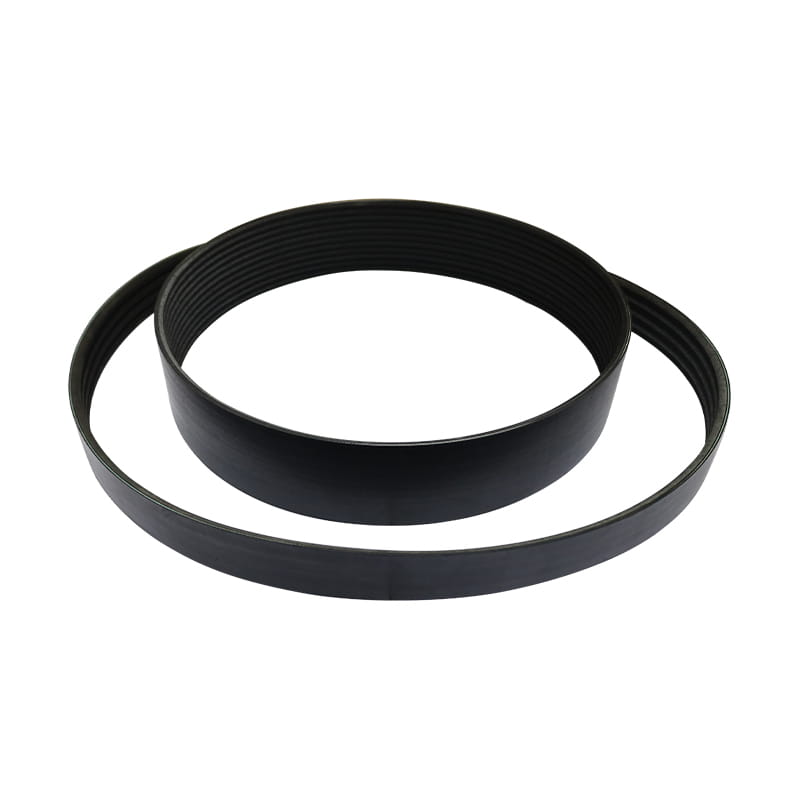
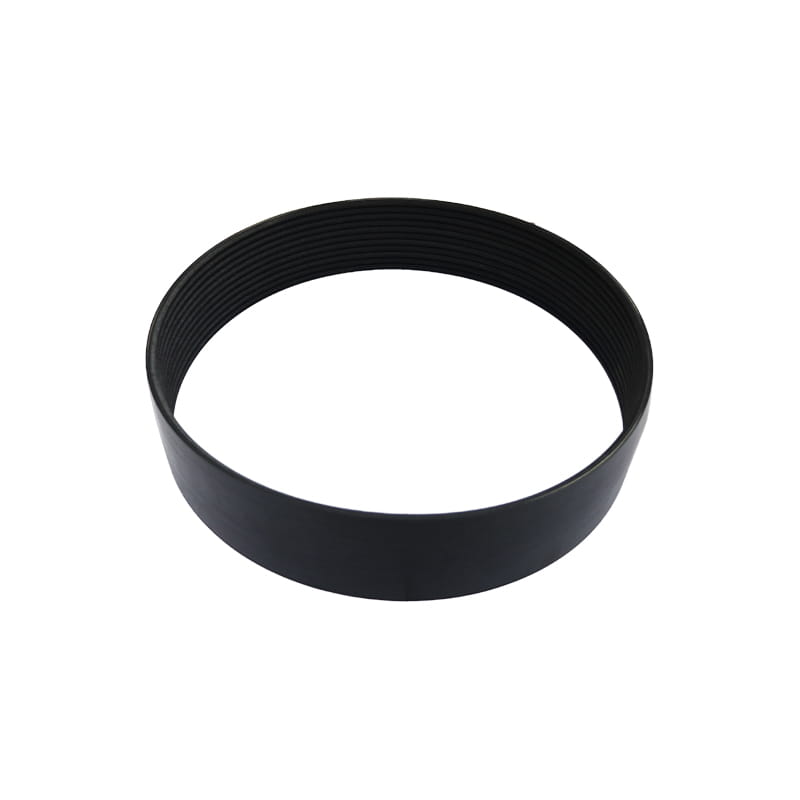 Rubber Wide-Angle V-Belt for Industrial Transmission60° wide-angle rubber belt in PU, CR, and EPDM with 3M–11M profiles, useful when comparing replacement length, transmission force, and wear resistance.View Product →
Field check: if the belt is still on the machine and in good condition, wrap a flexible tape around the belt path and mark the overlap. That gives an installed length, not necessarily the catalog length. On a used belt, stretch and wear can add 0.5 percent or more. A 2,000 mm belt can read 10 mm long after service. Do not use a worn belt as the only reference.
Synchronous Belts: Pitch Length and Tooth Count
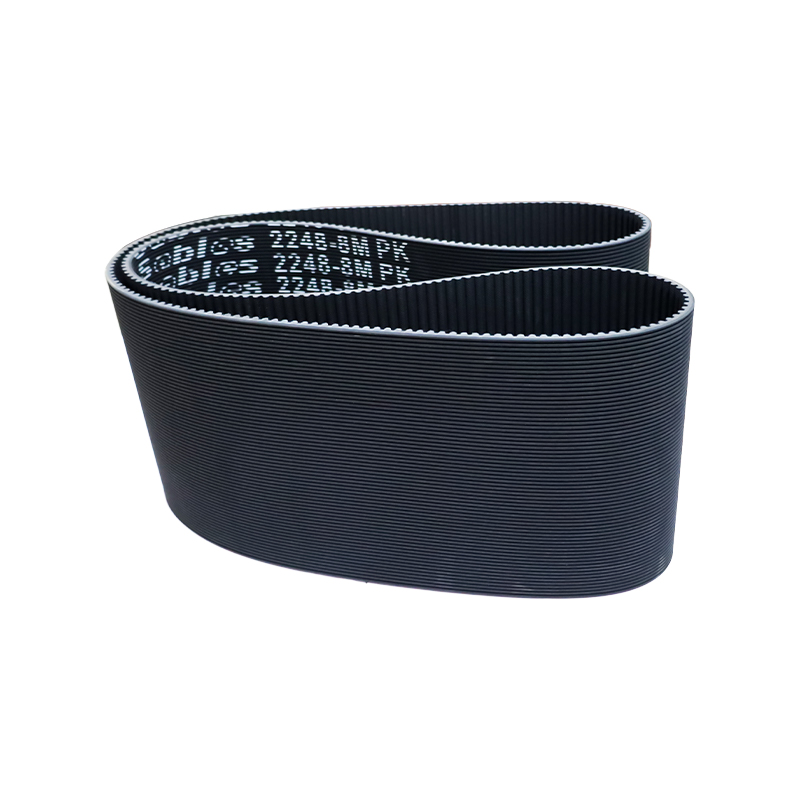
Timing belts are measured on the pitch line, the imaginary line running through the center of the tensile cords. The pitch length is the distance around that line. It is not the outside circumference. The tooth pitch is the distance from one tooth center to the next, such as 3 mm, 5 mm, 8 mm, or 14 mm, or a profile such as GT2. If the belt has 100 teeth at an 8 mm pitch, the pitch length is 800 mm.
To measure, count teeth and check pitch. For a closed loop, lay the belt flat, mark a starting tooth, and count all the way around. For an open-ended timing belt, measure the cut length with a tape while the belt is under light tension. Width is measured across the back with calipers. Thickness is measured from the tooth tip to the back. Record the tooth profile as well, because two belts with the same pitch length can have different tooth profile differences.
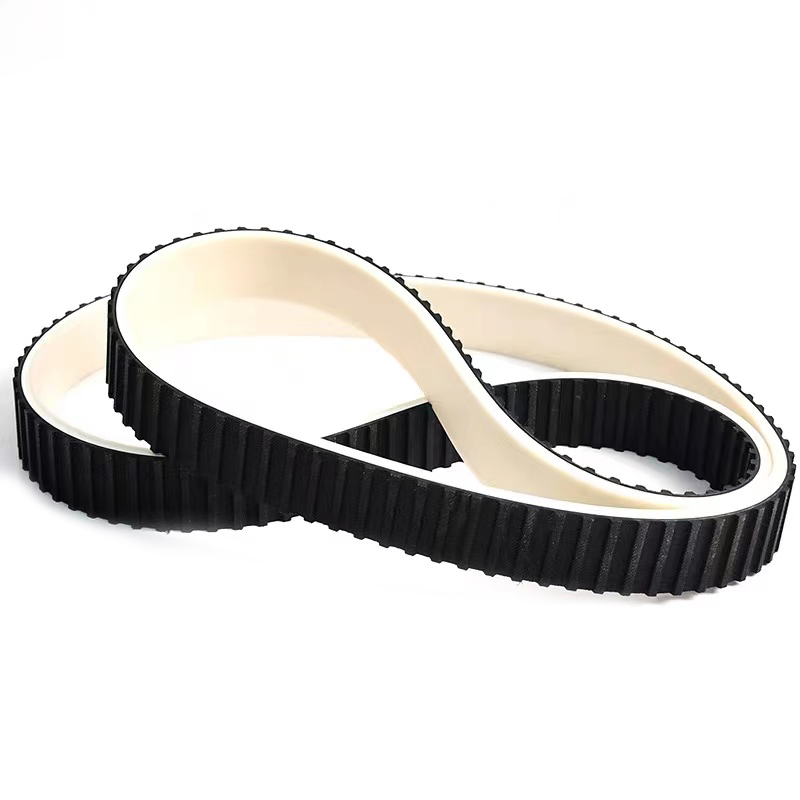
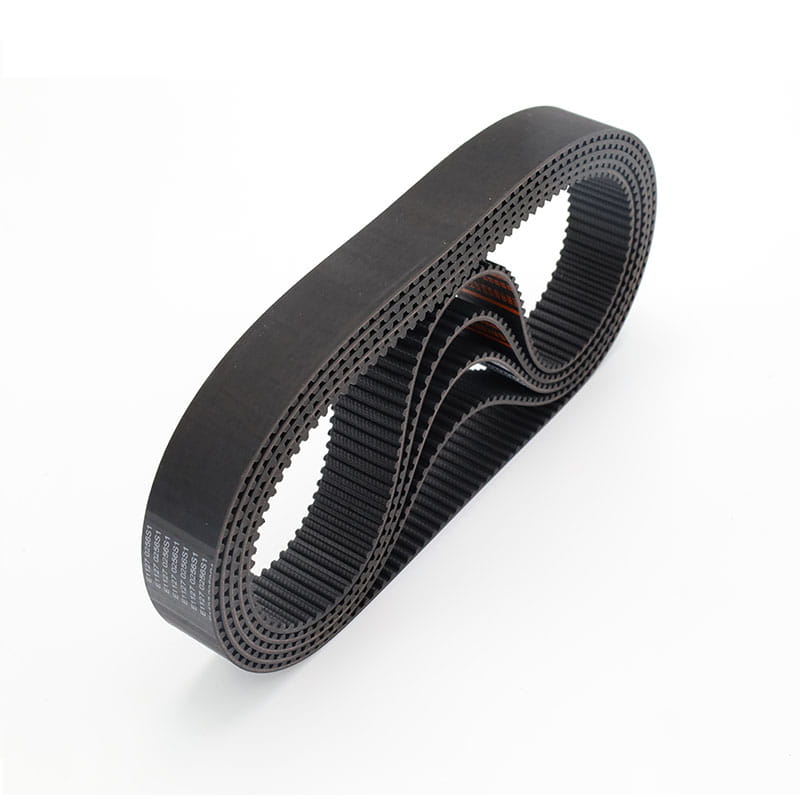 Rubber Synchronous Timing Belt for Positioning and TransmissionTiming belt range covers MXL, XXH, T, and M profiles with glass fiber cord and nylon tooth protection, useful when matching tooth count and pitch.View Product →
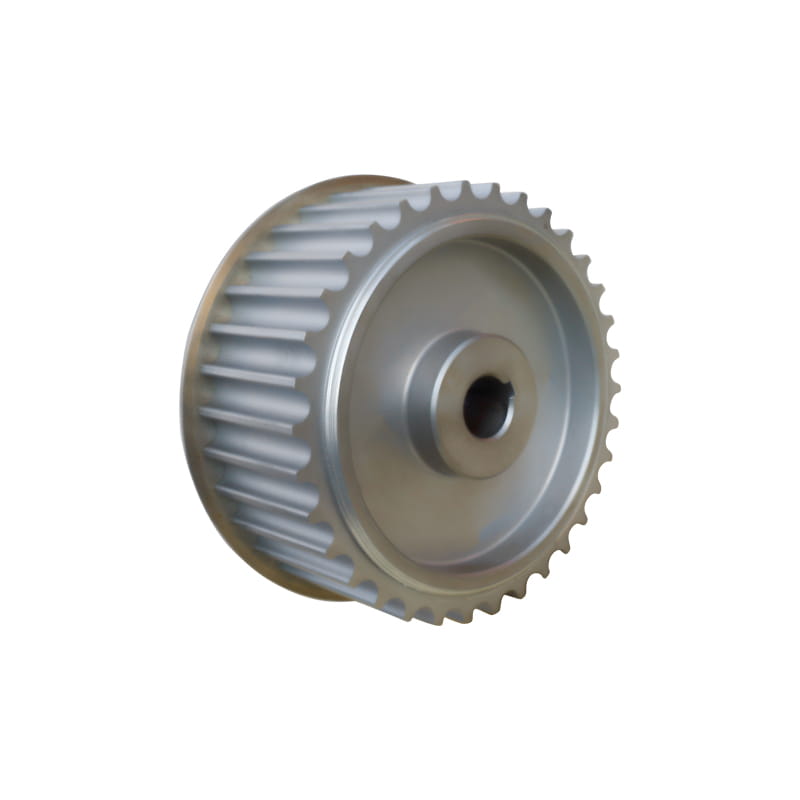
A common error is to measure the outside diameter of a timing pulley and multiply by pi. That gives a rough outside circumference, not the belt pitch length. Use the pulley pitch diameter if you must calculate, and confirm the belt tooth count against the pulley groove count.
Flat Belts, Ribbed Belts, and Conveyor Belts
Flat belts are usually specified by cut length, width, and thickness. For an endless flat belt, the length may be the inside circumference. For an open-end flat belt, the cut length is the straight length before joining. Measure width at three points and use the narrowest reading. Thickness matters because a belt that is 0.5 mm thicker can change tension and pulley contact.
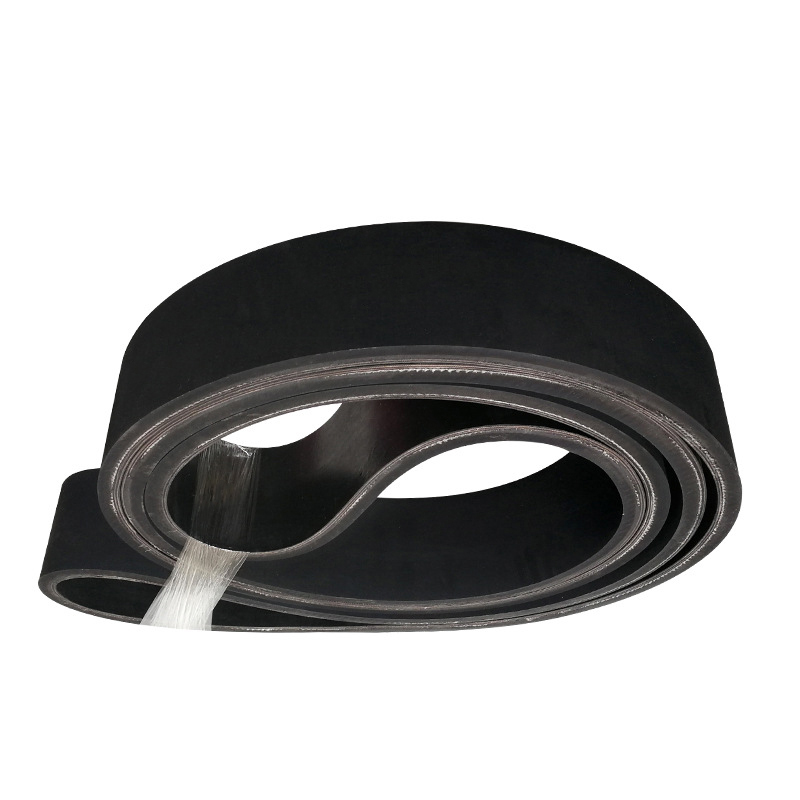
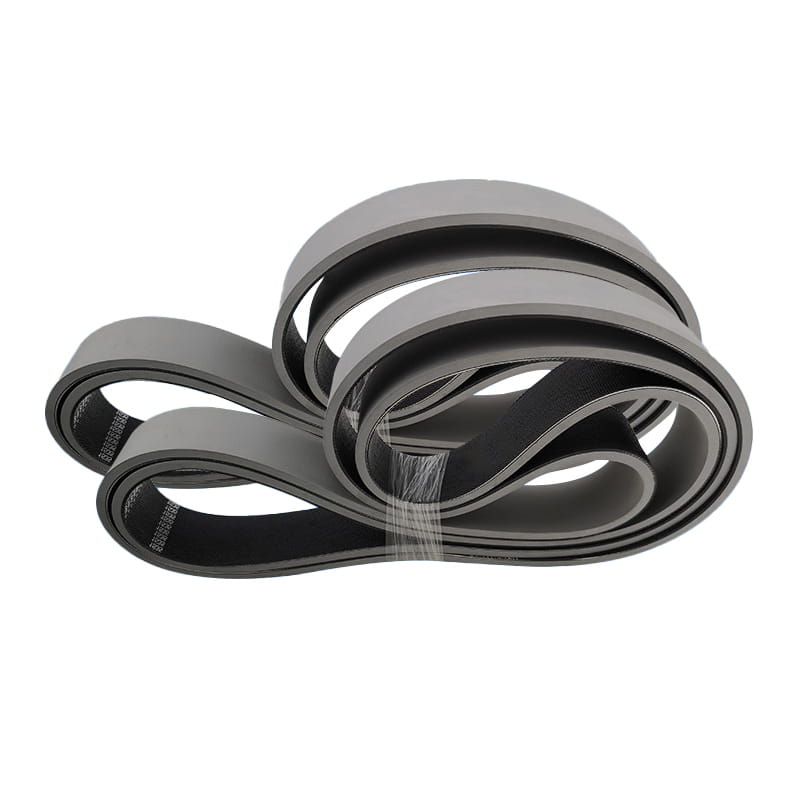
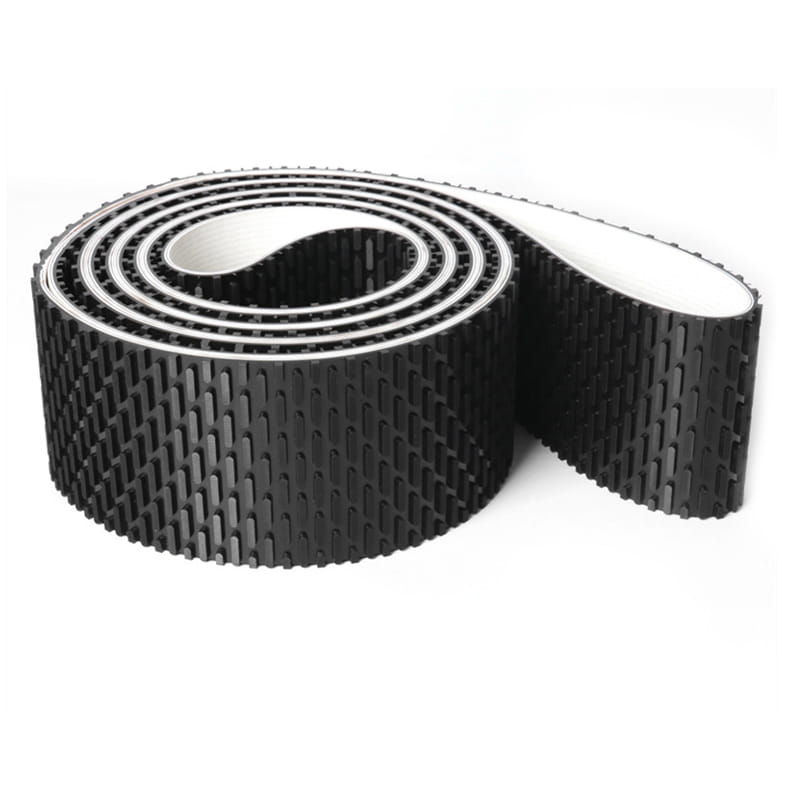
 Industrial Flat Belts in Nylon, Polyester, and AramidFlat belt series for power transmission and light conveying, with nylon, polyester, and aramid layers and 1–6 mm thickness, useful for length and width checks.View Product →
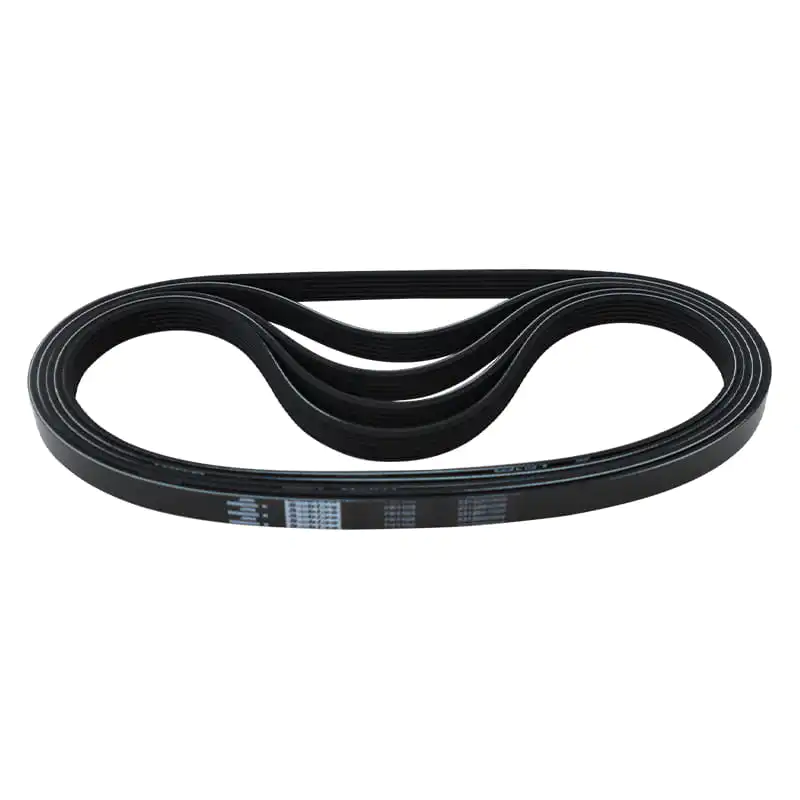
Ribbed belts use effective length, number of ribs, and rib pitch. The length is measured along the belt back or pitch line depending on the standard. Count ribs across the full width. Conveyor belts use overall length, width, thickness, and edge condition. For an endless conveyor belt, the length is often the inside circumference or the center-to-center distance around the pulleys. If the belt has a cleat, sidewall, or coating, include that in the description.
For coated or special processing belts, measure the base belt and the coating separately. A rubber coated belt may have a total thickness that includes the coating. If the coating is worn, the original thickness may be missing. Measure the base belt width and the coating width independently so the supplier can identify the correct construction.
A Field-Friendly Measuring Sequence
- Identify the belt type and any printed code. Clean the belt so the markings are readable.
- Measure width with calipers at three locations. Record the smallest value and the location.
- Measure thickness at three points. For timing belts, measure from tooth tip to back. For V-belts, measure top width and height.
- Measure length using the correct reference. Count teeth for timing belts. Use a flexible tape around the outside for V-belts only if the catalog uses outside length. Use a string around the installed path for an approximate check.
- Record pulley diameters and center distance if the belt is missing or unmarked. Use the formula for V-belts or the pitch length method for timing belts.
- Compare the result with the old belt marking and the machine manual. Allow for normal wear. A used belt can be longer than the original by 0.5 percent or more.
- Put all dimensions, photos of the markings, and the machine model in the request.
What to Put on a Replacement Request
A clear request prevents wrong orders. Include belt type, profile or section, pitch length or outside length, width, thickness, tooth count or number of ribs, and any special features. For timing belts, write the pitch length and tooth count, for example 800 mm pitch length, 100 teeth, 8 mm pitch, 15 mm width. For V-belts, write the section and the length reference, for example SPB section, 2,360 mm datum length. Do not write only 1,850 mm, because that number could mean outside, datum, or pitch length.
If the belt is a custom or special processing belt, include a sketch or a photo with the dimensions. Non-standard constructions still follow the same measurement rules for the base belt. The supplier can then match the profile, material, and joint type without guessing.
The final check is simple: match the measurement method to the belt type, and match the catalog reference to the old belt code. If the old belt has no code, measure the pulleys and calculate, then confirm with the supplier before ordering. A tape measure is a useful tool, but the right number is the one the manufacturer uses.



 中文简体