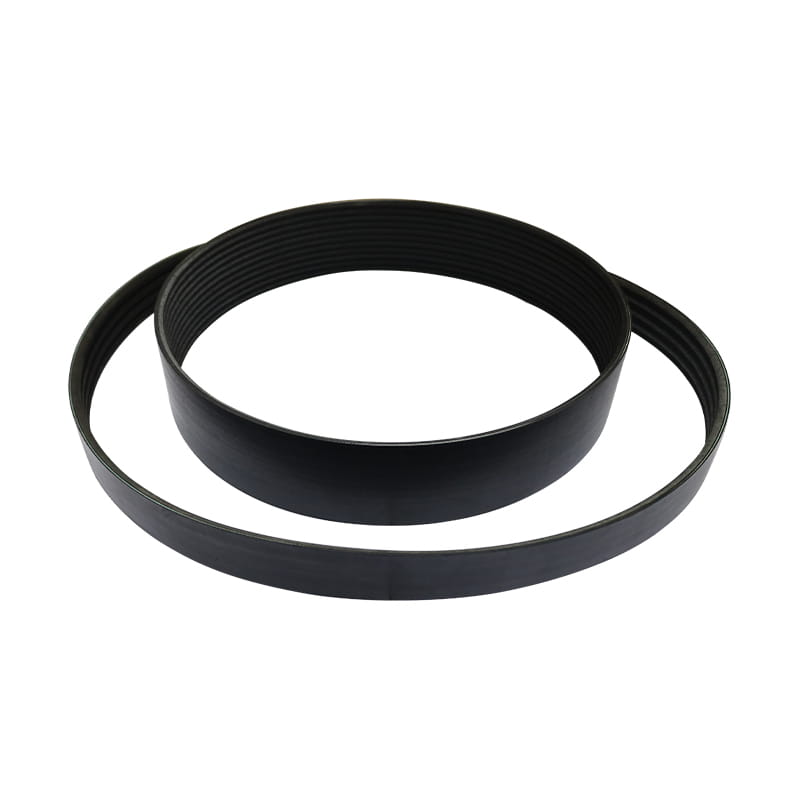
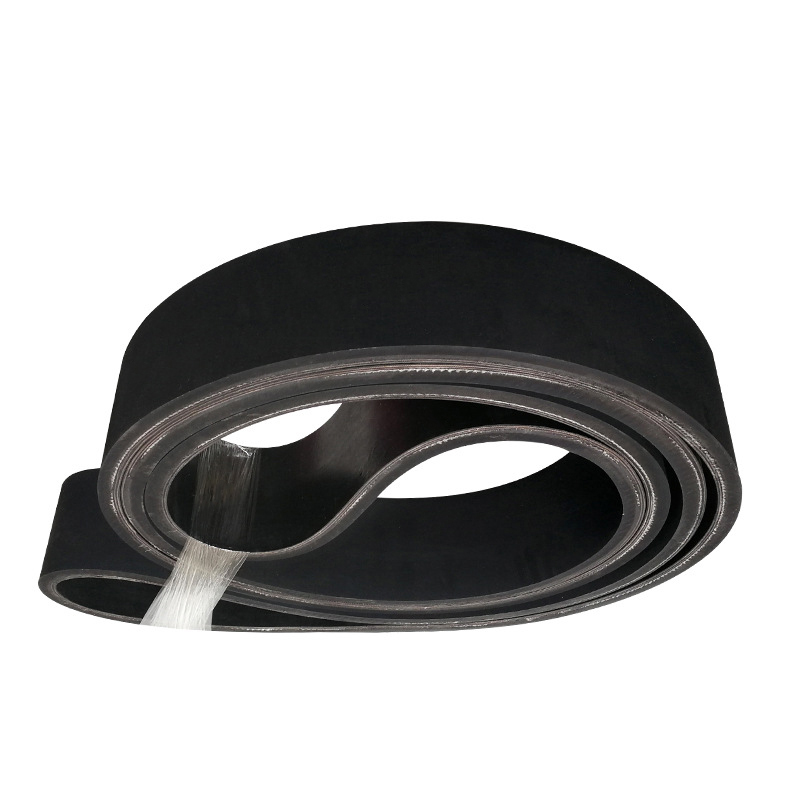
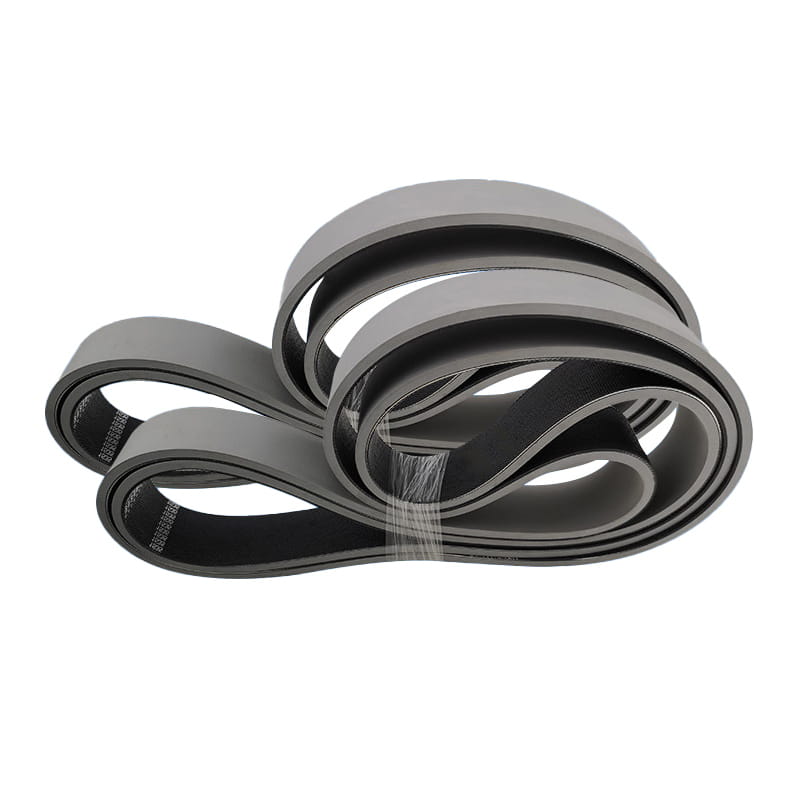
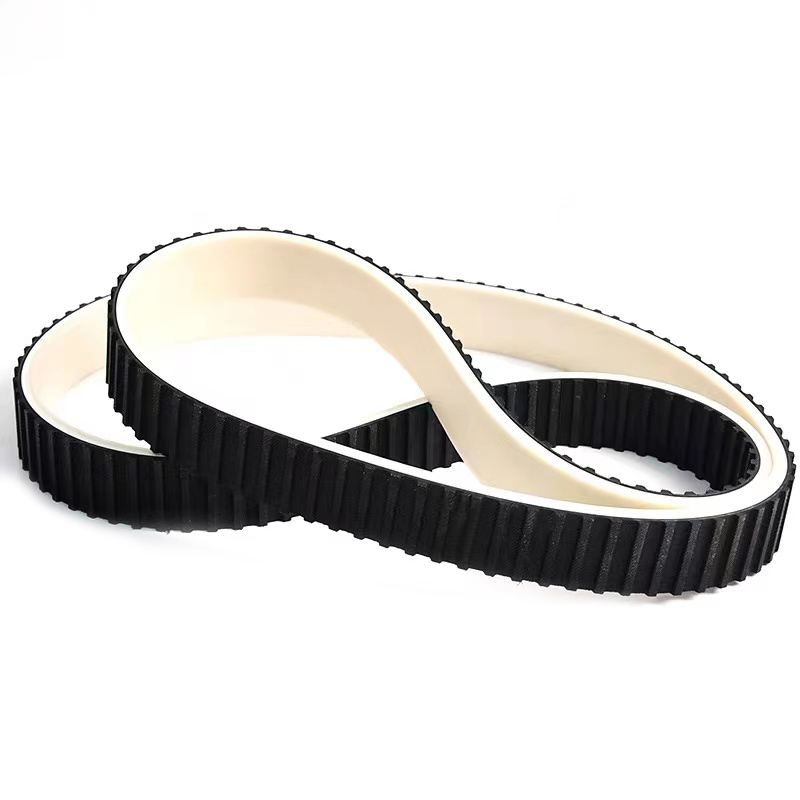
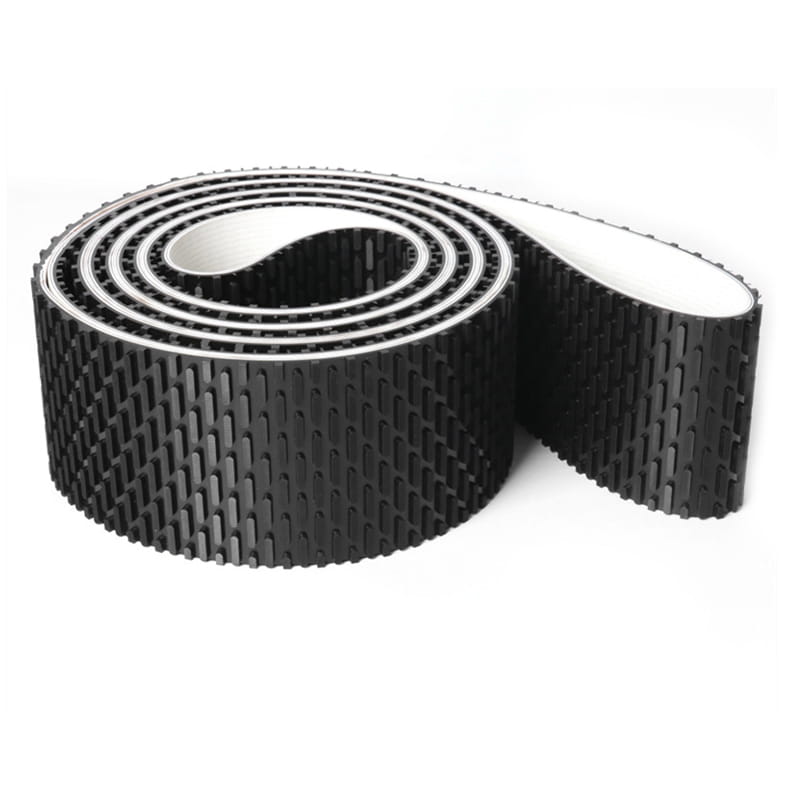
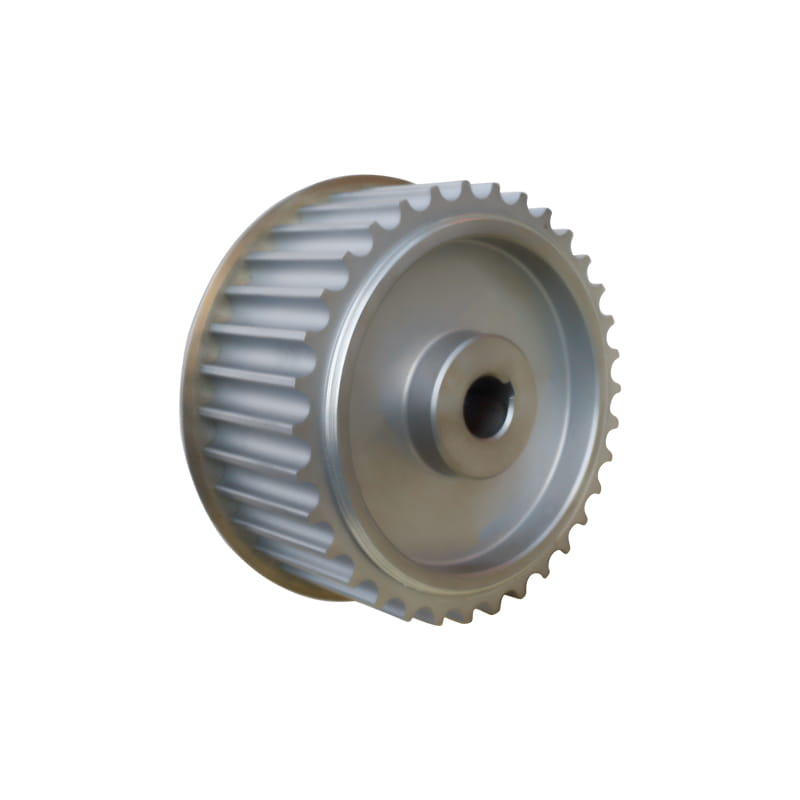
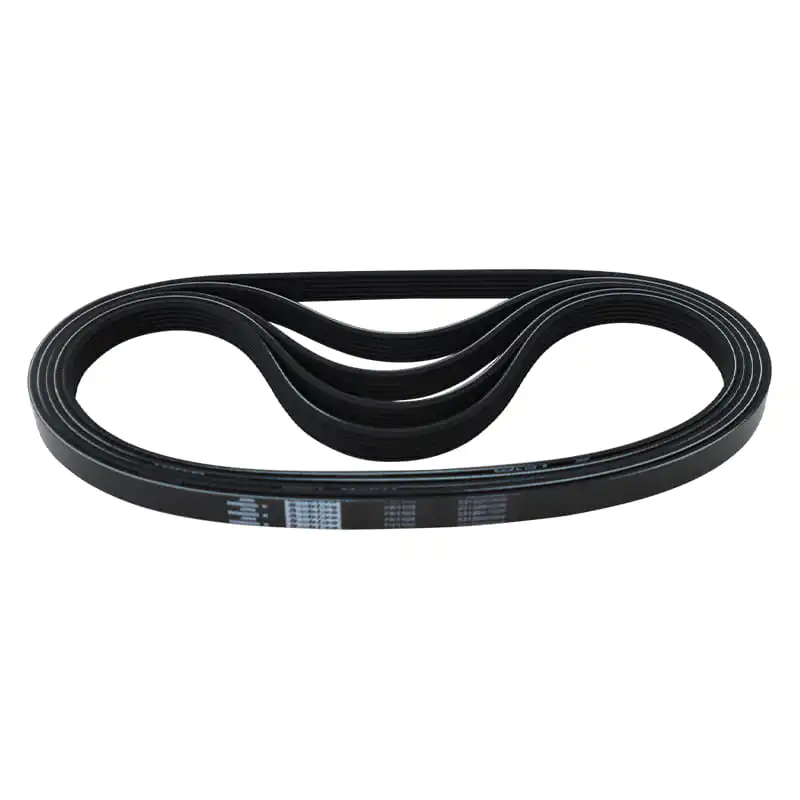
Rubber ribbed belts — also known as poly-V belts, multi-rib belts, or serpentine belts — are used to transmit rotational power between a driving pulley and one or more driven components in mechanical systems. Their longitudinal V-shaped ribs grip matching grooves on the pulleys, enabling efficient, smooth, and compact power transfer across a wide range of speeds and loads. They are found in virtually every domain of modern machinery: from the engine bay of every passenger vehicle and the drive systems of commercial HVAC units, to industrial conveyors, household appliances, fitness equipment, and agricultural machinery. Their combination of high power transmission efficiency (up to 98%), compact cross-section, and flexibility around small-diameter pulleys makes them one of the most versatile and widely deployed belt types in mechanical engineering today.
Automotive Applications: The Most Common Use Case
The automotive industry represents the single largest application segment for rubber ribbed belts. In modern passenger vehicles, a single ribbed serpentine belt typically replaces what used to be three or four separate V-belts, routing around a series of accessory pulleys in one continuous loop.
Serpentine Belt (Accessory Drive Belt)
The serpentine belt is the most recognizable application of rubber ribbed belt technology. Driven by the engine crankshaft, it simultaneously powers multiple vehicle systems including the alternator, power steering pump, air conditioning compressor, water pump, and sometimes the vacuum pump or supercharger. A typical serpentine belt in a mid-size passenger vehicle is 60 to 100 inches (1,500 to 2,550 mm) long and uses a PK-section rib profile. Its ability to wrap around multiple pulleys — including reverse-wrap idlers — without losing grip or efficiency is a direct result of the ribbed design.
Alternator and Charging System Drive
In vehicles where the alternator is driven by a dedicated belt rather than the main serpentine system, a shorter ribbed belt handles the power transfer from crankshaft to alternator. The ribbed design is essential here because alternator loads spike rapidly during high-electrical-demand events — such as engaging the rear defroster and headlights simultaneously — requiring a belt that resists slippage under sudden load changes.
Air Conditioning Compressor Drive
Automotive air conditioning compressors create one of the most demanding intermittent loads in the accessory drive system. When the AC clutch engages, the compressor load can spike to 3–5 horsepower (2.2–3.7 kW) within milliseconds. Rubber ribbed belts handle this shock loading without slipping because their rib-to-groove engagement distributes the force across multiple contact ribs simultaneously, preventing the localized slip that would occur with a flat belt under the same conditions.
Hybrid and Electric Vehicle Applications
In hybrid vehicles, ribbed belts are used to connect the integrated starter-generator (ISG) or belt-integrated starter-generator (BISG) to the crankshaft. These systems demand especially robust belt performance because the belt must handle both motoring (starting the engine) and generating (recovering energy during deceleration) modes, with load reversals occurring thousands of times over the vehicle's life. High-load BISG systems may transmit up to 15 kW (approximately 20 horsepower) through the accessory drive belt, requiring reinforced aramid-cord ribbed belt constructions.
Industrial Machinery and Manufacturing
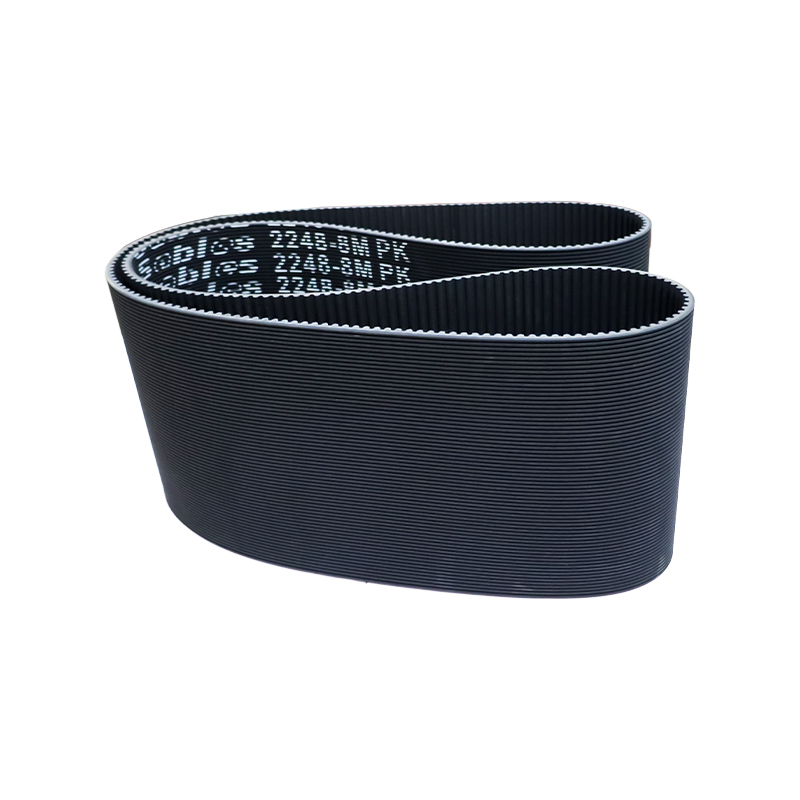
Outside the automotive sector, rubber ribbed belts are a foundational component in industrial power transmission. Their compact profile, high speed capability, and ability to handle mismatched pulley diameters make them a preferred alternative to chain drives and gear drives in many applications.
Electric Motor to Machine Drives
In factories and workshops, ribbed belts connect electric motor output shafts to the input shafts of lathes, milling machines, drill presses, band saws, grinders, and other machine tools. The ability to select different pulley diameter ratios provides simple, cost-effective speed reduction or multiplication without the complexity of a gearbox. A ribbed belt drive system transmitting 5–50 kW between motor and machine is common in light-to-medium industrial environments.
Conveyor and Material Handling Systems
Many conveyor systems use ribbed belts to drive the conveyor rollers or transfer power from a central drive motor to multiple conveyor sections. The ribbed belt's low-profile design allows the drive section to be integrated into a compact space beneath or alongside the conveyor frame, keeping the overall system footprint small. Ribbed belts in conveyor applications typically operate at belt speeds of 5–30 meters per second, well within the performance envelope of modern EPDM-rubber ribbed constructions.
Pumps and Compressors
Industrial pumps — including water pumps, hydraulic pumps, and vacuum pumps — are frequently belt-driven using ribbed belts when direct coupling is impractical due to speed ratio requirements or vibration isolation needs. The ribbed belt's inherent flexibility acts as a natural vibration damper between the motor and the pump, reducing transmitted vibration that would otherwise accelerate bearing wear in both components.
Textile and Printing Machinery
Textile looms, knitting machines, and printing presses require precise, smooth speed control with minimal vibration. Rubber ribbed belts are preferred in these applications because their multi-rib engagement produces lower levels of vibration and noise compared to V-belts or chain drives, which is critical when even small speed fluctuations can affect fabric quality or print registration accuracy.
HVAC, Refrigeration, and Climate Control Systems
Heating, ventilation, and air conditioning (HVAC) systems rely heavily on rubber ribbed belts to drive the blowers, compressors, and fans that move air and refrigerant throughout the system.
Blower and Fan Drives
Air handling units in commercial buildings use ribbed belts to connect motor shafts to centrifugal blower wheels. These drives often operate 24 hours a day, 365 days a year, placing exceptional demands on belt durability and fatigue resistance. The ability to change blower speed by substituting different pulley diameters — without replacing the motor or controller — makes ribbed belt drives a flexible, cost-effective solution for HVAC system optimization.
Refrigeration Compressor Drives
Commercial refrigeration units and large-scale air conditioning systems use ribbed belts to drive reciprocating or scroll compressors. The shock-absorbing properties of the rubber compound help protect compressor internal components from motor startup torque spikes, which can be 3 to 6 times the running torque in direct-on-line motor start configurations.
Household Appliances and Consumer Products
Rubber ribbed belts are found inside many everyday household appliances, where their compact size and quiet operation are particularly valued.
- Washing machines: Front-loading and top-loading washing machines use PJ or PK section ribbed belts to drive the drum from the motor. The ribbed design allows the motor to be positioned offset from the drum center, enabling the compact layouts required by modern appliance designs.
- Vacuum cleaners: Upright and canister vacuum cleaners use small-section ribbed belts (typically PH or PJ profile) to drive the rotating brush roll. A standard vacuum cleaner belt runs at speeds of 4,000–7,000 RPM, requiring a belt that remains stable and slip-free under high-speed, light-load conditions.
- Sewing machines: Industrial and semi-industrial sewing machines use ribbed belts to connect the motor to the needle drive mechanism, providing smooth torque delivery that prevents needle breakage from sudden drive jolts.
- Dishwashers: Some dishwasher pump motors use ribbed belts to drive the water circulation impeller, particularly in older designs where the motor is mounted separately from the pump assembly.
- Food processing equipment: Stand mixers, food processors, and commercial blenders with belt-drive configurations use ribbed belts to transmit motor torque to the mixing attachment or blade assembly at controlled speed ratios.
Fitness and Exercise Equipment
Fitness equipment is a significant and growing application area for rubber ribbed belts, particularly as consumers demand quieter, smoother gym equipment for home use.
Treadmills
Commercial and home treadmills use ribbed belts to transmit power from the drive motor to the front roller, which in turn drives the running belt. The ribbed drive belt must handle continuous loads of 1–3 horsepower (0.75–2.2 kW) and intermittent peaks well above that when users accelerate or run at high inclines. Because treadmills are often used indoors in living spaces, the low-noise characteristics of ribbed belt drives compared to chain or direct drives are a major design advantage.
Elliptical Trainers and Stationary Bikes
Many elliptical trainers and magnetic resistance stationary bikes use ribbed belts to connect the flywheel to the resistance mechanism or generator. The smooth, vibration-damped power transfer of a ribbed belt preserves the natural feel of the pedaling motion, which is critical to user experience in premium fitness equipment.
Rowing Machines
Air-resistance rowing machines use ribbed belts to connect the drive handle mechanism to the fan drum. The belt must handle highly dynamic, bidirectional loading as the user pulls and releases the handle. The flexibility and energy-return properties of ribbed rubber construction are well suited to this application.
Agricultural and Outdoor Power Equipment
Rubber ribbed belts are widely used in agricultural machinery and outdoor power equipment, where robust performance under variable loads, dust, moisture, and UV exposure is required.
- Riding mowers and lawn tractors: Ribbed belts drive the cutting deck blade spindles and the transmission from the engine, handling the variable loads imposed by tall grass, wet conditions, and terrain changes.
- Combines and harvesters: Large agricultural combines use multiple ribbed belts to drive threshing drums, cleaning fans, straw walkers, and grain elevators simultaneously, with individual belt loads that can exceed 50 kW in heavy harvesting conditions.
- Tillers and cultivators: Walk-behind and tractor-mounted tillers use ribbed belts to transfer engine power to the tine drive shaft, with the belt's slip-at-overload characteristic providing a degree of mechanical overload protection when the tines strike buried rocks or roots.
- Irrigation pumps: Engine-driven irrigation pumps in agricultural settings use ribbed belts when the pump speed must differ from the engine speed, allowing farmers to select optimal pump operating speed without requiring engine speed changes.
Power Tools and Workshop Equipment
Many stationary and semi-portable power tools rely on rubber ribbed belts for their drive systems, benefiting from the belt's ability to absorb vibration and provide speed reduction in a compact space.
- Band saws and scroll saws: The continuous, high-speed operation of saw blades demands a belt drive that remains stable and vibration-free, as any speed fluctuation translates directly into cut quality variation.
- Drill presses: Multi-speed drill presses use ribbed belts on stepped pulleys to provide discrete spindle speed selections, allowing the operator to match cutting speed to material and drill bit diameter.
- Wood lathes and metal lathes: Lathes require particularly smooth speed delivery to achieve fine surface finishes; the vibration-damping characteristics of a ribbed belt drive are superior to chain or gear drives for this requirement.
- Belt sanders and disk sanders: Abrasive finishing equipment uses ribbed belts to drive sanding drums or disks, with the belt absorbing the variable shock loads created as the workpiece contacts the abrasive surface.
- Air compressors: Single-phase and three-phase air compressors with separate motor and pump heads are commonly belt-driven, with the ribbed belt providing the speed reduction needed to match motor RPM to compressor piston speed.
Rubber Ribbed Belt Applications by Rib Section
Different rib section sizes are standardized for specific application categories, matching belt dimensions to the power, speed, and pulley geometry requirements of each use case.
| Belt Section |
Rib Pitch |
Power Range |
Typical Applications |
| PH |
1.6 mm |
Up to 0.5 kW |
Small appliances, office machines, medical devices |
| PJ |
2.34 mm |
Up to 3 kW |
Vacuum cleaners, washing machines, fitness equipment, power tools |
| PK |
3.56 mm |
Up to 15 kW |
Automotive serpentine belts, HVAC blowers, compressors |
| PL |
4.70 mm |
Up to 75 kW |
Agricultural machinery, industrial drives, heavy HVAC |
| PM |
9.40 mm |
Above 75 kW |
Heavy industrial drives, mining equipment, large compressors |
Standard poly-V ribbed belt sections with rib pitch, power range, and representative application categories.
Why Rubber Ribbed Belts Are Chosen Over Alternative Drive Systems
Engineers and designers specify rubber ribbed belts over alternative power transmission methods — including V-belts, flat belts, chain drives, and gear drives — for a combination of technical and practical reasons that vary by application.
- Higher power density than flat or V-belts: The multi-rib contact pattern allows a ribbed belt to transmit significantly more power per unit of belt width than a flat belt, and more power per unit of cross-sectional area than a classical V-belt. This enables narrower drive systems without sacrificing performance.
- Flexibility around small pulleys: Ribbed belts can operate around pulleys as small as 20–25 mm in diameter (for PH and PJ sections), far smaller than the minimum recommended pulley diameters for classical V-belts. This allows designers to create compact drive layouts impossible with other belt types.
- Low maintenance compared to chain drives: Chain drives require regular lubrication, periodic chain tension adjustment, and eventual chain and sprocket replacement. Ribbed belt drives require no lubrication, are quieter, and typically need only periodic tension checks and scheduled belt replacement.
- Vibration and shock absorption: The inherent elasticity of the rubber compound provides natural damping of torsional vibrations and shock loads between the driving and driven components, protecting bearings and shafts from fatigue loading that would otherwise shorten their service life.
- Lower noise levels than chains or gears: Ribbed belt drives are significantly quieter in operation than equivalent roller chain or spur gear drives, making them the preferred choice in noise-sensitive environments such as appliances, office equipment, medical devices, and consumer fitness products.
- Cost-effectiveness: Ribbed belts are inexpensive to manufacture and replace compared to gear sets, chain and sprocket systems, or direct-drive couplings. A replacement PK-section automotive serpentine belt typically costs $15–$50, and replacement takes 15–30 minutes in most vehicle applications.
Emerging and Specialized Applications
Beyond traditional automotive and industrial uses, rubber ribbed belts are being adopted in newer technology domains where their unique combination of properties addresses specific engineering challenges.
Robotics and Automation
Collaborative robots and automated assembly systems use small-section ribbed belts in articulated arm joints and end-effector drives, where compact size, low backlash, and quiet operation are prioritized. The flexibility of ribbed belts makes them suitable for joints that must accommodate slight angular misalignment during operation.
Medical and Laboratory Equipment
Centrifuges, analytical instruments, imaging equipment, and laboratory automation systems use PH and PJ section ribbed belts in their precision drive mechanisms. The absence of lubrication requirements is particularly important in cleanroom and sterile environments where oil contamination from chain or gear drives is unacceptable.
Renewable Energy Systems
Small-scale wind turbine generators and micro-hydropower units use ribbed belts to step up the relatively low rotational speed of the turbine rotor to the higher speed required by the electrical generator. The ribbed belt drive provides a simple, low-maintenance speed multiplication stage that is well suited to remote or off-grid installations where servicing access is infrequent.
Summary: Where Rubber Ribbed Belts Make the Difference
Rubber ribbed belts are used wherever engineers need to transmit rotational power efficiently, quietly, and compactly between a driving source and one or more driven components. From every passenger vehicle on the road to the washing machine in your home, the HVAC system in your office building, and the fitness equipment in your gym, ribbed belts are one of the most ubiquitous and mechanically important components in modern product design. Their unique combination of high efficiency, vibration damping, compact cross-section, small-pulley capability, and low maintenance cost makes them the preferred power transmission solution across an extraordinarily broad range of applications — a versatility matched by very few other mechanical components.



 中文简体
中文简体