Rubber-coated belts are used across a vast range of industries wherever reliable power transmission, precise motion control, or efficient material conveying is required under demanding conditions. Their core purpose is to transmit mechanical force, synchronize motion, or transport materials between two or more points while providing the grip, flexibility, durability, and resistance to wear, heat, oils, and chemicals that rubber uniquely offers as a surface material.
From high-speed packaging and printing lines to food processing, agriculture, mining, automotive manufacturing, and logistics, rubber-coated belts are essential mechanical components found in virtually every sector of modern industry. Their versatility stems from the ability to tailor the rubber compound, coating thickness, surface texture, and underlying belt construction to the precise requirements of each application — creating a single category of product with an exceptionally broad range of functional uses.
Power Transmission and Motion Synchronization
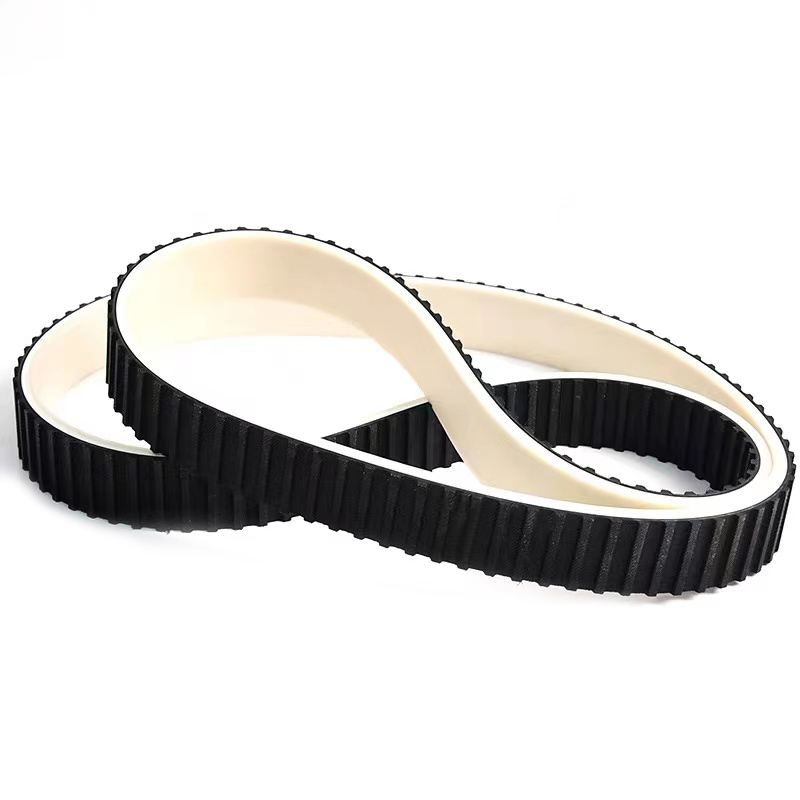
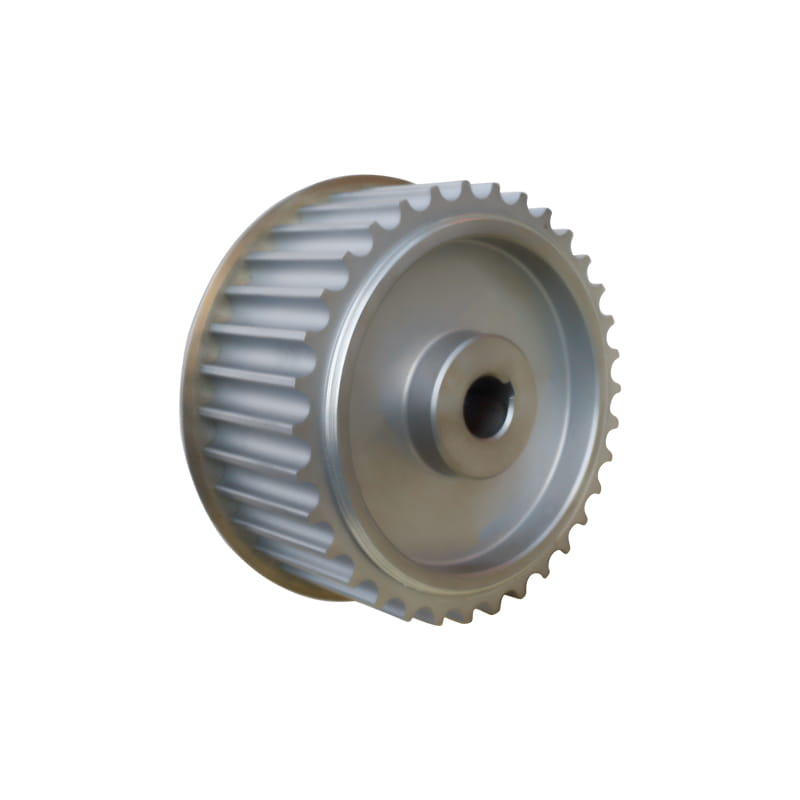
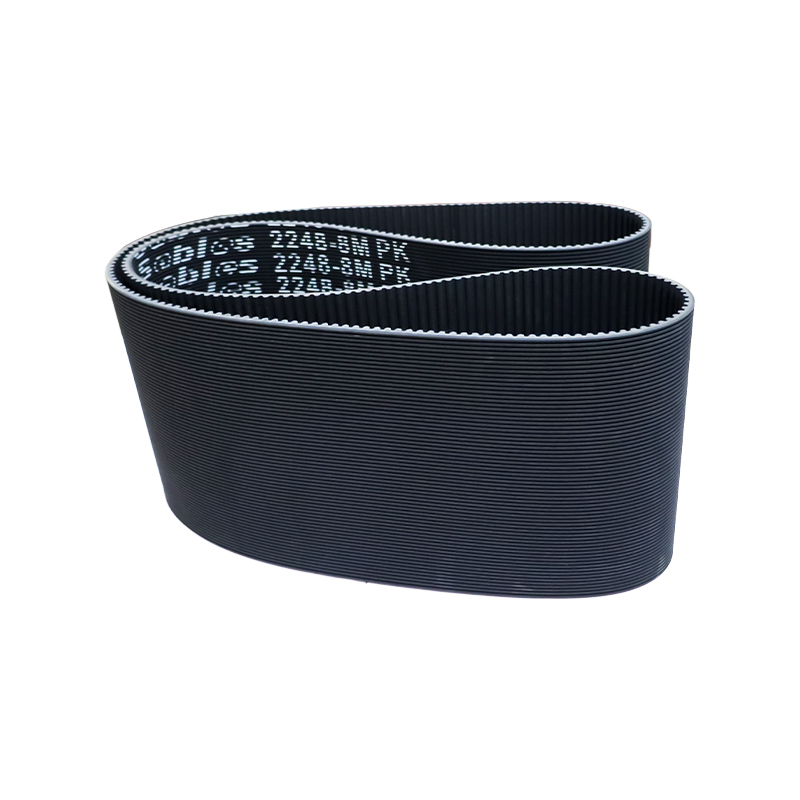
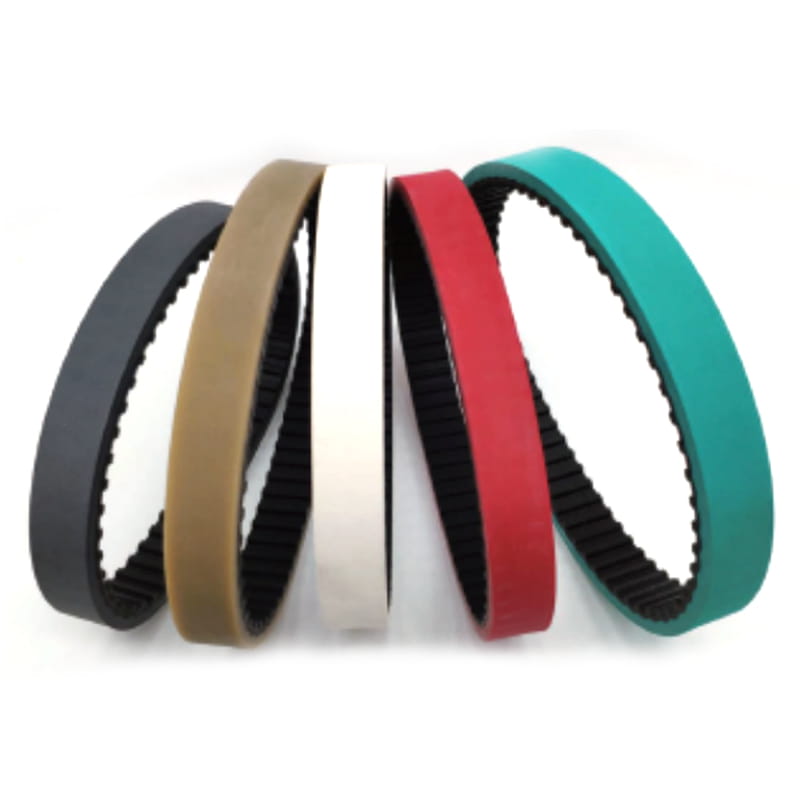
One of the primary uses of rubber-coated belts is to transmit rotational power between shafts and to synchronize the motion of mechanical components in machinery. Rubber synchronous belts — also called rubber timing belts — use a toothed profile on the inner surface that meshes with matching pulley grooves to deliver slip-free, precisely timed power transmission.
Rubber Synchronous Belts in Industrial Machinery
Rubber synchronous belts are used wherever the relative positions of drive and driven shafts must be maintained with exact timing. Unlike V-belts or flat belts that rely on friction and can slip under load, synchronous belts maintain a fixed velocity ratio with zero slip, making them indispensable in applications where position accuracy or phase synchronization is critical. Common industrial uses include:
- CNC machine tools: Axis drive systems require precise, repeatable positioning — rubber synchronous belts transmit motor torque to ball screws or lead screws with accuracy maintained to fractions of a millimeter
- Printing and packaging machines: Multiple print heads, cutting stations, and folding mechanisms must operate in precise phase relationship — synchronous belts coordinate these elements at speeds up to 50 m/s with timing accuracy of ±0.1 mm
- Textile machinery: Weaving looms, spinning frames, and knitting machines use synchronous belts to coordinate the motion of hundreds of mechanical elements that must act in precise sequence
- Servo-driven automation systems: Robotic arms, linear actuators, and pick-and-place systems rely on rubber synchronous belts to translate rotary servo motor output into accurate linear or rotary motion at the end effector
Double-Sided Rubber Belts for Complex Drive Layouts
Double-sided rubber-coated belts — with toothed or friction surfaces on both the inner and outer faces — are used in serpentine drive systems where the belt must engage pulleys on both sides simultaneously. This allows a single belt to drive multiple shafts rotating in opposite directions, commonly used in multi-output gearboxes, agricultural equipment, and complex industrial drive trains where compactness and reduced component count are priorities.
Food Processing and Agricultural Applications
The food processing and agricultural sectors represent some of the most demanding environments for belt performance — combining the need for gentle product handling with resistance to moisture, temperature extremes, cleaning chemicals, and continuous heavy use. Rubber-coated belts are specifically engineered for these conditions and serve multiple critical purposes in food and agricultural processing lines.
Fish Separation and Seafood Processing
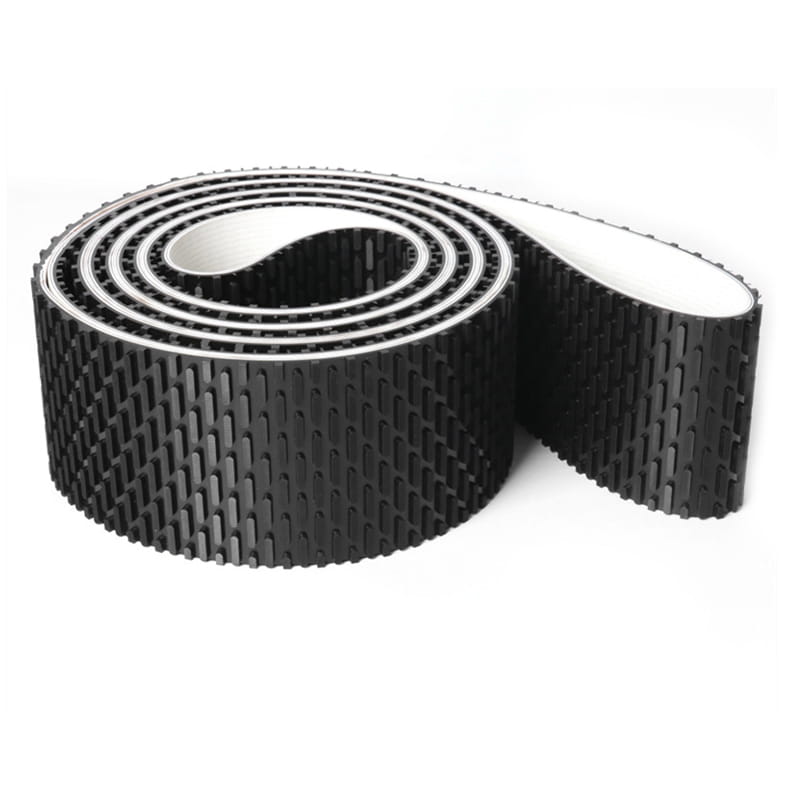
Specially designed rubber-coated fish-separation belts are used in seafood processing facilities to gently but efficiently separate, orient, and convey fish and shellfish through processing lines. The rubber surface coating provides the precise grip and controlled release needed to handle delicate products without damage, while the belt's resistance to salt water, fish oils, and frequent washdowns with sanitizing chemicals ensures long service life in these harsh environments.
Fish-separation belt designs typically incorporate specifically profiled rubber surface features — fins, ribs, or textured patterns — that orient or separate products by size as they travel along the belt, automating sorting operations that would otherwise require manual labor.
Vegetable Cutting and Produce Processing
Vegetable-cutting belts use rubber coatings optimized for food contact, providing the necessary grip to hold vegetables firmly in position relative to cutting blades while ensuring consistent, precise cuts at high throughput. The rubber compound used in food-contact belt coatings must comply with food safety standards — typically FDA 21 CFR or EU 10/2011 food contact regulations — confirming that no harmful substances migrate from the rubber into the food product.
Beyond cutting lines, rubber-coated belts are used throughout produce processing for washing, sorting by weight or optical properties, peeling, blanching feed, and packaging. The combination of food-safe rubber compounds, hygienic belt designs with minimal particle trap zones, and resistance to the sanitizing chemicals used in food plant washdowns makes rubber-coated belts the preferred solution for these applications.
Nut Shell Separation and Grain Processing
Nut-shell belts are purpose-designed rubber-coated belts used in nut processing facilities to crack shells and separate kernel from shell material efficiently. The rubber coating's hardness, resilience, and surface profile are engineered to apply the precise amount of compressive or shearing force needed to fracture shells without damaging the kernel — a balance that varies by nut species and that requires careful rubber compound selection. Similar principles apply in grain processing, where rubber-coated belts convey, elevate, and gently de-hull cereal grains at high throughput rates.
Printing, Packaging, and Paper Processing
The printing, packaging, and paper industries are among the largest users of specialized rubber-coated belts. These applications demand extreme precision, very high operating speeds, and consistent surface properties that must be maintained over millions of belt cycles without degradation.
High-Speed Packing and Printing Machine Belts
Endless rubber-coated belts for high-speed packing and printing machines must perform reliably at belt speeds that can exceed 10–15 meters per second in continuous operation. These belts serve multiple functions within packaging lines: feeding substrates (paper, film, foil, board) into print stations at precisely controlled tension; transporting printed or labeled products between process stations; and driving folder-gluer, cutter-creaser, and bag-forming mechanisms in precise synchronization.
The rubber surface coating on printing machine feed belts must provide consistent, controlled grip on the substrate — firm enough to prevent slippage that would cause misregistration, but gentle enough to avoid marking delicate printed surfaces. Surface hardness, coefficient of friction, and anti-static properties are all carefully specified for each printing application.
Coated Feeding Belts for Sheet and Web Handling
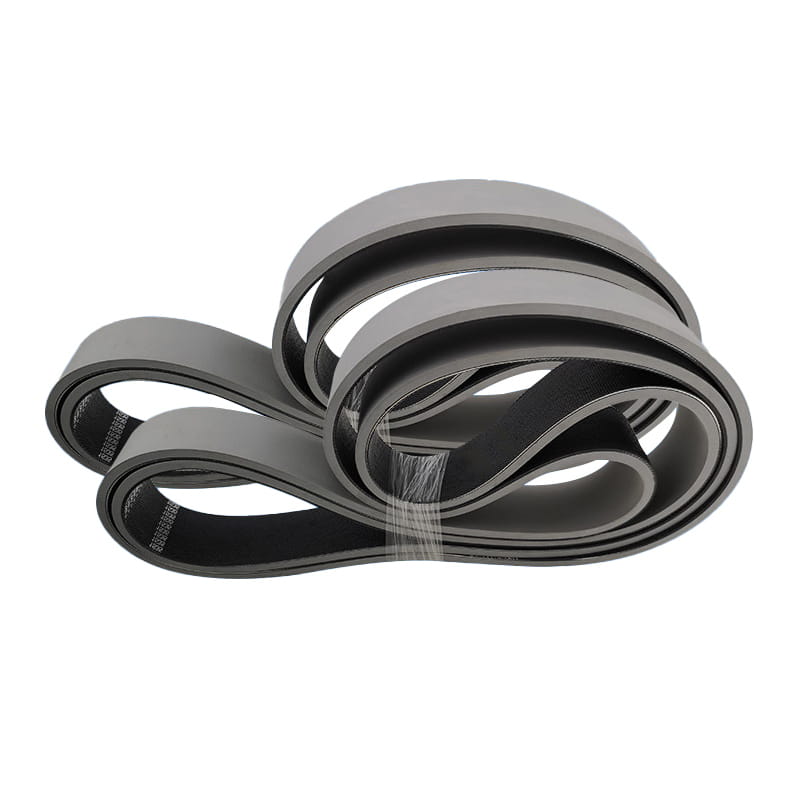
Coated feeding belts are used in copiers, printers, currency counting machines, banknote handling equipment, and document processing systems to pick up and feed individual sheets from stacks or to advance continuous webs through the machine at precisely controlled speed. The rubber coating's coefficient of friction, surface hardness (typically Shore A 40–70), and durometer consistency are critical to reliable single-sheet separation and feeding without misfeeds, multi-feeds, or jams. Even small variations in surface hardness across the belt width can cause skewing of the fed sheet, making tight manufacturing tolerances essential.
Conveying and Material Handling
Rubber-coated conveyor and flat belts are among the most widely used belt types in industrial material handling, offering the grip, durability, and load-bearing capacity needed to transport bulk materials, discrete parts, and finished products reliably across horizontal, inclined, and curved transport paths.
Inclined and Elevated Conveying
The high coefficient of friction provided by rubber surface coatings makes rubber-coated conveyor belts essential wherever materials must be transported at an incline. Standard smooth belt surfaces begin to lose grip on materials at inclination angles above approximately 15–20°; rubber-coated belts with profiled surfaces (chevron patterns, cleats, ribs, or raised buttons) can transport materials at angles up to 35–45° without slippage, and specially designed high-angle belts can operate at even steeper angles in enclosed conveyor systems. These belts are used extensively in:
- Mining and quarrying: Transporting ore, coal, aggregates, and overburden from extraction points to processing or stockpile areas over long distances and significant elevation changes
- Grain elevators and port facilities: Elevating grain, fertilizer, and bulk commodities from ground level to storage or ship-loading facilities
- Recycling and waste processing: Moving sorted materials up inclines between sorting, shredding, and baling stations
Parts and Assembly Line Conveying
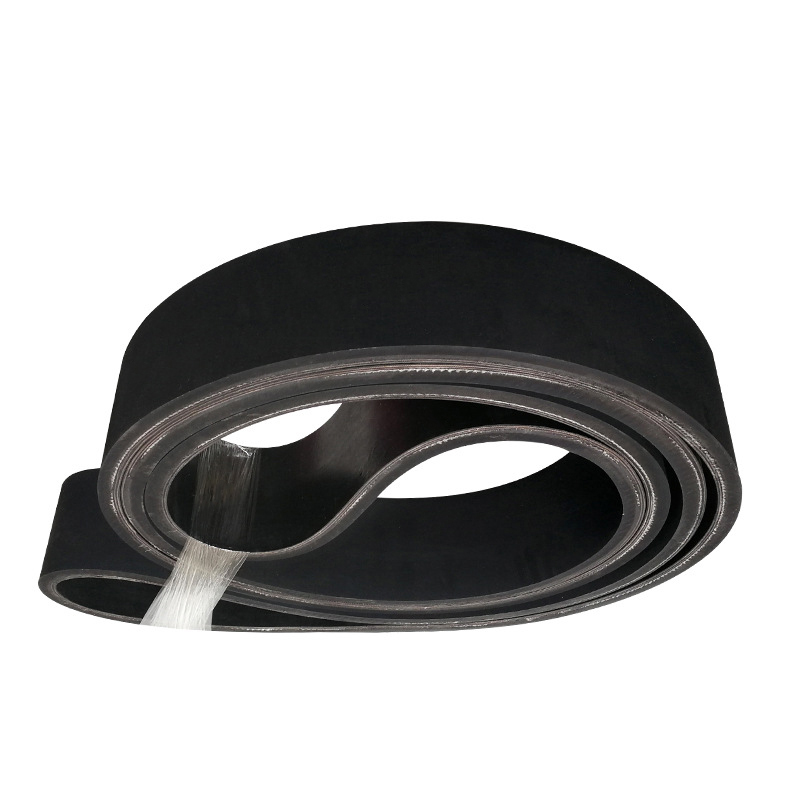
In automotive, electronics, and general manufacturing assembly lines, rubber-coated flat belts and ribbed belts transport parts and subassemblies between workstations at controlled speeds. The rubber surface coating prevents parts from sliding or repositioning during transport — particularly important for precision components that must arrive at assembly stations in a specific orientation — while also absorbing vibration that could damage delicate electronics or cause surface marking on finished components.
Logistics, Sorting, and E-Commerce Fulfillment
Modern parcel sorting and e-commerce fulfillment centers operate rubber-coated belt conveyors continuously, handling millions of packages per day. The rubber surface provides the friction needed to prevent package slippage at divert points and merge sections, while the belt's flexibility allows tight radius curves that reduce the system footprint. High-speed sortation systems in express courier facilities operate at belt speeds of 2–4 meters per second, with rubber coatings engineered to handle packages ranging from envelopes to heavy cartons without surface damage.
Automotive and Transportation Sector Uses
The automotive industry is one of the largest consumers of rubber-coated belts, using them in both vehicle manufacturing processes and within the vehicles themselves. The demands placed on automotive rubber belts are extreme — high temperatures, oil exposure, vibration, cyclic loading, and very long maintenance intervals are all standard requirements.
Engine Timing and Accessory Drive Systems
Rubber synchronous timing belts drive the camshafts of internal combustion engines in precise synchronization with the crankshaft, ensuring that inlet and exhaust valves open and close at exactly the correct crank positions. A timing belt failure can result in catastrophic engine damage — the belt's rubber compound and tensile cord reinforcement must maintain dimensional stability and fatigue resistance across engine operating temperatures of -40°C to +120°C and oil-splash environments for service intervals of 60,000–100,000 km or more.
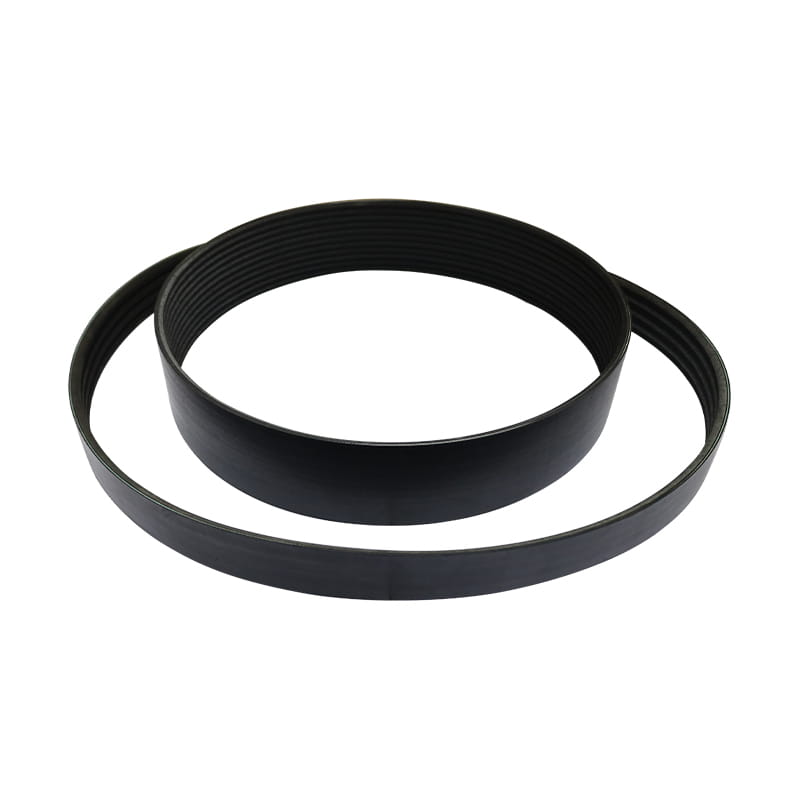
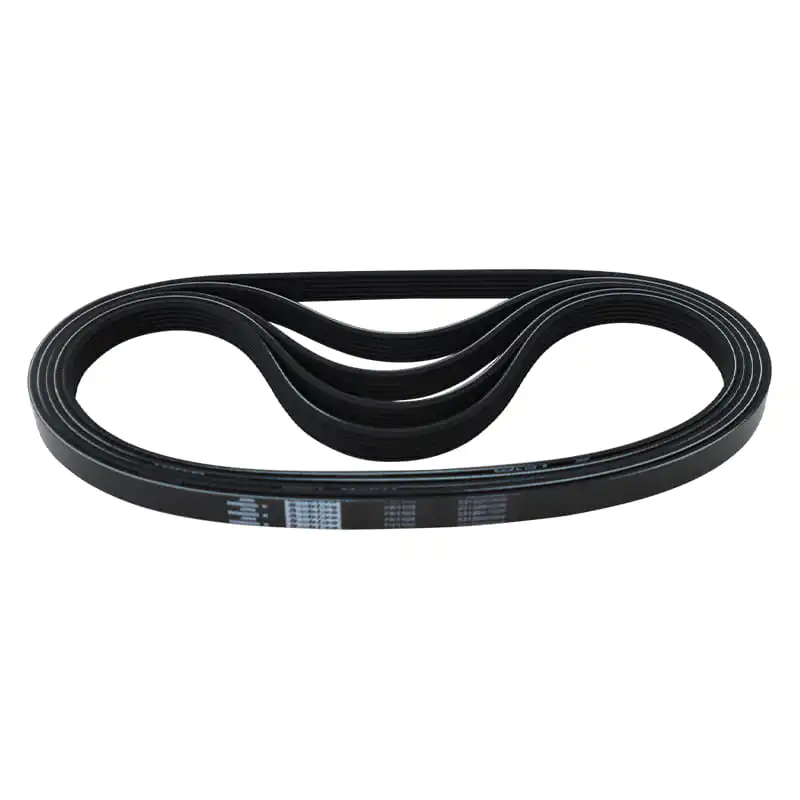
Ribbed belts (poly-V belts) with rubber coatings drive alternators, power steering pumps, air conditioning compressors, and water pumps as accessory drive systems. These belts must transmit substantial loads across multiple pulleys simultaneously while running in confined underhood environments where temperatures regularly exceed 100°C.
Vehicle Assembly Line Applications
Automotive assembly plants use rubber-coated conveyor belts extensively to move vehicle bodies, subassemblies, and components through paint shops, trim lines, final assembly, and quality inspection. Floor-level friction-drive belts and overhead trolley systems using rubber-surfaced drive elements move partially completed vehicles at precisely controlled speeds between assembly stations, with rubber providing the controlled slip characteristics needed for smooth engagement and gentle handling of expensive body panels.
Textile and Apparel Industry Uses
The textile industry relies heavily on rubber-coated belts for both power transmission and fabric handling throughout the production chain — from fiber processing and spinning through weaving, knitting, dyeing, finishing, and garment manufacturing.
- Spinning frames and ring spinning machines: Rubber-coated aprons and top rollers on drafting systems grip and attenuate fiber slivers with precise, consistent pressure as they are drawn into yarn — the rubber surface hardness and surface finish directly determine yarn evenness and quality
- Weaving looms: Rubber synchronous belts drive the shedding mechanism, weft insertion systems, and take-up rollers in precise phase coordination at loom speeds exceeding 1,000 picks per minute on modern rapier and air-jet looms
- Fabric transport and finishing: Rubber-coated flat belts convey fabrics through stenter frames, calenders, and coating machines without marking or distorting the fabric surface, critical for maintaining dimensional accuracy in technical textiles and precision woven fabrics
- Garment cutting and sewing: Rubber-coated feed belts advance fabric layers under cutting blades and through sewing machine mechanisms at controlled rates, ensuring stitch accuracy and cut consistency in automated garment production
Special Processing Belts for Niche Industrial Applications
Beyond the broad industrial categories described above, rubber-coated belts are engineered for a wide range of highly specialized applications where standard belt products cannot meet the precise functional requirements. These special processing belts represent some of the most technically demanding applications in the industry.
Examples of specialized rubber-coated belt types and their specific industrial applications
| Belt Type |
Industry |
Specific Function |
Key Rubber Property Required |
| Fish-separation belt |
Seafood processing |
Sort, orient, and convey fish by size |
Oil and salt water resistance; food-safe rubber |
| Vegetable-cutting belt |
Food processing |
Hold produce firmly during cutting |
FDA/EU food-contact compliance; high grip |
| Nut-shell belt |
Nut processing / agriculture |
Crack shells without damaging kernels |
Controlled hardness and resilience |
| Endless packing machine belt |
Packaging |
High-speed product feed and transport |
Fatigue resistance at high speed; dimensional stability |
| Coated feeding belt |
Printing / document handling |
Single-sheet pick-and-feed from stack |
Precise friction coefficient; hardness consistency |
| Tooth-ribbed belt |
Multi-axis drive systems |
Combined synchronous and V-belt function |
Tooth accuracy; lateral stability |
| Anti-static rubber belt |
Electronics / explosive environments |
Prevent static charge buildup during operation |
Surface resistivity <10⁶ Ω (ESD-safe) |
Why Rubber Coating Is Chosen Over Other Belt Surface Materials
Understanding why rubber is specifically chosen as a belt coating material — rather than polyurethane, PVC, fabric, or bare metal — clarifies the unique properties that make rubber-coated belts the preferred solution across so many applications.
Superior Grip and Friction Characteristics
Rubber provides a high coefficient of friction against most surfaces — typically 0.5–0.8 against steel and 0.6–1.0 against rubber in dry conditions — which makes rubber-coated belts highly effective at gripping both pulleys and transported materials. The coefficient of friction can be precisely adjusted by varying the rubber compound formulation, surface hardness, and surface texture to match the exact requirements of each application.
Elasticity and Vibration Damping
Rubber's inherent elasticity allows it to absorb and dampen vibration and shock loads that would cause premature fatigue failure in stiffer materials. In high-speed machinery, the ability of rubber belt coatings to absorb vibration energy reduces noise levels and protects both the belt and the machinery from the cumulative effects of cyclic loading — a property that is particularly valuable in printing and packaging applications where vibration affects print quality.
Chemical and Environmental Resistance
The rubber compound can be tailored to resist specific chemical environments. Key rubber types used in belt coatings and their primary resistance properties include:
- Neoprene (CR): Excellent oil resistance, moderate chemical resistance, good weathering resistance — widely used in general industrial and automotive applications
- EPDM: Outstanding weathering, ozone, and UV resistance — preferred for outdoor conveyor applications and where steam exposure occurs
- Nitrile (NBR): Superior resistance to oils, fuels, and greases — the standard choice for automotive and oil industry belt coatings
- Silicone rubber: Exceptional high-temperature resistance (up to 200°C continuous) and very wide operating temperature range (-60°C to +200°C) — used in baking, drying oven, and high-temperature industrial applications
- Food-grade rubber compounds: Formulated to comply with FDA and EU food contact regulations — used in all direct food contact belt applications in food processing
Customizable Hardness Range
Rubber coating hardness can be specified across a wide range — from very soft Shore A 20 (gel-like, used for very delicate product handling) to Shore A 90 (almost rigid, used for high-load power transmission surfaces) — giving engineers precise control over the compliance and contact area characteristics of the belt surface for each specific application requirement.
Key Factors When Selecting a Rubber-Coated Belt for a Specific Use
Selecting the correct rubber-coated belt for a given application requires consideration of multiple interrelated factors. An incorrect specification can result in premature belt failure, poor performance, contamination risks, or machine damage. The following parameters should be evaluated systematically:
- Operating load and speed: The transmitted power or conveyed load determines the required belt width, thickness, and core tensile strength. Belt speed affects centrifugal loading and heat generation in the rubber coating.
- Chemical environment: Exposure to oils, water, solvents, cleaning chemicals, or food products determines which rubber compound is appropriate. An incorrect compound choice will cause swelling, hardening, or delamination of the coating.
- Temperature range: Both continuous operating temperature and peak temperature excursions must be within the rubber compound's rated range. Silicone for high temperatures; EPDM for steam; standard natural rubber or SBR blends for ambient conditions.
- Required coefficient of friction: Different applications need different grip levels — too much friction causes product marking or belt wear; too little causes slippage and loss of control. Surface texture and rubber hardness are the primary control variables.
- Regulatory compliance: Food contact, pharmaceutical, or explosive environment applications require rubber compounds meeting specific regulatory standards — FDA, EU food contact, ATEX, or ESD requirements as applicable.
- Belt geometry and joint type: Whether the belt is endless (seamless) or jointed; the joint type (mechanical fasteners, vulcanized, bonded); and the pulley diameter range all affect the rubber coating's required flexibility and minimum bend radius.
About Jiangxi Kangqi Industrial Co., Ltd.
Jiangxi Kangqi Industrial Co., Ltd. is a high-tech manufacturer specializing in the production, research, and development of rubber synchronous belts and special belts. The company produces products under its well-known brands SABLES and KML, which have earned recognition from customers worldwide, and also serves as an authorized agency for Japan Bando Belts.
As a professional rubber-coated belt manufacturer and factory, Jiangxi Kangqi's product range is extensive, covering the full spectrum of industrial belt requirements:
- Rubber synchronous belts and polyurethane timing belts
- Double-sided belts and flat belts
- Coated feeding belts and ribbed belts
- Tooth-ribbed belts and synchronous belt wheels
- Conveyor belts and fish-separation belts
- Endless belts for high-speed packing and printing machines
- Nut-shell belts, vegetable-cutting belts, and all kinds of special processing belts
With deep expertise in rubber compound formulation, belt construction engineering, and special surface coating technologies, Jiangxi Kangqi Industrial Co., Ltd. is equipped to develop and supply rubber-coated belt solutions for standard industrial applications as well as the most technically demanding custom requirements across food processing, packaging, printing, agriculture, and beyond.



 中文简体
中文简体