



HOME / News / Which is better, a rubber timing belt or a metal timing belt?

News

Which is better, a rubber timing belt or a metal timing belt?

Rubber timing belts outperform metal timing chains in most passenger vehicle and light industrial applications due to their quieter operation, lower weight, self-lubrication, and lower replacement cost. Metal timing chains are superior in high-load, high-temperature, and long-service-life applications where durability under stress outweighs other factors. Choosing between them requires matching the belt type to the operating environment, load profile, and maintenance expectations of the specific application.

KML Belt Image

What Each Type Is Made Of and How It Works

Rubber Timing Belt

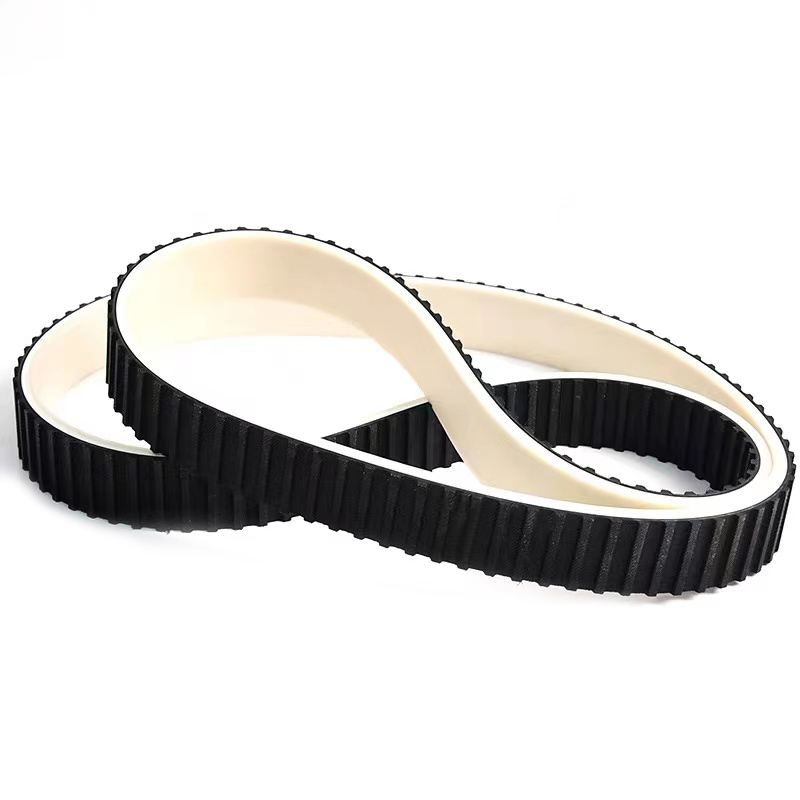
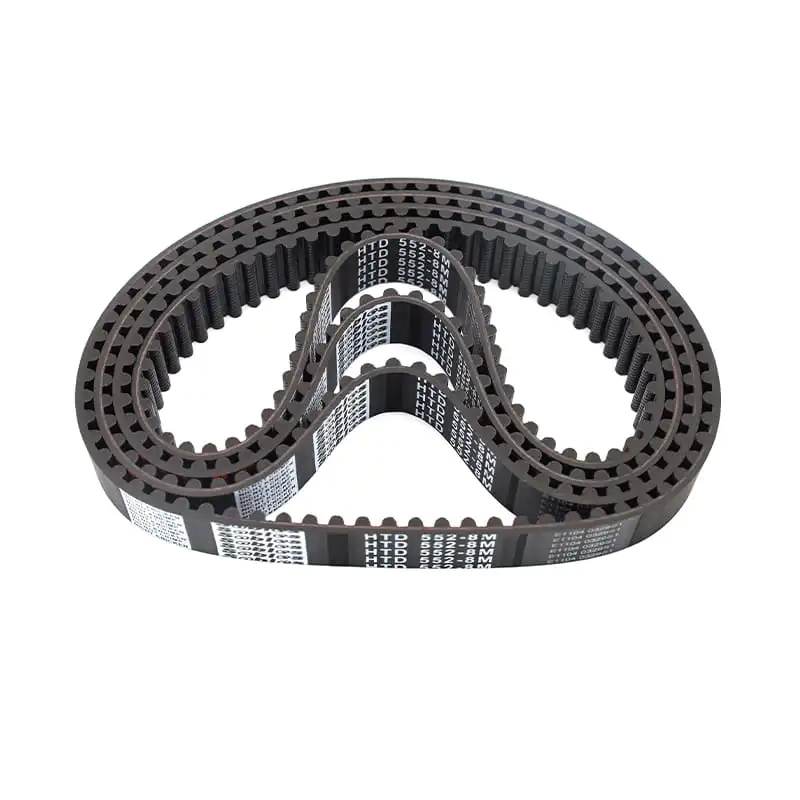
A rubber timing belt is a flexible toothed belt manufactured from reinforced elastomer — typically chloroprene (neoprene) or hydrogenated nitrile rubber (HNBR) — with fiberglass or aramid (Kevlar) fiber tension cords embedded longitudinally. The precisely formed teeth mesh with matching sprocket grooves to transmit rotational motion with no slip and no need for lubrication. In automotive engines, the timing belt synchronizes the crankshaft and camshaft(s) to keep valve timing accurate within ±1° or less.

Metal Timing Chain

A metal timing chain is a roller or silent chain constructed from hardened steel links and pins. It operates on sprockets in the same positional relationship as a belt but runs in an oil-lubricated environment (inside the engine block). Metal chains do not degrade through chemical exposure to heat, oil, or coolant in the way rubber does, giving them a fundamentally different durability profile.

Performance Comparison Across Key Criteria

Rubber timing belt vs. metal timing chain compared across operational factors
Criteria Rubber Timing Belt Metal Timing Chain
Noise level Very quiet Audible (especially when worn)
Lubrication required No (dry operation) Yes (oil-bath required)
Replacement interval 60,000–120,000 km (typical) 200,000+ km or engine lifetime
Replacement cost Lower part cost; moderate labor Higher part cost; significant labor
Failure warning Little to none (sudden failure) Rattling or slack (audible warning)
Weight Light Heavier
Temperature resistance Limited (degrades above ~130°C) High (stable in engine temps)
Oil/coolant contamination Degrades significantly Designed for oil immersion

Where Rubber Timing Belts Excel

Rubber timing belts are the preferred solution in the following scenarios:

  • Passenger car and light commercial vehicle engines — the combination of quiet operation, lower component weight, and dry-running simplicity makes rubber belts the standard choice for many engine designs in this segment.
  • Industrial motion control and automation — in CNC machines, conveyor systems, printing equipment, and robotics, rubber timing belts transmit precise motion without backlash, oil mess, or lubrication maintenance.
  • Food processing and cleanroom applications — where oil contamination is unacceptable, dry-running rubber belts are the only viable synchronous drive option.
  • Cost-sensitive designs — rubber belt systems typically cost 30–60% less to manufacture and install than equivalent chain-drive systems of the same power rating.

Where Metal Timing Chains Excel

  • High-performance and turbocharged engines — elevated heat and combustion pressures degrade rubber faster; metal chains maintain dimensional stability under these conditions.
  • Heavy-duty trucks and commercial vehicles — where engines run for hundreds of thousands of kilometers without major overhaul, chain drives reduce the maintenance burden significantly.
  • Long oil-change interval engines — modern engines designed around extended 15,000–30,000 km oil change intervals benefit from chains, as oil-lubricated chains age far more gracefully than rubber belts in aged oil environments.
  • Applications with vibration or shock loads — metal chain links absorb impact loading better than rubber belts, which can crack under sudden torque spikes.

The Critical Risk of Rubber Belt Failure

One factor that disproportionately influences the belt-vs-chain decision in automotive engines is the consequence of failure. In most interference engines — where valves and pistons occupy the same cylinder space at different times — a snapped rubber timing belt causes catastrophic engine damage: pistons strike open valves, bending them and potentially destroying the engine in milliseconds. Repair costs typically range from $2,000 to $8,000 or more depending on engine complexity.

This is why strict adherence to rubber belt replacement intervals is non-negotiable. A metal chain, by contrast, typically gives audible advance warning (rattling or clattering) as it wears and stretches, allowing maintenance intervention before catastrophic failure occurs.

Products Recommended

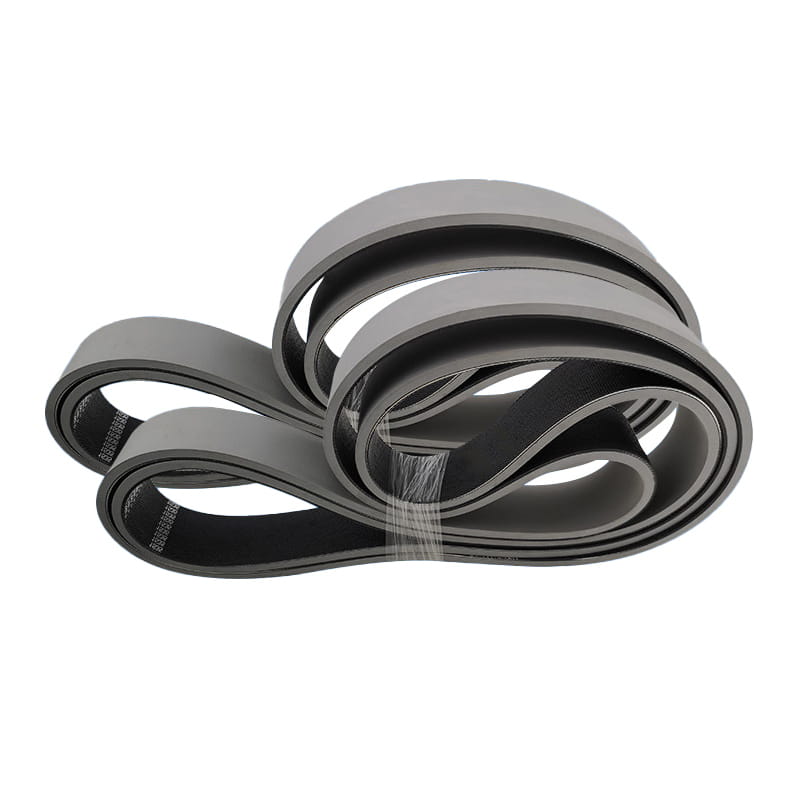
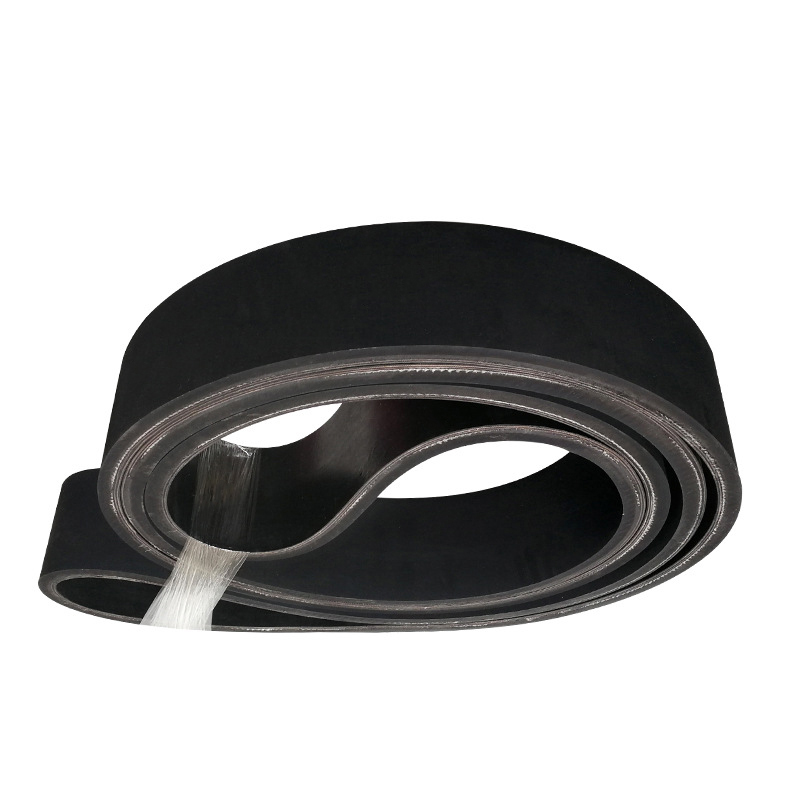
  • Rubber Wide - Angle Belt
    Rubber Wide - Angle Belt
    The wide-angle belt is a new type of industrial transmission belt developed on the basis of the general industrial V-belt technology.
    They are all driven by the friction diagram on both sides of the belt. The wedge angle of the general V-belt is 40° and the wedge angle
    of the wide-angle transmission belt is 60°.
    According to the principle of transmission dynamics, as the wedge angle of the wide-angle belt increases, the area supported by the
    two transmission sides naturally increases, thus giving rise to the following advantages over the general V-belt:
    1. The load of the wide-angle belt is evenly distributed and the wear resistance is improved.
    2. The contact area between the belt and the pulley increases and the transmission force is increased.
    3. It improves the concave deformation of the drive belt core and strengthens the drive characteristics.
    4. After the wide-angle belt is installed and used, the problem of belt tension drop is improved.
    It is the above-mentioned advantages of the wide-angle belt that are widely used and affirmed by the precision machinery industry.
    View More
  • Rubber Conveyor Belt
    Rubber Conveyor Belt
    The conveyor belt is composed of surface adhesive, core, and layer glue. In addition, a layer of buffer cloth can be added to the use of high drop impact to make it more impact-resistant.

    The surface adhesive
    With natural rubber and synthetic rubber as raw materials and in order to enhance wear resistance, crack resistance, aging resistance, and other properties, the surface adhesive has various characteristics such as wear resistance, cutting resistance, heat resistance, flame resistance, cold resistance, acid and alkali resistance, oil resistance, static electricity resistance and so on.
    Cloth layer core
    The cloth layer is composed of natural fiber or chemical fiber alone or a combination of the two, has the same quality after single-step treatment by a mature process, And has good adhesion with rubber.
    The adhesive layer
    The adhesive layer is very important for the adhesive force between the layers of the core of the conveyor belt that is repeatedly flexed. Especially for high-tension conveyor belts, a layer of adhesive with less buckling stress and less fatigue due to internal stress must be used.
    Specifications and models can be customized according to customer requirements, with a thickness ranging from 2.0 mm to 8.0 mm.
    View More
  • Endless Rubber Flat Belt
    Endless Rubber Flat Belt

    Belt type:
    FH FL FM
    Scope of application:

    High-speed, smooth, and low-extension transmission and conveying systems, such as textile machinery, woodworking machinery, grinding machinery, ticket vending machines, vegetable cutting machines, etc.
    Characteristics:
    High speed and stability, high tensile strength, and low elongation.
    View More
  • Silicone Belt
    Silicone Belt

    Belt type:
    Integrated Vulcanized Silicone Flat Belt and Silicone Synchronized Belt
    Scope of application:

    Sanitary products industry, glass machinery, sealing machine, etc.
    Characteristics:
    Anti-sticking, high friction coefficient, and high-temperature resistance.
    View More
  • Endless Rubber Sanding Machine Belt
    Endless Rubber Sanding Machine Belt
    The seamless rubber band produced by woodworking machinery can be used for sanding, correcting, and trimming core materials, planing wood boards, laminated boards, plastic laminated boards, and other machines, and can help the surface to be perfectly machined and selected.
    Its special technology lies in the manufacturing method and produces the required size jointless belt. We not only strictly control the quality, but also insist on using imported materials in order to make our sander belt have better performance.

    All parts of thickness and strength are absolutely uniform.
    It has a good linear operation.
    High flexibility can be used for small wheel diameters.
    It can maintain flatness and non-deformability under working pressure.
    The friction coefficient between the bottom of the belt and the plate surface is very low.
    Because the surface layer of the belt is covered with rubber, the adhesiveness is improved and the stability of the conveyor belt is improved.
    View More
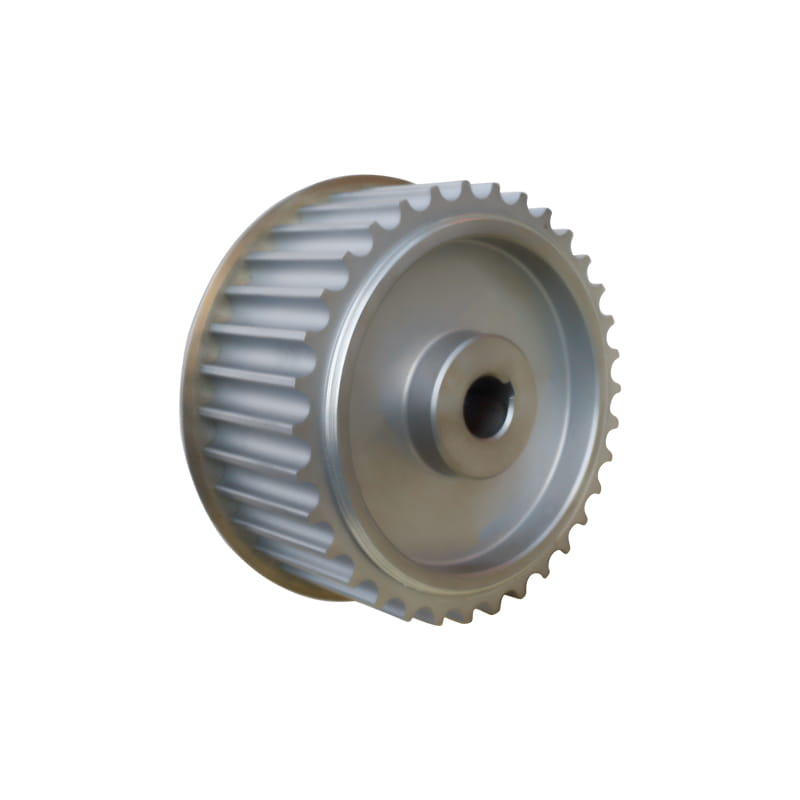
  • Synchronous Pulley
    Synchronous Pulley

    Scope of application:

    Apply to each field of the synchronous-driven device system.
    Characteristics:
    Ensure coordination with the belt, to enhance the accuracy and lifetime of the driven. According to customer requirements, customization optimum driven solution can divided into 45# steel, aluminium alloy, stainless steel, cast iron, nylon, etc, according to the material.
    View More
  • Ribbed Belt
    Ribbed Belt

    Belt type:
    PHPJPKPLPM
    Scope of application:

    It is suitable for outdoor transmission equipment, transportation equipment, medical equipment, electric tools, household appliances, and sports equipment.
    Characteristics:
    1. The transmission power of the ribbed belt is higher than that of an ordinary V-belt by 30 % when the space is the same. 
    2. The transmission system of the ribbed belt has a compact structure, and under the same transmission power, the space occupied by
    the transmission device is 25 % smaller than that of the common V-belt.
    3. The ribbed belt is thin and flexible and is suitable for transmission with a small pulley diameter and high-speed transmission, with belt
    speed up to 40m/ s; Small vibration, less heat, and stable operation.
    4. The ribbed belt is heat-resistant, oil-resistant, and wear-resistant, with small elongation and a long service life.
    View More
  • Toothed And Ribbed Belt
    Toothed And Ribbed Belt

    Belt type:
    8MPK S8MPK
    Scope of application:

    Flour mill, pulverizer, etc. 
    Characteristics:
    1. One side of the tooth wedge belt is a ribbed belt and the other side is a synchronous belt.
    2. Double-sided transmission capable of meeting special working conditions.
    View More