



Content
Rubber timing belts are better for automotive engine applications — they flex more easily at low temperatures, are widely available in OEM specifications, and perform reliably within typical engine temperature ranges. Polyurethane (PU) timing belts are better for industrial motion control applications — they offer superior dimensional stability, longer service life under continuous cycling, greater abrasion resistance, and consistent performance across a wider range of environmental conditions. Choosing between them requires matching the belt material to the specific operating environment, not treating one as universally superior.
Material Characteristics: How Rubber and Polyurethane Differ
Rubber Timing Belt Construction
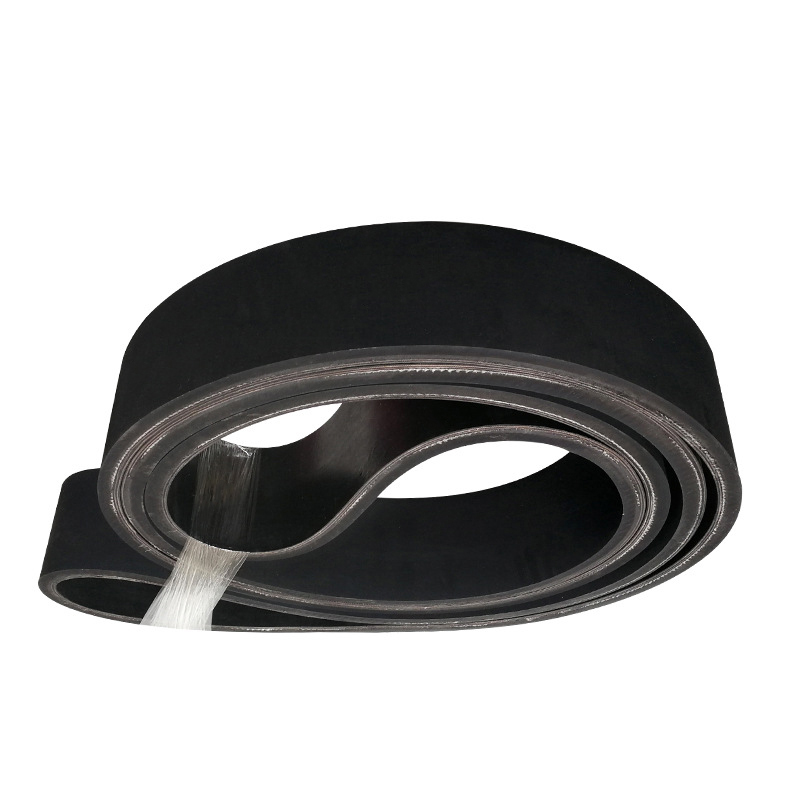
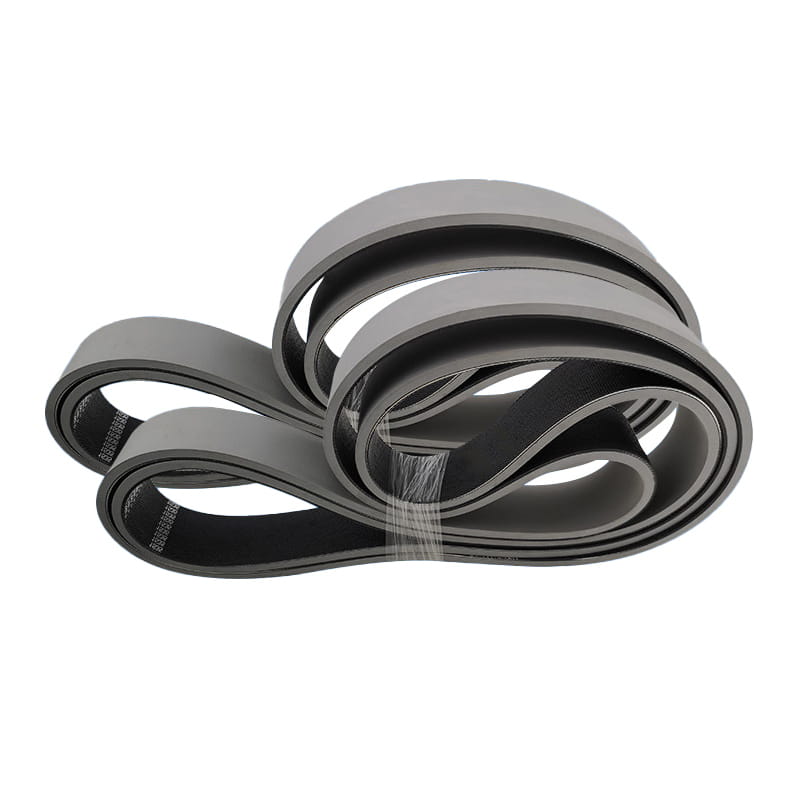
Automotive and industrial rubber timing belts are produced from chloroprene (neoprene), EPDM, or hydrogenated nitrile butadiene rubber (HNBR) compounds, reinforced with fiberglass or aramid fiber tension cords. The rubber compound provides flexibility and damping; the fiber cords provide tensile strength and dimensional stability under load. Tooth profiles are formed during molding. HNBR compounds, used in modern high-performance belts, withstand temperatures up to approximately 130°C continuous and have improved resistance to oil and ozone compared to older neoprene formulations.
Polyurethane Timing Belt Construction
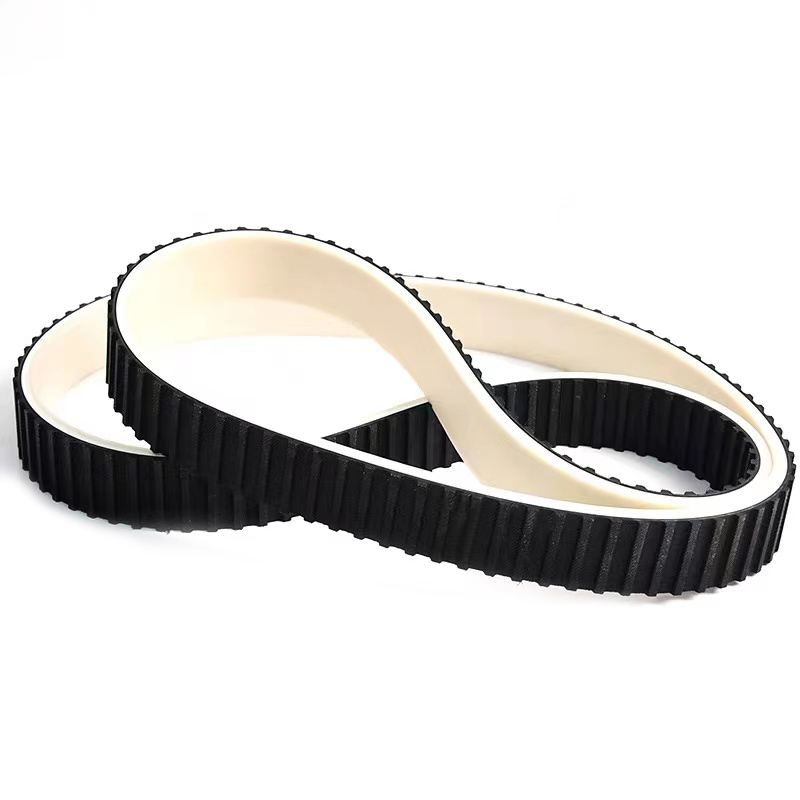
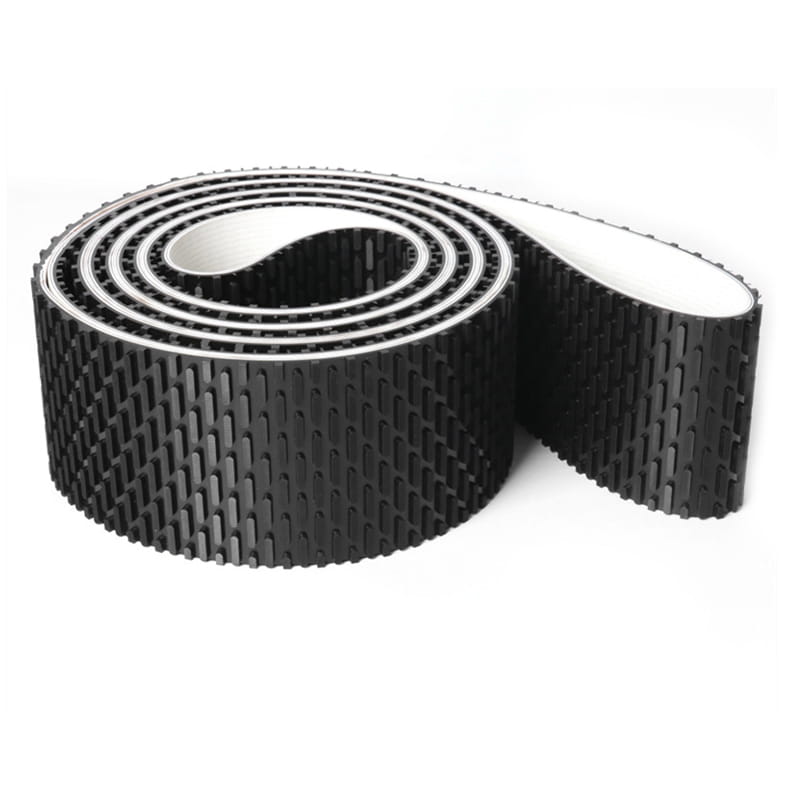
Polyurethane belts are cast or extruded from thermoplastic polyurethane (TPU) compounds, typically reinforced with steel or Kevlar fiber tension cords. Unlike rubber, PU can be cast directly around the cord reinforcement without a separate bonding layer, creating a monolithic structure with excellent cord-to-body adhesion. PU belts are often produced with steel cord reinforcement for maximum load capacity or Kevlar cords for high-speed low-backlash applications.
Performance Comparison Across Key Criteria
| Criteria | Rubber Belt | Polyurethane Belt |
|---|---|---|
| Abrasion resistance | Moderate | Very high |
| Service life (industrial use) | Good | Longer (2–3x in many applications) |
| Low-temperature flexibility | Good (remains pliable at -30°C) | Variable (some grades stiffen below -20°C) |
| High-temperature resistance | Up to ~130°C (HNBR) | Up to ~100–110°C (standard TPU) |
| Dimensional stability under load | Good | Excellent (less elongation) |
| Oil resistance | Moderate (HNBR good, neoprene poor) | Good to excellent |
| Vibration damping | Better (rubber absorbs shock) | Lower (stiffer material) |
| Cost per unit | Generally lower | Generally higher |
| Custom profile availability | Standard profiles dominant | Highly customizable (extruded and welded) |
Where Rubber Timing Belts Are the Right Choice
- Automotive engine timing systems: The OEM specification for virtually all car and light commercial vehicle engines. The combination of flexibility, heat resistance, and vibration damping matches engine environment requirements that PU belts do not optimally meet.
- Applications with shock or vibration loads: Rubber's elastic damping capacity absorbs torque spikes and impact loads that would cause PU belts to transmit the full shock to sprocket teeth and shaft bearings.
- Cold-environment applications (below -20°C): Rubber grades retain more flexibility at very low temperatures than most PU formulations, making them preferred for outdoor and cold-storage machinery.
- Cost-sensitive standard applications: Where a well-understood service interval and lower unit cost are priorities over extended service life.
Where Polyurethane Timing Belts Are the Right Choice
- CNC machines and precision motion control: PU belts with steel or Kevlar cords offer lower elongation and more precise positioning than rubber equivalents — critical for servo-driven axes where positional accuracy is measured in tenths of a millimeter.
- High-speed conveyors and packaging machinery: PU's superior abrasion resistance significantly extends service life on high-cycle-rate machinery where rubber belts would require frequent replacement.
- Food processing environments: Food-grade TPU formulations are FDA-compliant and resist oils and cleaning chemicals — making PU the required choice for belt drives in food contact applications.
- Open-ended belt applications: PU belts can be welded end-to-end after cutting to length — enabling custom loop lengths that molded rubber belts cannot achieve without custom tooling. This makes PU ideal for retrofits and custom machine builds.